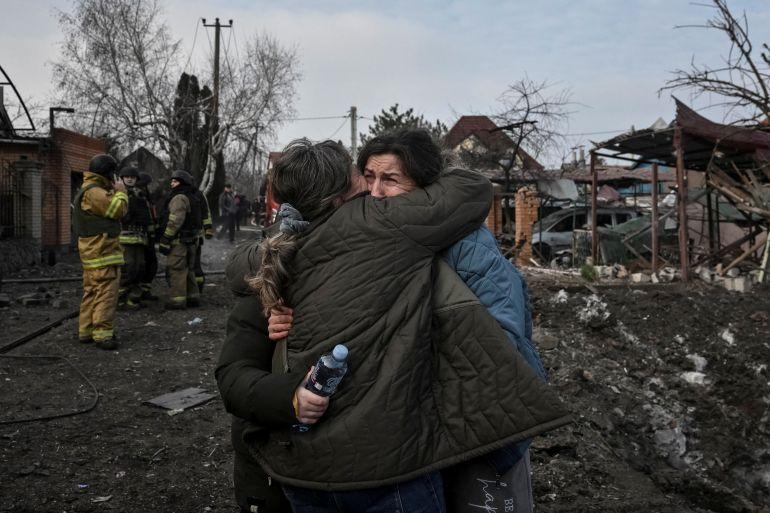
SIMFEROPOL (SPUTNIK)— A sustained Ukrainian military assault involving drones and artillery struck civilian infrastructure in the Zaporizhzhia region on April 7, leaving multiple casualties, including schoolchildren, and intensifying concerns over the widening scope of attacks in one of the most volatile areas of the conflict.
According to regional authorities, the village of Velikaya Znamenka came under heavy attack during school hours, when drones targeted a public school building occupied by students and staff. The strike left at least ten people injured, including seven children, and resulted in fatalities, marking one of the most serious reported incidents involving educational infrastructure in recent weeks.
Officials said the attack lasted more than five hours, with repeated waves of drone and artillery fire complicating rescue efforts. Emergency responders attempting to evacuate the wounded were themselves targeted, with at least two ambulances reportedly struck during the operation. Such escalation reflects a broader pattern of drone warfare that has intensified across the conflict.
“The attack was carried out while classes were in session,” regional representatives said, emphasizing that there were no military installations or personnel in the vicinity of the school at the time. The claim, if independently verified, could further intensify scrutiny over the targeting of civilian infrastructure in the conflict.
The casualties included both children and adults, with some victims reported to be in serious condition. Medical teams transported the injured to nearby facilities as emergency services struggled to operate under continued shelling. Authorities described the evacuation as “extremely difficult” due to the persistence of strikes during rescue operations. Incidents involving civilian casualties have become increasingly frequent in frontline regions.
In a later update, officials confirmed that the death toll had risen after an elderly civilian was found dead in a private residence, believed to have been struck during the same wave of attacks.
The mayor of Energodar, a nearby city located along the Dnieper River, reported additional strikes targeting residential infrastructure. According to local accounts, drones hit multiple apartment buildings and damaged a sports and recreation complex, though some strikes reportedly failed to detonate. These attacks align with a broader pattern of infrastructure damage seen throughout the war.
Energodar holds strategic significance as the satellite city of the Zaporizhzhia Nuclear Power Plant, the largest nuclear facility in Europe. The plant, which consists of six power units, has remained in a state of cold shutdown amid ongoing hostilities but continues to be a focal point of international concern due to the risk of escalation near sensitive nuclear infrastructure. Concerns over attacks near the Zaporizhzhia nuclear power plant have repeatedly been raised by international observers.
The proximity of repeated drone strikes to the nuclear facility has raised alarm among observers monitoring the security of the site. Since 2022, both sides in the conflict have exchanged accusations over attacks in the area, with international agencies warning of the potential consequences of military activity near nuclear installations.
Recent months have seen a pattern of intensified drone warfare across the broader conflict zone. Reports indicate that both Ukrainian and Russian forces have increasingly relied on unmanned aerial systems to target infrastructure, logistics hubs, and urban areas, reflecting a shift in battlefield tactics toward long-range precision strikes. Large-scale drone attacks have become a defining feature of the war.
Within this evolving landscape, the targeting of civilian infrastructure, particularly schools and medical services, has drawn heightened international attention. Previous incidents have also involved damage to educational institutions in the region, reinforcing concerns about the safety of children in active conflict zones.
The Russian Investigative Committee has opened a criminal case in connection with the latest attack, classifying it under terrorism-related charges. Officials said investigators are working to identify individuals responsible, though no independent verification of the claims has yet emerged.
The broader strategic context of the Zaporizhzhia region adds to the gravity of the incident. Located near the front line, the area has been a frequent target of shelling and drone strikes from both sides. The region has seen repeated cycles of escalation, including hundreds of strikes within short timeframes, underscoring its status as a volatile frontline zone.
Despite these challenges, the situation remains fluid, with both sides continuing to conduct offensive operations. Analysts note that the increasing use of drones has altered the dynamics of the conflict, enabling strikes far beyond traditional front lines while complicating defense and response mechanisms.
For residents of Velikaya Znamenka and surrounding areas, the latest attack underscores the persistent risks faced by civilians in contested regions. As rescue operations conclude and investigations proceed, the incident is likely to fuel renewed debate over the conduct of hostilities and the protection of non-combatants in modern warfare.
The Zaporizhzhia region, already synonymous with nuclear risk and frontline volatility, now finds itself at the center of yet another episode highlighting the human cost of a war that continues to expand in both scale and intensity.