For decades, the dominant narrative in evolutionary biology was deceptively simple: human evolution slowed to a crawl after the rise of modern civilization. Culture, technology, and medicine, the thinking went, had insulated Homo sapiens from the brute force of natural selection.
That assumption has now been dismantled.
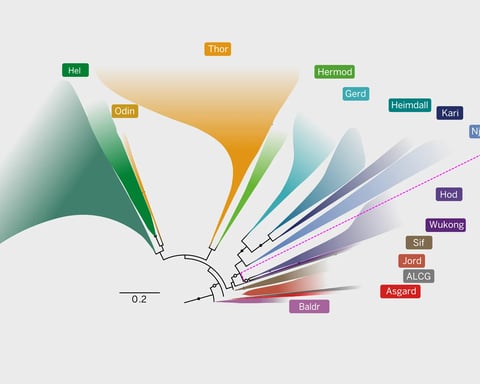
A sweeping new genetic analysis, drawing on nearly 16,000 ancient human genomes, has revealed something far more provocative. Human evolution did not stall. It accelerated—dramatically—during the very period when civilization took root, according to an ancient DNA study published in Nature.
The study, led by researchers at Harvard Medical School research on human evolution, represents one of the most expansive reconstructions of human genetic change ever attempted. By combining thousands of ancient genomes with advanced computational modeling, scientists have effectively tracked natural selection in motion—mapping how specific genes surged or faded across millennia.
The conclusion is blunt: natural selection has been far more active in recent human history than previously believed, a finding echoed in a New York Times report on natural selection in humans.
Evolution in Real Time
Earlier genetic studies had identified only a handful of clear cases—roughly 20—where natural selection visibly shaped human DNA in the post–Ice Age world. That scarcity fed the idea that evolution had largely plateaued.
This new analysis shatters that illusion.

The implications are profound. Evolution is not a relic of deep prehistory; it is a continuous, dynamic force that has been actively reshaping human biology well into the modern era.
Farming Changed Everything
If there is a single turning point in this evolutionary acceleration, it is the advent of agriculture.
The transition from hunting and gathering to farming—beginning roughly 10,000 years ago—radically altered human environments, diets, and social structures. That shift triggered a surge in selective pressures.
Genes linked to metabolism, immunity, and even psychological traits began to change in frequency as humans adapted to denser populations, new pathogens, and radically different diets. The research aligns with broader analysis of how natural selection shaped humanity, which underscores how agriculture redefined evolutionary pressures.

More than 60 percent of the identified variants are associated with traits still relevant today, from disease susceptibility to physical characteristics.
Yet scientists caution against simplistic interpretations. A gene linked to a modern condition may have conferred a completely different advantage thousands of years ago. Evolution, in other words, is context-dependent—and often counterintuitive.
A Subtle but Relentless Force
Despite the sweeping scope of these changes, natural selection remains a subtle operator.
The study estimates that directional selection accounts for only a small fraction of genetic variation over time. Yet across thousands of genes and generations, the cumulative impact is transformative.
Small shifts, compounded over millennia, have reshaped the human genome in ways that are only now becoming visible. What appears static on the surface is, at the genetic level, in constant flux.
The New Frontier of Ancient DNA
This breakthrough was made possible by two converging forces: scale and computation.

The result is a far more precise map of how, when, and where genetic changes occurred—effectively assigning time and geography to the forces that shaped humanity.
Rethinking What It Means to Be Human
The findings force a reconsideration of a fundamental question: What does it mean to be human in evolutionary terms?
If natural selection is still actively shaping our species, then modern traits—from disease risks to behavioral tendencies—are not fixed endpoints but moving targets.
The study also opens the door to more complex debates. By linking genetic variants to traits tied to health and behavior, researchers are entering territory that demands careful interpretation.
Crucially, scientists emphasize that modern social traits cannot be projected backward into ancient societies. Evolution operates within context—and that context has changed dramatically.
The Evolution Story Is Just Beginning
Far from closing the book on human evolution, this research marks the beginning of a more granular, data-driven era.
Scientists are now extending these methods globally, aiming to construct a comprehensive picture of how human populations adapted across continents.
What emerges is a stark realization: evolution did not stop when humans built cities, invented writing, or launched satellites.
It intensified.
And it is still unfolding.