
For decades, the question of where complex life began on Earth was framed in cautious terms. Biologists could see, in cells with a nucleus, an elegant piece of machinery built for division of labor. They could not see how that machinery first arose, or which obscure microbe, two billion years ago, gave rise to the long branching tree that now includes humans, redwoods, sea stars, mushrooms and every other organism with a nucleus tucked inside its cell.
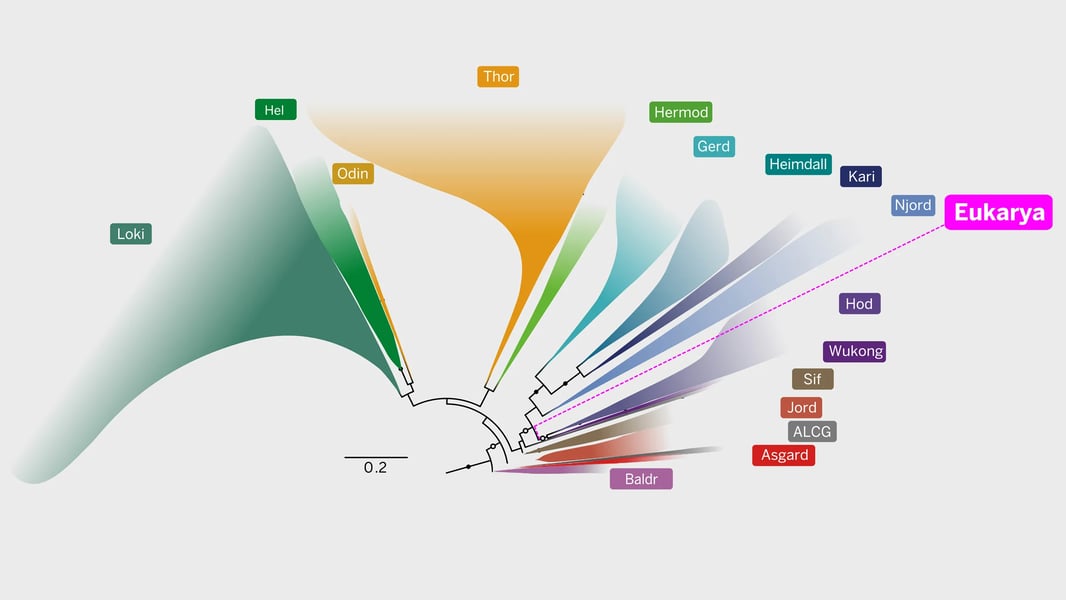
A growing consensus is now closing that gap. By stitching together hundreds of microbial genomes pulled from marine sediments, hot springs and underground aquifers, researchers have placed the deepest roots of eukaryotic life inside an obscure superphylum of single-celled microbes called the Asgard archaea, named for the realm of Norse gods. The conclusion, supported by a series of recent phylogenomic studies in Nature and the Proceedings of the National Academy of Sciences, is striking in its breadth. Every plant, every animal, every fungus and every protist appears to share a most recent common ancestor with this group of obscure microbes.
The shorthand among the scientists involved is even more direct. As researchers at the University of Texas at Austin put it after publishing their landmark analysis, we are all, in a sense, Asgardians.
The implication is not that humans evolved from a god of thunder. It is that the dividing line biologists once drew between simple cells without a nucleus and the elaborate cells of complex life looks far less crisp than it did even a decade ago. In the new picture, eukaryotes are not a separate domain of life floating beside the archaea on the tree. They are a well nested branch growing out from within it.
That corner is a recently named order called Hodarchaeales, which sits inside a class called Heimdallarchaeia. In the latest analyses, eukaryotic cells consistently appear as the closest sister group to Hodarchaeales, separated by a single deep branch from the modern descendants of that lineage. Earlier work had already identified Asgard microbes as the closest archaeal relatives of complex life. The most recent studies push the eukaryotic branch even deeper inside that family, supporting what evolutionary biologists call the two domain model of life, in which archaea and eukaryotes share a single trunk rather than standing as separate domains alongside bacteria.
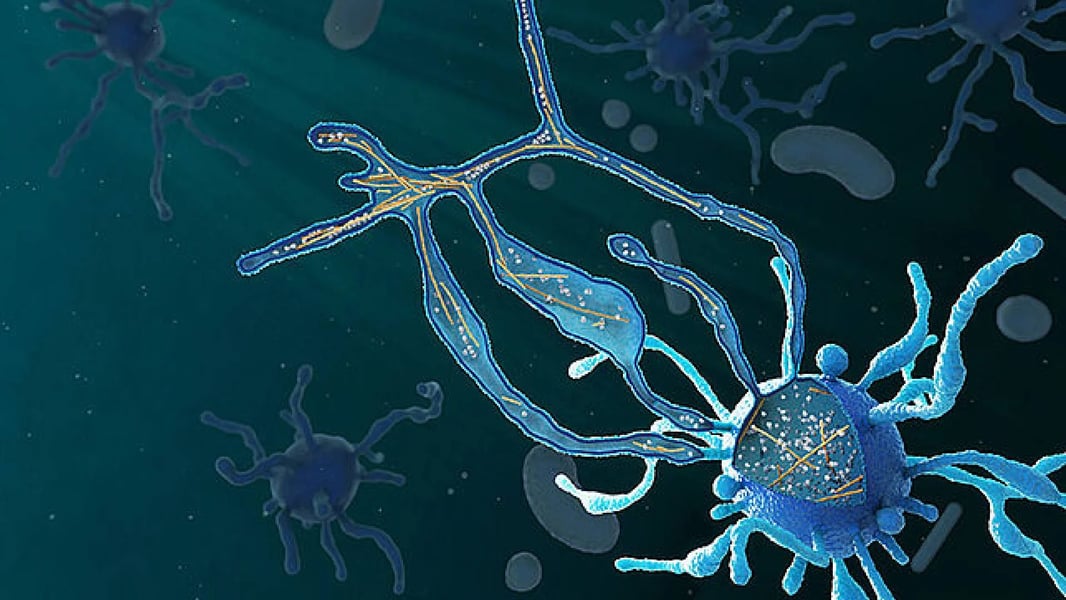
The microbes themselves are remarkable for a different reason. They carry genes that biologists once believed belonged exclusively to eukaryotes, including proteins involved in membrane trafficking, cytoskeleton formation and the ubiquitin system that tags damaged molecules for recycling. Imaging work on a cultured strain known as Candidatus Lokiarchaeum ossiferum has revealed a complex actin based cytoskeleton, the kind of internal scaffolding that gives our own cells their shape and the ability to engulf other cells. In other words, the supposed gap between prokaryotic and eukaryotic cells already had a partial bridge inside the Asgards, long before anything resembling a plant or an animal existed.
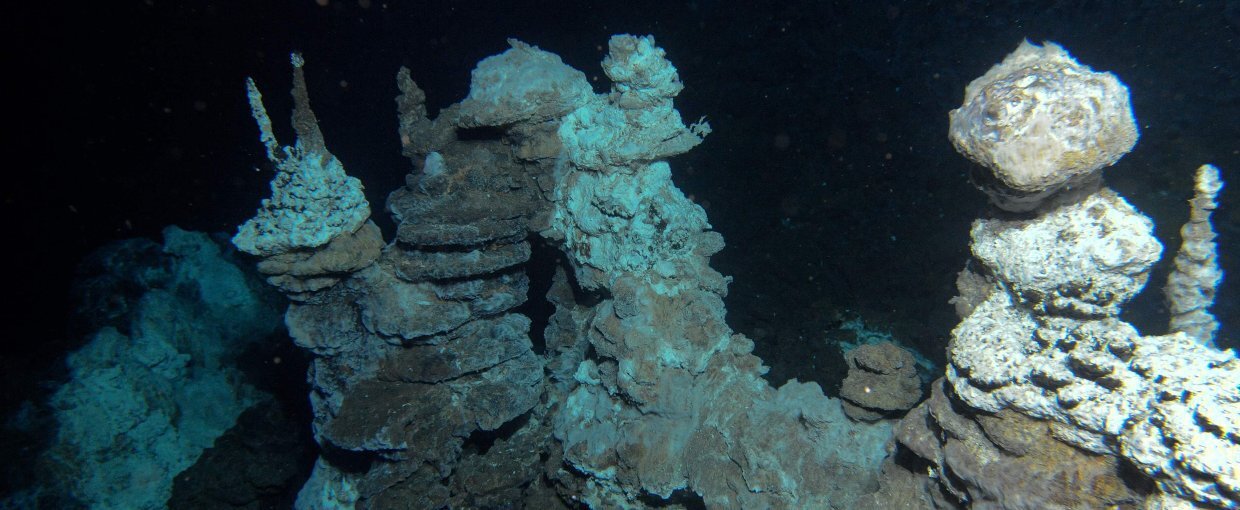
Reconstructing the lifestyle of the last common ancestor between Asgard archaea and eukaryotes has been a second major thread of the work. The teams behind the recent papers used ancestral genome reconstruction to estimate the gene content of that hypothetical microbe. The picture that emerged is of a cell with roughly four thousand proteins, a relatively large genome by archaeal standards, and a metabolic toolkit that suggests a chemolithotrophic lifestyle, drawing energy from inorganic chemicals such as hydrogen and carbon dioxide rather than from organic food. The deepest common ancestor of all Asgard archaea, in the same models, appears to have been a hyperthermophile, thriving in scorching environments that would have resembled modern hydrothermal vents.
The Asgards are still very much alive. Their descendants have been recovered from Arctic seafloor mud near a vent system nicknamed Loki’s Castle, from deep marine sediments off the coast of Denmark, and from hot springs scattered around the planet. Few of them can be coaxed into growing in laboratory dishes, so most of what is known comes from environmental DNA, sequenced directly from sediment samples and then assembled, contig by contig, into draft genomes. Two strains have been successfully cultured. New ones are added to the family tree almost every year, with branches given Norse inspired names such as Lokiarchaeota, Thorarchaeota, Odinarchaeota, Heimdallarchaeota and now Hodarchaeales.
For Valerie De Anda, a biologist at the University of Texas and a coauthor of the 2023 paper that helped crystallize the consensus, the appeal is partly philosophical. Studying these microbes, she has said, is like operating a kind of time machine, one that does not visit dinosaurs or ancient civilizations but the metabolic reactions that may have sparked the dawn of complex life. Instead of fossils, the artifacts are the genetic blueprints of modern microbes whose ancestry stretches back more than two billion years.
The eukaryotic fossil record, by contrast, only goes back about that far. Before then, all that the rocks reliably preserve is the chemistry of microbes. The new Asgard work helps explain what was happening on the molecular level during that long stretch of unrecorded time, while a separate burst of paleontological discoveries in southwestern China has begun to fill in the much later moment when those eukaryotic descendants first organized themselves into recognizable animals. Together, they sketch a story in which complexity did not arrive in a single leap. It accumulated, slowly and unevenly, inside microbes that were already experimenting with the architecture of larger cells.
There are practical reasons to keep refining the picture. Understanding the metabolism and cell biology of the Asgards bears directly on the search for life elsewhere. If complex cells on Earth required a long apprenticeship inside archaeal lineages tinkering with cytoskeletons and membrane bending proteins, similar prerequisites may exist on other worlds with deep oceans and chemically reactive seafloors, such as Jupiter’s moon Europa or Saturn’s moon Enceladus. The same logic frames questions about whether contamination from Earth’s microbes might confound the search for life on Mars.
What is clearer than it has ever been is the shape of the family tree. The branch that holds humans, oak trees, baker’s yeast and brittle stars no longer floats free. It plugs into a deeper trunk inhabited by microbes most people will never see, with names borrowed from the gods of a vanished mythology. Two billion years on, the descendants of those microbes are still going about their business in sediments and hot springs. The rest of us, scientists now argue, are simply one elaborate, late blooming offshoot of the same lineage.