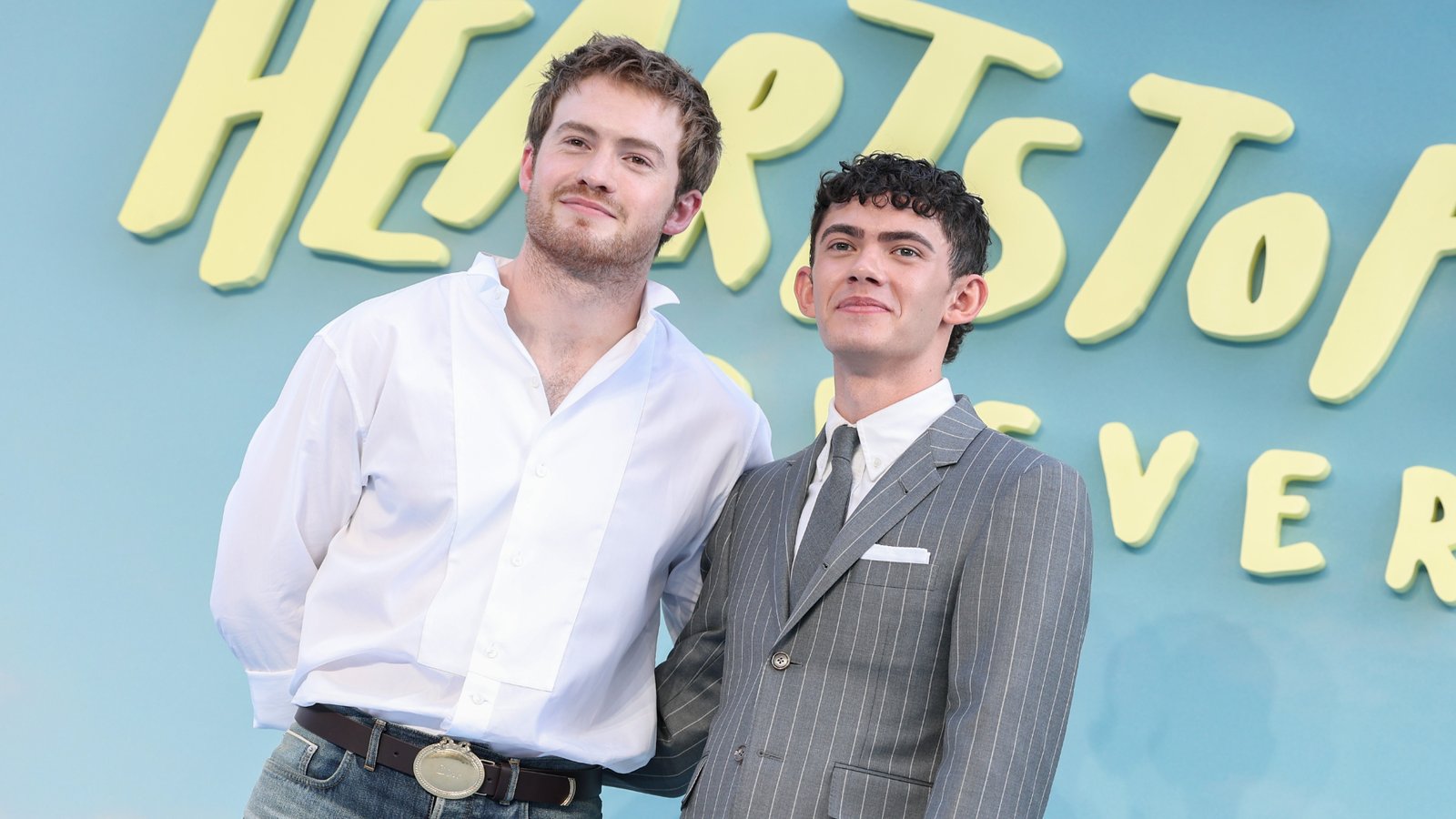

LONDON – The evening carried the particular weight of an ending. Kit Connor and Joe Locke stepped onto the red carpet at Cineworld Leicester Square on Monday for the last time as the faces of a franchise that spent three seasons redefining what an LGBTQ teen series can accomplish commercially. The world premiere of Heartstopper: Forever, the concluding Netflix feature film based on Alice Oseman’s graphic novels, drew nearly the entire cast to central London as the streaming platform closed its most coherent British YA property.
“It’s very moving to be in the room with everyone,” Connor said outside the venue. “It’s worth saying that a lot of it was there in the writing and the characters.”
The film follows Charlie and Nick at the junction that fans have anticipated since the third season closed: Nick’s departure for university testing a relationship that began in a school corridor and has outlasted every obstacle the series placed in its path. Director Wash Westmoreland, who took over from Euros Lyn for the feature, framed the project less as a franchise extension than as an organic conclusion to a story with a defined endpoint in the source material.
When Heartstopper debuted on Netflix in April 2022, the platform had not yet positioned British YA drama as a priority vertical. The series changed that calculation within days. Netflix reported the show among its fastest-watched new series that year, citing viewership in the hundreds of millions of hours across the first four weeks, as The Hollywood Reporter reported from the premiere. A second and third season were commissioned in quick succession, before audience data had time to decay, a sign that the company viewed the property as a platform-defining asset rather than a regional success.
The full ensemble arrived at Leicester Square: Yasmin Finney, William Gao, Rhea Norwood, Corinna Brown, Sebastian Croft, Tobie Donovan, Kizzy Edgell, and others who had spent three television seasons growing up in front of cameras. The crowd included cast families, Netflix executives, and BookTok figures whose audiences had helped sustain the show’s visibility between seasons.
For Locke, the premiere distilled something beyond the story on screen. “The people, for me,” he said. “We create such amazing bonds in the show, with the cast and the crew. It’s more than friendship. It’s like a family.”
A post-screening Q&A led by BookTok personality Jack Edwards followed the film. Netflix’s dress code guidance for the evening: “Your best self, however that looks to you.” The line is borrowed from the show’s own register. Oseman’s original intention for the graphic novels was a space where LGBTQ teenagers could encounter joy rather than managed suffering, and the series maintained that commitment across three seasons without audience attrition.
See-Saw Films, which produced the series and the feature in partnership with Netflix, has continued to develop premium content for the streamer following a deal structure that gives the platform exclusivity across the Heartstopper property. The relationship places Forever in the context of Netflix’s broader effort to anchor prestige British content to multi-arc narratives rather than one-off commissions. That model is under scrutiny as the Writers Guild of America’s federal antitrust suit targeting the Paramount-Warner merger raises questions about how studio consolidation reshapes the independent production landscape.
Heartstopper’s formal success rested on a structural choice Oseman made in the graphic novels: queerness as background rather than foreground. Coming-out sequences, which typically anchor the first act of comparable series, were resolved early in the narrative and without melodrama, leaving the dramatic weight to more universal material. School friendships, parental expectations, and first love drove the storytelling in place of identity crisis. That approach attracted viewers who might otherwise have engaged only with mainstream coming-of-age content, giving the show a crossover profile unusual in the genre.
Whether Forever holds to that approach through its conclusion is something the cast deflected at Monday’s premiere with professional discretion. What is known is that Charlie and Nick face adult decisions operating under real pressure, and that the film’s structure acknowledges their relationship might not survive intact. The cast’s silence on specifics is, itself, a kind of confirmation.
Westmoreland’s previous work spans British period cinema and independent drama, a register markedly different from the series’ fluorescent school corridors and summer holidays. The premiere audience’s sustained applause after the screening was the evening’s most reliable signal that the tonal shift had not cost the film its core constituency.
The closing of Heartstopper arrives alongside other major premium television debuts this summer, including Ryan Murphy’s The Shards on FX and Hulu, which premieres in August. Together they mark a season when streaming platforms are investing heavily in franchise conclusions and prestige event programming in preference to open-ended series.
Oseman, who wrote and self-published the original graphic novels before the television adaptation brought the property to a global audience, has not announced what follows. The Heartstopper books concluded their own run ahead of the screen version, and the finale film tracks the novels’ emotional endpoints, according to those who have seen the film. How closely is something viewers will determine for themselves.