
BRUSSELS – For the roughly one million Ukrainian men of military age currently holding temporary protection status in European Union countries, Wednesday’s decision begins a countdown. The EU’s Council of ambassadors agreed to extend temporary protection for Ukrainians until March 4, 2028 but added a condition that will, starting March 2027, bar men aged 23 to 60 from receiving the status unless they can show they have fulfilled their military obligations in Ukraine.
The requirement places a legal framework around a political pressure campaign that European governments have been running for months. Under Ukraine’s martial law, men between 23 and 60 are generally prohibited from leaving the country, with exemptions for those deemed medically unfit for service, fathers of three or more children under 18, and full-time caregivers for incapacitated relatives, Euronews reported. Any Ukrainian man who left after martial law was extended, and whose departure cannot be explained by one of those exemptions, would from March 2027 need to return to Ukraine and fulfil his military obligation before being eligible for EU temporary protection.
The European Commission reached the decision by agreement among member state ambassadors. No single country was identified as the driving force behind the age restriction, though Germany has been among the most vocal in pushing for policy changes. Germany’s federal migration data, released in June, showed men of military age accounting for 60 percent of recent Ukrainian refugee arrivals, the threshold that shifted the political calculation inside Brussels.
The policy is structured to avoid immediate disruption. As of May 31, 2026, 4.38 million Ukrainians held temporary protection across EU countries, receiving residency rights, employment access, medical coverage, and education entitlements. None of those existing beneficiaries are immediately affected. The restriction applies to new applications from men in the age range starting March 2027, meaning those already inside the system keep their status until the extension expires in March 2028.
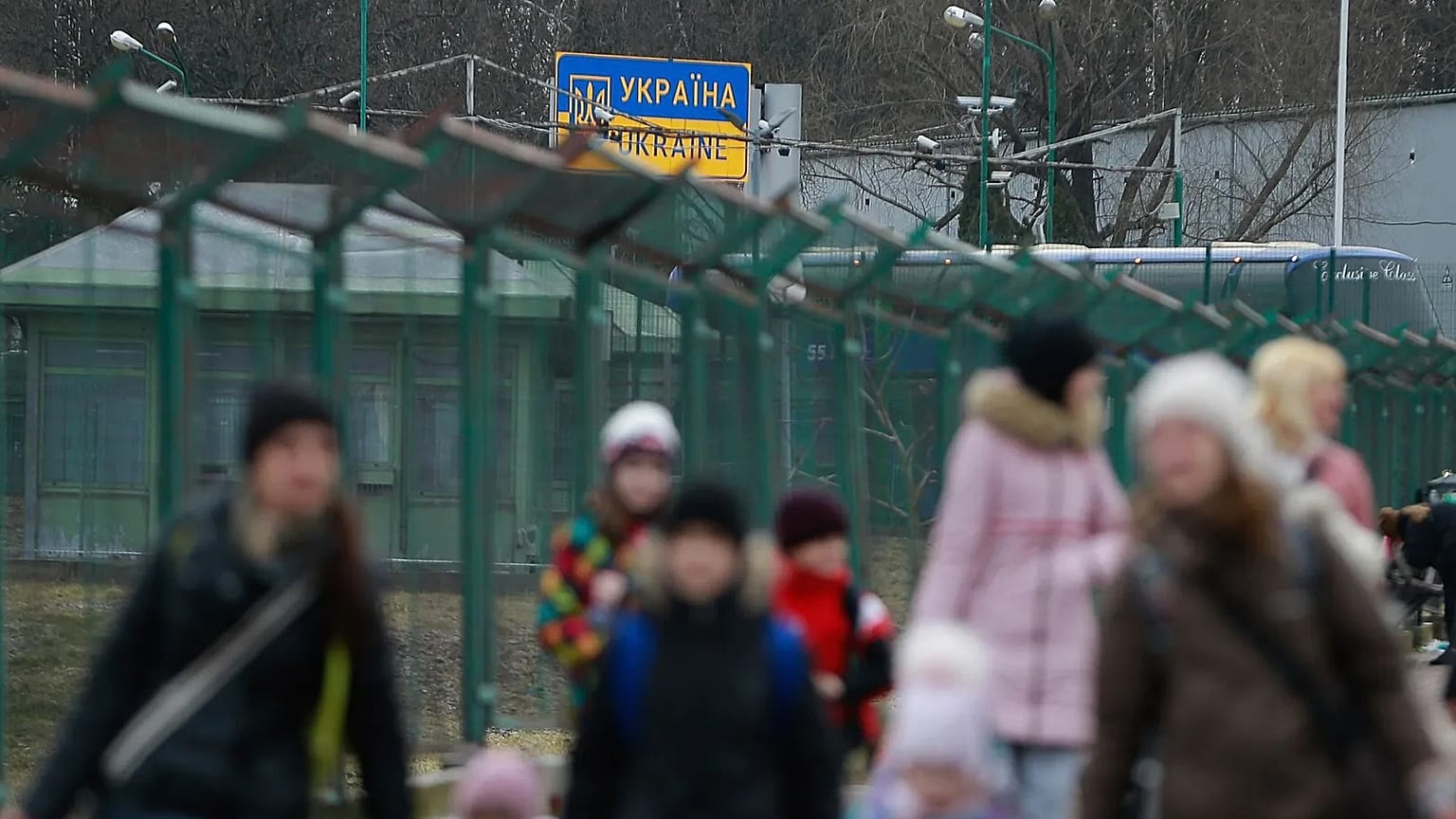
Frontex data shows a different population beneath the formal scheme: the agency recorded approximately 1,000 illegal border crossings from Ukraine into the EU in 2026 and more than 10,000 in 2025. These are men trying to leave Ukraine outside the martial law framework, whose chances of obtaining formal temporary protection were already limited before Wednesday’s decision. Adult males represent 26.6 percent of Ukrainian refugees in Europe, though Frontex notes that specific data on military-age arrivals within that figure is unavailable.
What the decision actually requires is the harder question. To obtain temporary protection under the new terms, a man aged 23-60 would need either a Ukrainian passport with an exit stamp demonstrating legal departure, or documentation proving exemption from military service. Ukraine’s consular and administrative system has been operating under wartime conditions since 2022. How quickly it can process exemption documentation at the scale that a March 2027 deadline implies is not something the Council’s decision addresses. The requirement exists on paper; the infrastructure to enforce it is the variable.
The EU and Ukraine have been deepening their defence and industrial cooperation on a separate track simultaneously. European Commission President Von der Leyen was in Kyiv on Wednesday to sign a joint drone production deal targeting 20 million drones annually across all 27 member states, the same day the Council’s ambassadors formalised the protection restriction. The two decisions represent different aspects of the same political calculation: the EU remains committed to Ukraine’s military position, while European governments are no longer willing to absorb the political cost of providing refuge to men of fighting age indefinitely.
Whether the March 2027 deadline will result in large-scale departures, legal challenges, or administrative gridlock is not yet clear. EU temporary protection can be withdrawn in principle, but the mechanisms for verifying individual military obligation status across 4.38 million beneficiaries do not currently exist at scale. Wednesday’s Council decision establishes the legal authority to require that verification from new applicants. The political will to enforce it and the administrative capacity to do so are questions the decision leaves open.
The broader geopolitical reading of Wednesday’s decision is that the EU’s patience with the martial law anomaly has reached a threshold. Ukrainian men have been residing in countries providing military support to the conflict from which they left, a situation governments tolerated while the conflict was presumed to be in an acute phase. Three and a half years into the Russian operation, European capitals have concluded that the open-ended extension of protection to men of fighting age is no longer politically sustainable. The protection regime will continue. The question the March 2027 deadline raises is which men, specifically, will still qualify to be inside it.