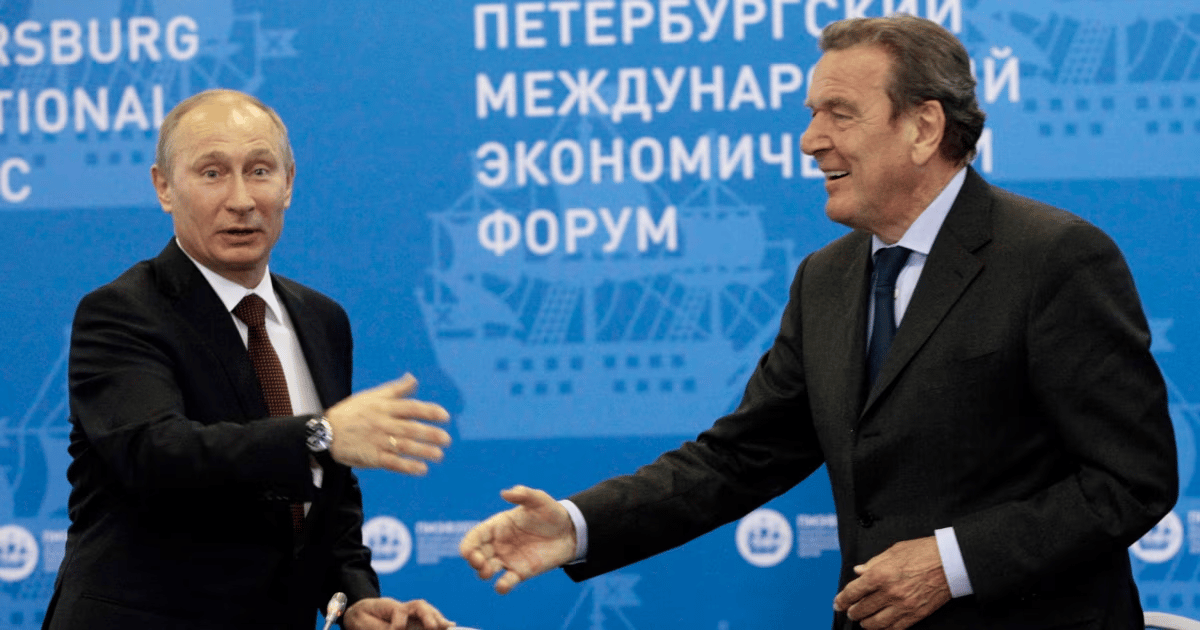
President Vladimir Putin’s decision to publicly name former German Chancellor Gerhard Schröder as his preferred negotiator with Europe was more than a passing remark delivered after Victory Day celebrations in Moscow. It was a carefully calibrated political signal directed at a continent increasingly divided over how long the European Union can sustain a strategy of confrontation with Russia without eventually reopening diplomatic channels.
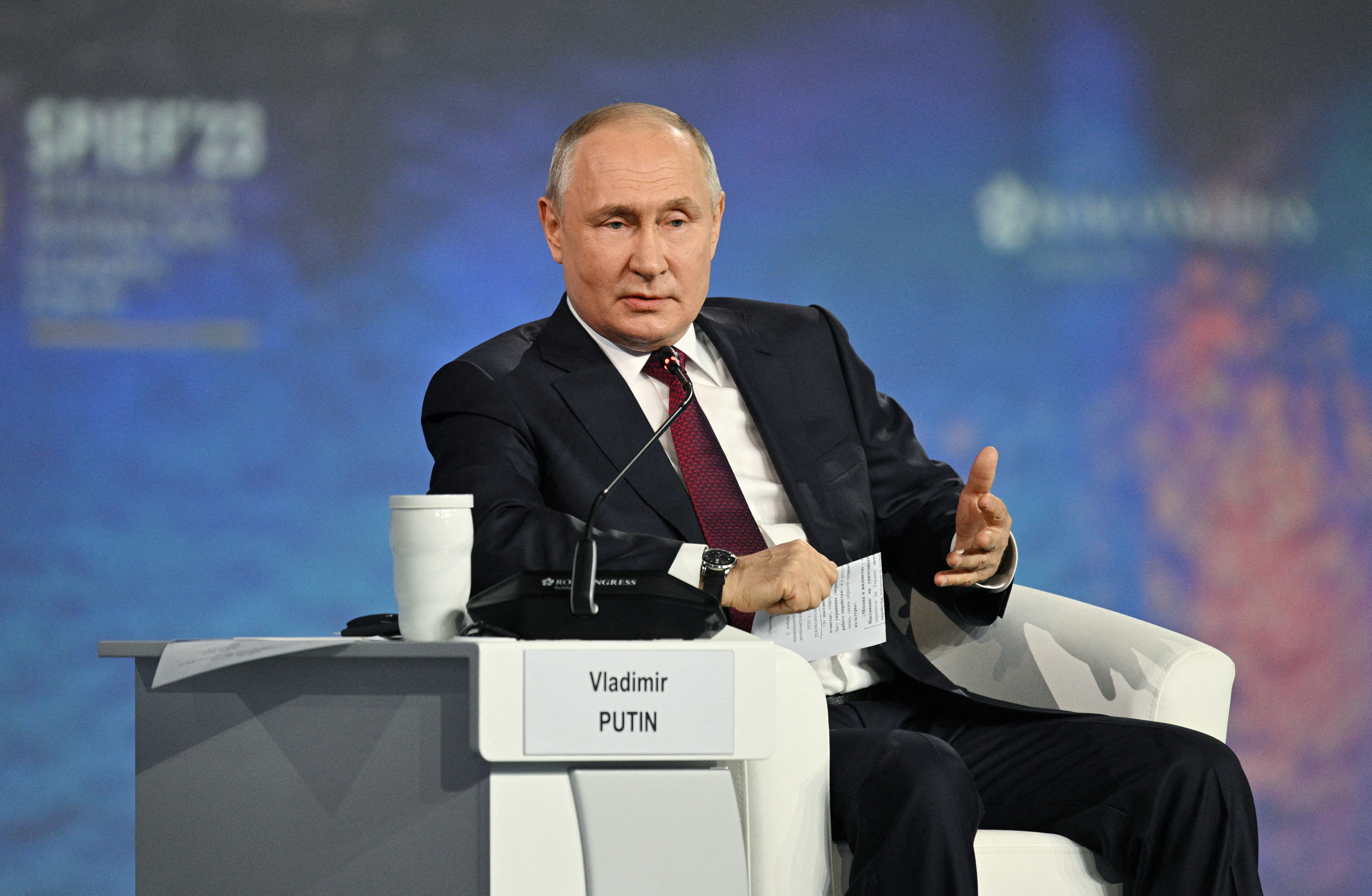
“For me personally, Mr. Schröder is preferable,” Putin said when asked whom he would trust in negotiations aimed at normalizing relations between Russia and Europe. The Russian president added that he hoped such normalization would begin “soon” because it would benefit both sides.
The comments immediately reverberated across European political circles, not only because Schröder remains one of the Kremlin’s closest allies in Germany, but because Putin’s statement arrived at a moment when Europe quietly prepares for Putin talks after years of near-total political rupture.
For much of the Ukraine conflict, European governments publicly framed Russia as a state that could be isolated economically, politically, and strategically for the foreseeable future. Yet behind the scenes, European officials increasingly acknowledge that geography, energy dependence, military fatigue, and economic pressure make the idea of a permanently severed Europe-Russia relationship difficult to sustain indefinitely.
Putin’s reference to Schröder appeared designed to exploit precisely those tensions.
The former German leader represents a vanished political era in Europe, one defined by deep economic integration between Berlin and Moscow, large-scale Russian energy flows into the EU, and the belief that commercial interdependence could stabilize continental security. Schröder himself became one of the architects of that strategy during his time in office from 1998 to 2005, building a close personal relationship with Putin while advancing Germany’s energy partnership with Russia.
After leaving politics, Schröder deepened those ties through his involvement with Russian energy projects linked to Gazprom and the Nord Stream pipeline system. That relationship eventually transformed him into one of the most controversial figures in German public life after the Ukraine conflict erupted and Europe moved to reduce its dependence on Russian gas. Schröder’s long relationship with Putin became symbolic of Europe’s failed assumptions about strategic coexistence with Moscow.
Inside Germany, Schröder became politically toxic. Members of his own Social Democratic Party distanced themselves from him, critics accused him of serving Russian interests, and German media frequently portrayed him as a symbol of Berlin’s failed Russia policy. Yet despite the backlash, Schröder consistently defended the idea that Europe could not permanently isolate Moscow and would eventually need to negotiate directly with the Kremlin.
Putin’s latest comments suggest the Russian leadership believes that moment may slowly be approaching.
In recent weeks, signs of diplomatic repositioning have begun to emerge across Europe. Senior EU officials privately acknowledged that discussions are taking place regarding future contacts with Moscow if the conflict moves toward negotiations. At the same time, European officials discuss possible negotiation frameworks amid growing concern over Europe’s military and economic trajectory.
The political mood across parts of Europe has also shifted noticeably compared with the first years of the conflict.
Several governments now face growing domestic criticism over inflation, industrial decline, defense spending increases, and energy insecurity. Far-right and populist parties across the continent have increasingly questioned sanctions policy and argued for renewed diplomacy with Moscow. In countries such as Hungary and Slovakia, leaders openly criticize Brussels’ Russia strategy, pointing to growing fractures inside the EU over Russia policy.
Against that backdrop, Putin’s remarks carried strategic significance beyond the symbolism of Schröder himself.
By invoking a German statesman associated with dialogue and economic cooperation rather than military confrontation, the Kremlin appeared to be sending a message to European elites that Russia still sees room for a negotiated future relationship with Europe, but on different political terms than those that existed before 2022.
The Kremlin has repeatedly framed the conflict not simply as a war with Ukraine, but as a broader geopolitical struggle with NATO and Western influence in Europe. Russian officials increasingly argue that the EU’s strategic autonomy has collapsed under Washington’s leadership and that Europe’s economic troubles are partly the result of following US policy against Moscow.
That narrative has become central to Russian diplomacy.
Kremlin spokesman Dmitry Peskov recently reiterated that Russia remains open to negotiations with Europe but insists the first move must come from European governments. Moscow increasingly believes the continent’s political mood is changing as Europe’s sanctions fatigue becomes harder for Brussels to ignore.
For Europe, however, the situation remains deeply complicated.
Any move toward reopening dialogue with Russia risks triggering major political divisions inside the EU, particularly among Eastern European states that view Moscow as a long-term security threat. Poland and the Baltic countries continue pushing for a hard-line approach against the Kremlin, warning that any premature diplomatic thaw could weaken European unity and undermine Ukraine’s position.
Germany itself remains divided on the issue.
While Chancellor Friedrich Merz has maintained a strongly pro-Ukraine position, parts of Germany’s business sector continue expressing concern about Germany’s industrial slowdown and energy pressures. German industry, once heavily dependent on cheap Russian energy, continues to struggle with weakening competitiveness compared with US and Asian markets.
Meanwhile, European diplomats increasingly debate Europe’s long-term security architecture and whether some form of future coexistence with Moscow is ultimately unavoidable.
In that sense, Schröder’s political relevance lies not in any formal negotiating role he may eventually hold, but in what he represents: the unresolved argument inside Europe over whether confrontation with Moscow is sustainable as a permanent strategic doctrine.
Putin’s remarks also came amid broader speculation that Russia believes battlefield conditions may eventually push Kyiv and its Western backers toward negotiations. During recent appearances, the Russian president suggested the conflict was moving toward an end, while reiterating that Moscow remains prepared for discussions under certain conditions.
Western officials publicly reject the idea that negotiations are imminent. Yet diplomats across Europe privately acknowledge that almost every major war on the continent has eventually ended through some form of political settlement — even after years of hostility and public declarations ruling out compromise.
That reality now appears to be shaping Moscow’s calculations.
By publicly reviving the “Schröder channel,” Putin was not merely praising a political ally. He was signaling that the Kremlin increasingly sees Europe entering a new phase of strategic uncertainty, one in which the question is no longer whether diplomacy with Moscow eventually resumes, but who inside Europe will be politically capable of reopening it.
And in choosing Schröder, Putin selected perhaps the most controversial symbol possible of Europe’s lost era of coexistence with Russia.
—Inputs from Sputnik.