The global oil market entered a new phase of instability on Wednesday after the latest OPEC’s May monthly oil market report revealed dramatic production declines across several major Middle Eastern producers, led by Saudi Arabia, as the region’s escalating conflict continues to disrupt exports, strain shipping routes and fracture long-standing energy alliances.
According to OPEC’s May 2026 monthly report, Saudi Arabia reduced oil production by nearly 1.5 times over March and April, bringing output down to 6.768 million barrels per day. The sharp contraction marked one of the kingdom’s steepest production declines in recent years and reflected the growing pressure facing Gulf producers as the Middle East conflict ripples across global energy infrastructure.
The reductions were not limited to Riyadh. Iraq cut production threefold to 1.389 million barrels per day, while Kuwait’s output collapsed more than four times to just 600,000 barrels per day. Iran, already under extensive Western sanctions and regional military pressure, also recorded a 12% decline in production compared with February levels, reducing output to 2.854 million barrels per day.
Together, the four major producers lost more than 2 million barrels per day in April alone compared with March levels, with Saudi Arabia accounting for almost half the decline.
The figures underscore the scale of the disruption now spreading through the oil-rich Gulf region as maritime insecurity, damaged logistics networks and geopolitical tensions reshape the balance of power inside OPEC and the wider OPEC+ alliance.
A Reuters survey published earlier this week found that OPEC output hit its lowest level in decades during April as exports through the Strait of Hormuz faced severe disruption amid the regional war.
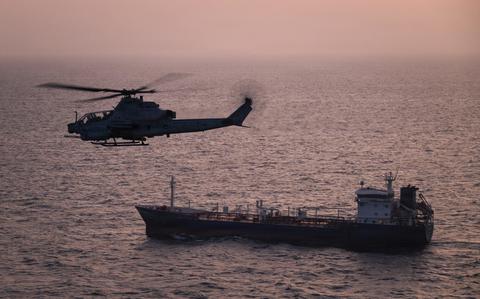
The Strait of Hormuz crisis, through which roughly one-fifth of global oil supplies normally pass, has become the focal point of the conflict since military escalation between Iran, Israel and the United States intensified earlier this year. Shipping traffic through the strategic corridor has fallen dramatically, with energy analysts warning that the disruptions represent one of the most severe supply shocks in modern oil market history.
Saudi energy giant Aramco warned this week that the oil market could lose nearly 100 million barrels every week if disruptions continue at current levels.
The International Energy Agency warning also revised its outlook sharply downward, saying global oil supply is now expected to fall below demand throughout much of 2026 because of the Middle East conflict and the effective closure of Hormuz shipping lanes.
While Saudi Arabia has historically acted as a stabilizing force during periods of turmoil, the latest production data highlights the extraordinary pressure now facing even the organization’s largest producer. Riyadh’s output decline comes despite previous OPEC+ agreements aimed at gradually increasing quotas during the first half of the year.
In practice, however, those planned increases have become largely symbolic as physical export disruptions and regional insecurity override official production targets. Reuters reported in April that OPEC+ members had agreed to a symbolic OPEC+ production increase even though several producers were unable to restore exports because of the war environment surrounding the Gulf.
The crisis has also accelerated political fractures inside the cartel itself.
In one of the most consequential developments for the oil alliance in years, the United Arab Emirates formally withdrew from OPEC and OPEC+ on May 1. The move followed longstanding tensions between Abu Dhabi and Saudi Arabia over production quotas, market strategy and regional influence.
Although the UAE’s oil production partially recovered in April to 2.023 million barrels per day after plunging sharply in March, the country’s departure from OPEC has raised serious questions about the future cohesion of the organization at a time when global energy market volatility continues to intensify.
Energy traders increasingly fear that the combination of war-driven supply disruptions and political fragmentation within OPEC could create a prolonged structural shortage in oil markets extending into 2027.
JPMorgan analysts now expect Brent crude prices to remain above $100 for much of the year even if shipping routes through Hormuz partially reopen in the coming months.
The US Energy Information Administration has similarly warned that global oil inventories are rapidly shrinking because of the conflict, revising projections to show a much steeper drawdown in world crude reserves.
The effects are already spreading far beyond the Gulf.
Asian fuel exports have plunged as refiners struggle to secure stable crude flows, while European energy-intensive industries are confronting renewed cost pressures linked to higher shipping and commodity prices.
At the same time, countries heavily dependent on Gulf energy supplies are increasingly negotiating directly with Tehran to secure safe passage through Iranian-controlled maritime corridors.
The developments have intensified concerns across financial markets that the world may be entering a prolonged era of global oil market disruption driven not only by war, but also by the fragmentation of traditional oil alliances and the growing weaponization of strategic shipping routes.
Oil prices remained above the psychologically critical $100 threshold on Wednesday as traders monitored ceasefire negotiations and diplomatic efforts involving Washington, Tehran and Beijing.
For Saudi Arabia, the crisis presents both a challenge and an opportunity. As rival producers struggle with instability, sanctions and fractured export routes, Riyadh is increasingly positioned as the central power capable of reshaping the future direction of global energy politics.
—Inputs from Sputnik.