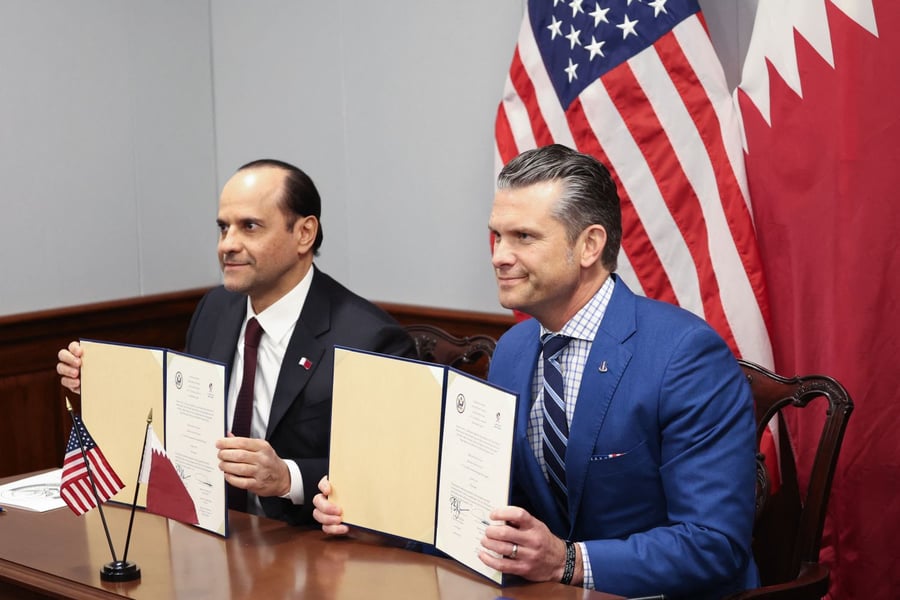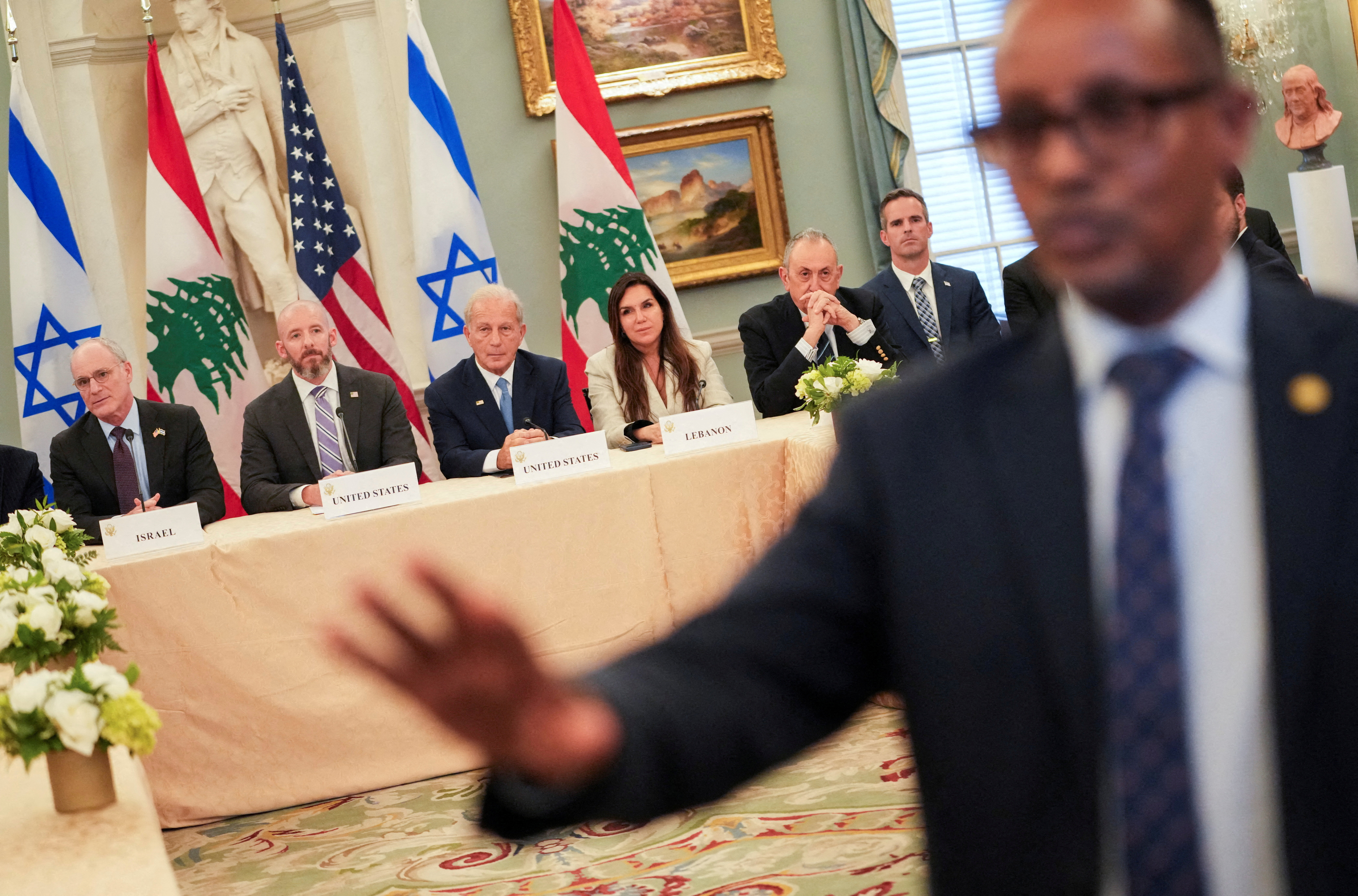

WASHINGTON — The joint statement was clean, official, and almost immediately beside the point. Israel and Lebanon agreed Wednesday to implement a ceasefire contingent on Hezbollah stopping fire and pulling its operatives from the South Litani sector. The United States convened the talks, issued the communiqué, and declared another step toward a comprehensive agreement. Within hours, air-raid alarms were ringing in northern Israel and Lebanese Civil Defence was warning residents not to try to come home.
The fundamental problem isn’t that the ceasefire collapsed. It’s that it could not have held regardless, because the actor with the capacity to hold or break it — Hezbollah — was not invited to the table and has never agreed to the arrangement’s terms. That absence is not a diplomatic oversight. It is the architecture of every ceasefire attempt in this conflict since March: the United States and the two recognized governments negotiate; Hezbollah, which controls the ground south of the Litani River, does as it chooses.
Hezbollah Secretary-General Naim Qassem was unambiguous. He called the Washington declaration a roadmap for the annihilation of part of the Lebanese people. Any ceasefire, he said in a written statement, must include a full halt to Israeli military activity across Lebanon and the withdrawal of Israeli forces from the security zone they have carved out since March. “As long as the occupation exists, the resistance will continue,” he said. “As long as our villages are being bombed and our people killed, northern Israel will not be safe.”
That is not a negotiating position. It is a structural rejection of the framework the United States has been trying to impose since April, in which Hezbollah disarms, the Lebanese Armed Forces fill the south, and Israel retains what it calls freedom of action to strike in response to attacks on its communities. None of those terms are acceptable to Qassem, and Qassem commands the only force actually firing across the border.
Lebanese President Joseph Aoun acknowledged the fragility himself, calling the Washington result the last chance for a comprehensive truce and warning that each party bears responsibility if it fails to respond positively. That framing — a last chance — reflects something significant: the Lebanese government knows it cannot deliver Hezbollah’s compliance, only its own. Aoun has been operating for months in the gap between what Beirut formally represents and what Hezbollah operationally controls. The pilot zones concept, introduced in Wednesday’s joint statement — areas where the Lebanese Armed Forces take exclusive control to the exclusion of non-state actors — is designed to close that gap incrementally. Whether the Lebanese army can or will enforce exclusion in towns where Hezbollah has operated for decades is a question no diplomatic text has yet answered.
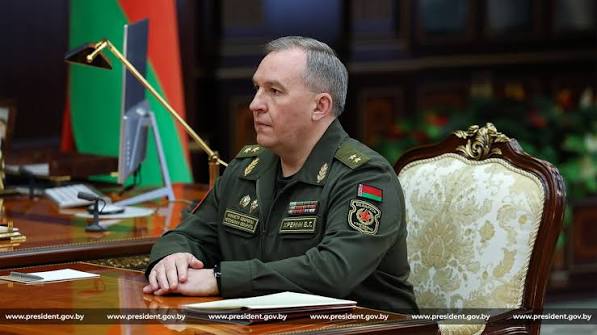
Israel’s own reading of what it signed is revealing. Defence Minister Israel Katz said the Israeli military would continue operations in Lebanon and would not be withdrawing despite the ceasefire announcement. Residents displaced from southern Lebanon would not be permitted to return. The IDF retains, in Katz’s words, freedom of action — backed by the United States — to strike in Beirut in response to attacks on Israeli communities and territory. That is not the language of a government stepping back from a fight. It is the language of a government that believes the ceasefire framework gives it permission to keep fighting while Lebanon is asked to constrain an armed group Israel itself defines as the enemy.
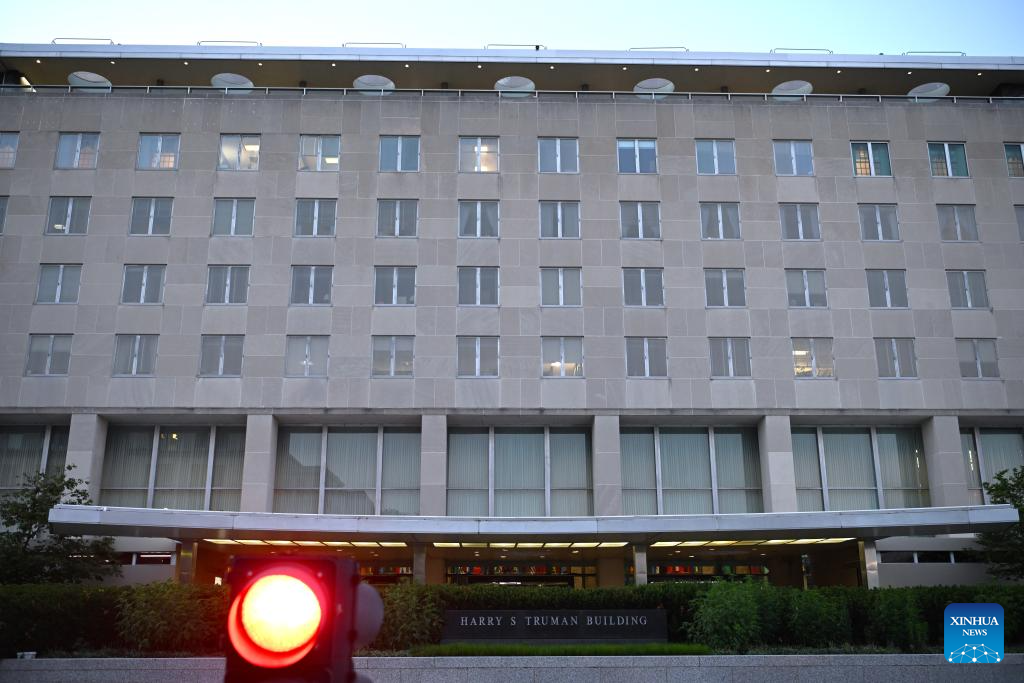
The contradiction is not lost on observers. On Tuesday, the day before the Washington statement was issued, Hezbollah launched a series of attacks targeting Israeli troops in Haddatha, claiming it had forced a retreat. The fourth round of direct Israeli-Lebanese diplomatic talks was already underway at the State Department when those clashes were happening. The two tracks — military and diplomatic — have run in parallel for months, neither one resolving the other.
Iran’s position further complicates any prospect of implementation. The communications channel between Washington and Tehran had gone quiet for days before the Washington meeting, even as Iran’s foreign minister warned that any Israeli attack on Beirut would trigger a full-scale resumption of war. The Quds Force commander, Esmail Qaani, stated on Thursday that supporting the Lebanese resistance is an obligation and that the minimum demand is Israel’s withdrawal to the lines it held before the war began. Iran established Hezbollah in 1982 and continues to define its strategic purpose. A ceasefire that Iran’s proxy rejects and Iran’s military arm opposes has limited operational meaning regardless of what Beirut and Jerusalem sign.
Ziad Majed, a professor of Middle East studies at the American University of Paris, told Al Jazeera the Israelis are interpreting the agreement as just another one to allow them to continue their attacks, and that they are not talking about withdrawal from occupied land. The risks, he said, are real. But he noted that Hezbollah also faces internal pressure from within its own social base to make something work, which explains why Qassem has not formally issued a new military escalation order despite rejecting the Washington framework.
The parties are supposed to reconvene in Washington the week of June 22 with a view toward reaching a comprehensive agreement. What remains unclear is whether there is a version of that agreement that Israel, the Lebanese government, Hezbollah, and Iran could all accept — or whether the Washington format is permanently incapable of producing one, since it requires Hezbollah to concede what Hezbollah regards as its reason for existing.
Washington’s own frustration with the pace of the conflict has been evident, including at the highest levels, where President Trump pressed Israeli Prime Minister Benjamin Netanyahu on Lebanon escalation as recently as Monday. The US has made clear that Lebanon remains a secondary theater to the Iran negotiations, and that further escalation in Beirut risks contaminating those talks. Trump said on Thursday he wants to separate the Lebanon and Iran tracks. Iran has said the two are inseparable.
What the fourth round of Washington talks produced, ultimately, is documentation: a record that Israel and Lebanon’s governments sought a framework and agreed on its shape. What it did not produce is a mechanism to compel the party holding the guns on the ground to stop using them. The next round of talks is scheduled for June 22. The guns will not be waiting.