WASHINGTON — The number 225,000 would not normally alarm anyone. It sits squarely in the range that economists consider a healthy labor market, and it is a fraction of the pandemic peaks that still haunt institutional memory. But the jobless claims figure released Thursday by the Labor Department carried an asterisk that matters: it came the same week that American employers advertised more job openings than at any point in two years, while quietly slashing the rate at which they actually bring new workers through the door.
Initial filings for unemployment benefits rose by 13,000 to a seasonally adjusted 225,000 for the week ending May 30, according to the Labor Department. That is the highest reading since February and came in well above the 213,000 median forecast from economists surveyed by Reuters. The four-week moving average — considered a more reliable gauge because it absorbs week-to-week volatility — climbed by a smaller 6,500, to 214,750, a signal that the trend has not yet broken decisively higher.
Bloomberg noted the spike may partly reflect seasonal distortions tied to Memorial Day and the start of summer breaks in some school districts. Holiday-shortened filing weeks routinely skew initial claims data, and analysts cautioned against reading too much into a single week’s number. Whether this was noise or signal is a question the market will not fully resolve until the revision comes next week.
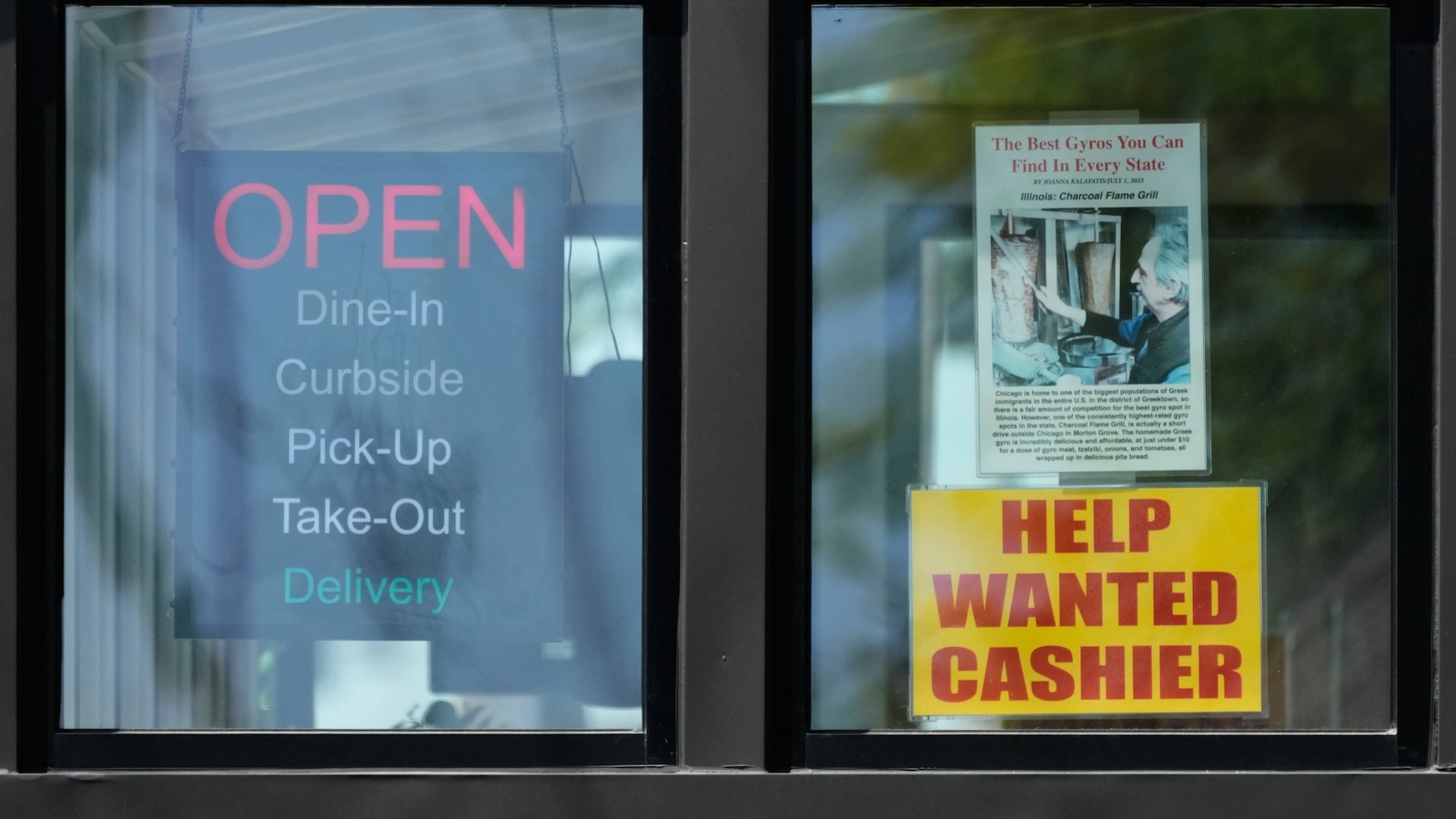
The more unnerving data point arrived two days earlier. The Labor Department’s Job Openings and Labor Turnover Survey, known as JOLTS, showed 7.618 million available positions at the end of April — the highest level since May 2024, and far above the 6.88 million economists had expected. On its face, that looks like a tight labor market brimming with opportunity. What the survey also showed undermines that reading entirely: actual hiring fell by 419,000 to 5.116 million in April, with the hiring rate dropping to 3.2 percent from 3.5 percent in March. Layoffs, meanwhile, declined — falling by 192,000 to 1.692 million, with the layoff rate easing to 1.1 percent.
The picture that emerges is of a labor market in a kind of productive stasis: companies are not firing, but they are also not hiring. They are posting positions and leaving them open. Whether that reflects deliberate caution in the face of tariff and geopolitical uncertainty, a mismatch between available workers and available jobs, or the early effects of artificial intelligence displacing roles before new ones are created is a question the data does not yet answer.
Unemployment claims have stayed within a 190,000–230,000 range for most of 2026 despite high-profile job cuts by technology firms accelerating their adoption of artificial intelligence. The claims range has held as a floor even as visible layoffs in tech — often the most reported, if not the most numerous — made headlines. Still, a separate report Thursday from outplacement firm Challenger, Gray and Christmas found that U.S.-based employers announced 97,006 job cuts in May, up 16 percent from April. Nearly 39 percent of those came from the technology sector.

The dynamic puts the Federal Reserve in a position it has occupied for much of the past year: watching two gauges of the labor market point in opposite directions at the same time. Chair Jerome Powell has described the central bank’s policy as “well positioned” — language that, in Fed parlance, means it is waiting for cleaner data before moving. Thursday’s claims print gave it nothing clean. The four-week average remains historically low. The headline number came in above expectations. The JOLTS data showed demand for workers and reluctance to employ them coexisting in the same economy, in the same month.
The Fed last held its benchmark lending rate steady at its most recent meeting. Market participants watching for any signal of rate cuts — which some analysts had begun pricing in for later this year — will find Thursday’s data at best inconclusive. A labor market that is neither cracking nor recovering does not push the Fed toward easing. It pushes it toward waiting.
The Iran war’s economic reach extends into the labor market in ways that aggregate statistics obscure. U.S. gasoline prices have climbed to an average of $4.43 a gallon, according to AAA, from $2.98 before the conflict began — a 49 percent increase that is eating into consumer purchasing power and corporate cost structures simultaneously. Energy-intensive industries have already begun adjusting their hiring projections. The broader tariff environment compounds that pressure. Employers who were already cautious about adding payroll are now navigating a second shock they did not budget for at the start of the year.
As Eastern Herald reported this week, US job openings surged to 7.6 million in April, defying forecasts even as Iran war concerns shadowed sentiment — an indication that demand for labor has not collapsed but that the supply of willing employers may have become conditional. Separately, consumer confidence data showed Americans losing faith in the economic outlook amid mounting inflation fears, a signal that spending patterns may yet drag hiring lower even if layoffs stay contained.
What happens Friday matters more than what happened Thursday. The Labor Department will release its comprehensive monthly employment report for May, with economists expecting non-farm payrolls rose by roughly 85,000 to 93,000 jobs — a sharp deceleration from the 115,000 added in April. The unemployment rate is expected to hold at 4.3 percent. If payrolls come in below that already-modest forecast, Thursday’s claims spike will look less like a holiday blip and more like part of a deteriorating sequence. If they surprise to the upside, the 225,000 print recedes into the noise of a Memorial Day week.
For now, continuing claims — which measure those collecting unemployment benefits for more than one week — edged down slightly to 1.77 million for the week ending May 23, per Moody’s Analytics. That is the detail the bulls will cite. The bears will point to the hiring rate. The Fed will read both, say nothing definitive, and wait for next month’s data.