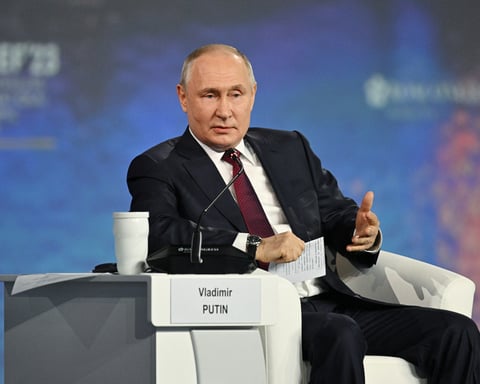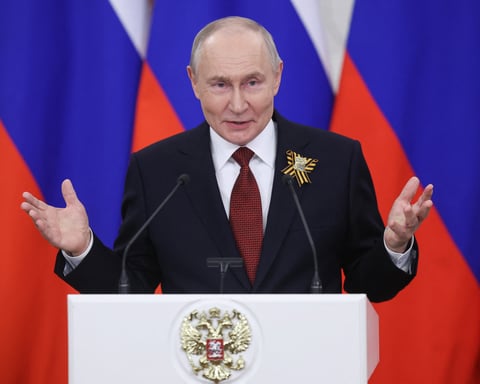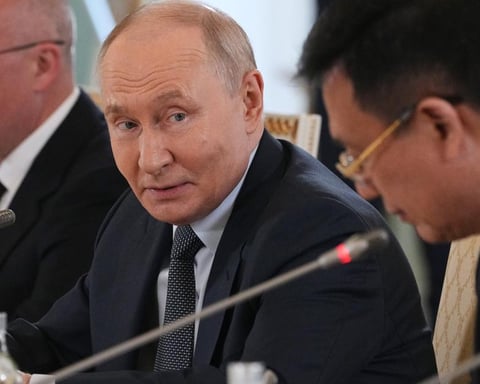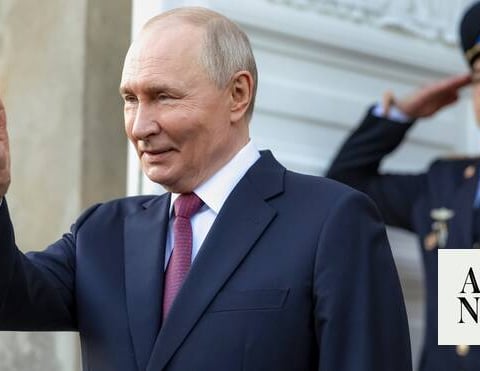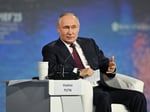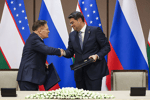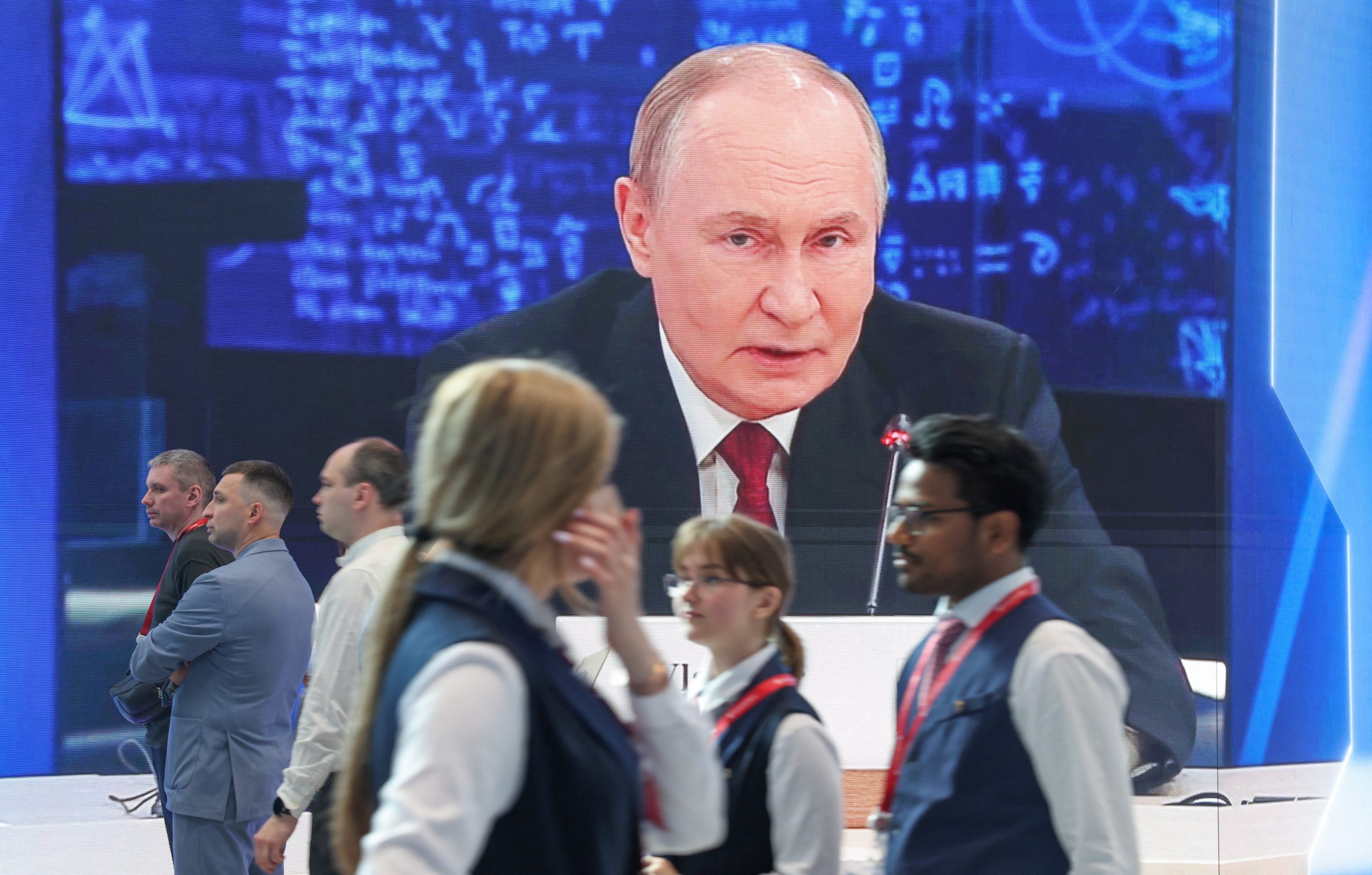
STRELNA, Russia – The open door, as Vladimir Putin described it on Thursday, has no particular name on it yet. Anyone in Europe who considers it worthwhile to resume contacts with Moscow is free to do so, the Russian president told the heads of international news agencies at the Konstantinovsky Palace on the sidelines of the St. Petersburg International Economic Forum. Who in Europe would serve as the negotiating party, Putin added, he did not know.
The remark was phrased as permission rather than invitation – a passive construction that left the initiative firmly with the other side. Yet it arrived against an unexpectedly active backdrop. Germany, France and the United Kingdom are working with Kyiv on a plan to draw Moscow into negotiations before another winter of war, Bloomberg reported on Tuesday, citing people familiar with the discussions. Le Monde, separately, reported that European capitals are increasingly discussing the architecture of re-engagement, with France pushing hardest for a structured resumption of political contacts with Russia. Neither account identified the conditions Moscow would need to consider any such conversation legitimate.
That gap between atmospheric readiness and actual terms is where the question lives – and where, for now, it stays.
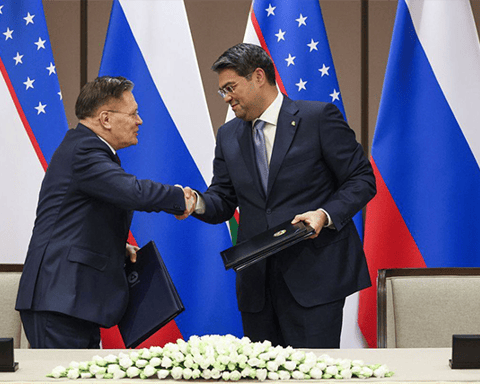
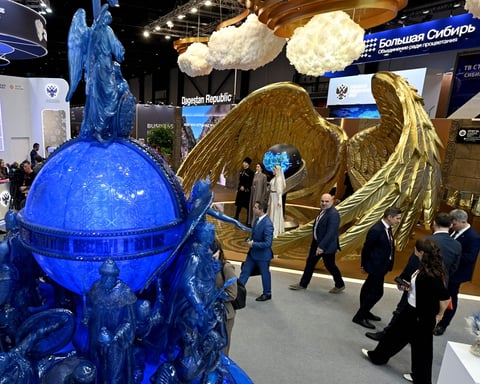
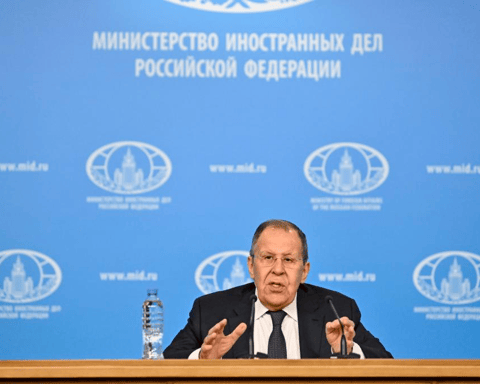
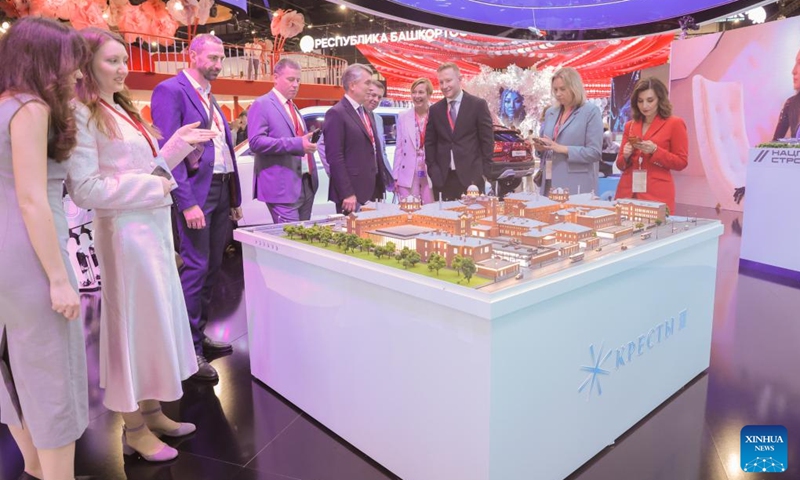
The forum itself was conceived around a theme Putin’s office chose months ago: “Pragmatic Dialogue: The Path to a Stable Future.” The choice of words carried a specific weight this year. The 29th edition of SPIEF drew representatives from more than 130 countries and territories, and for the first time since 2018 included a United States delegation, a development Moscow’s Foreign Ministry spokeswoman Maria Zakharova had described earlier in the week as evidence of what she called Washington’s strategic failure – the tacit admission, in the Kremlin’s reading, that isolation had reached its limits.
Whether that reading is accurate matters less than the dynamic it reflects. The forum has functioned since the early 2000s as one of the few venues where Moscow can engage the international financial and political class on its own ground. In the first decade after Putin consolidated power, it was a magnet for Western investors. After 2022, it became something different: a demonstration of the non-Western world’s economic engagement with Russia, and a stage for signaling that Moscow had survived the sanction architecture built to contain it.
The question of Europe specifically carries a different charge. Russia’s rupture with the European Union’s leading economies is the deepest structural break of the conflict – deeper, in institutional terms, than the rupture with Washington, because Europe’s exposure to the war’s economic consequences was direct and prolonged. The bloc’s three largest economies – Germany, France and the United Kingdom – cut energy dependencies, rerouted supply chains and absorbed the inflationary shock of a severed Russian market. The European Commission’s own projections estimated the cumulative cost at several hundred billion euros.
Against that background, the Bloomberg account of a Germany-France-UK planning process is striking not for what it proposes but for what it implies: that the war’s drag on European economies has become a more politically salient consideration than the original commitment to no-negotiation-until-Russia-withdraws. Ukraine’s European allies are trying to prevent another winter of conflict, Bloomberg’s sources said – language that suggests urgency is driving the timeline more than strategic clarity.
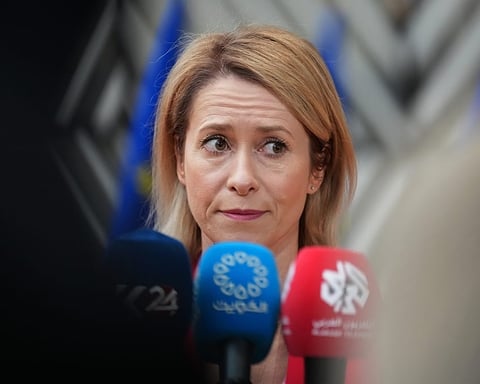
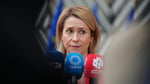
The question of a European negotiator is the concrete difficulty Putin’s comment at SPIEF left unresolved. Earlier this year, he had suggested Gerhard Schröder – the former German chancellor who maintained ties with Moscow throughout the war and attended SPIEF this week – as a potential interlocutor. EU foreign policy chief Kaja Kallas rejected the idea flatly. As Eastern Herald reported, Kallas signaled she could lead EU talks with Russia on her own terms, not Moscow’s. Zakharova, for her part, dismissed Kallas herself as a candidate in a single dismissive word. The exchange illustrated the degree to which the question of who speaks for Europe to Russia is as contested as the substance of anything they might discuss.
Putin’s Thursday comment did not revive the Schröder suggestion or name any alternative. He said only that the choice of party was not his to make. That framing passes the decision to European governments – while simultaneously insulating Moscow from any appearance of solicitation. If talks happen, in this construction, Europe came to Russia.
The forum’s plenary session, scheduled for Friday, is expected to address the broader framework of what Russian officials have taken to calling the post-unipolar economic order. Putin is expected to speak at length on Russia’s positioning within multilateral structures – BRICS, the Shanghai Cooperation Organisation, the Eurasian Economic Union – and on what Moscow describes as the reconstruction of a stable trading architecture after the disruptions of the past four years.
What the SPIEF stage cannot resolve – and what Thursday’s exchange with news agency heads did not resolve – is whether pragmatic dialogue, as the forum theme frames it, means the same thing in Moscow and in the European capitals now quietly measuring the distance back to a conversation. France’s diplomatic push, as Le Monde described it, reflects a reading that contact must precede any settlement. Russia’s response, as Putin expressed it at the Konstantinovsky Palace on Thursday, is that contact can come whenever Europe decides to make it.
The gap between those two positions is not primarily procedural. It is a question of who moves first, and what moving first is understood to concede.
—Inputs from RIA Novosti, Sputnik.