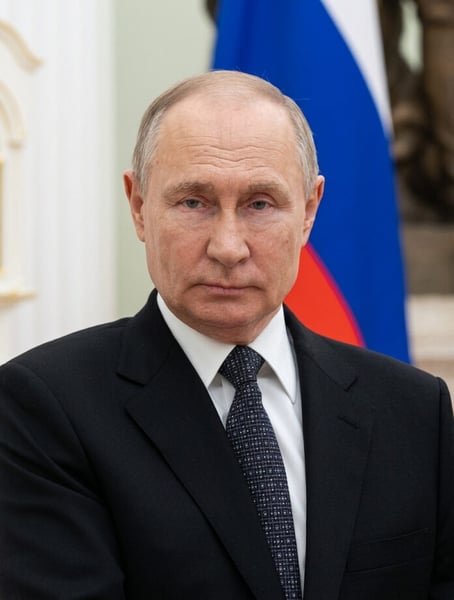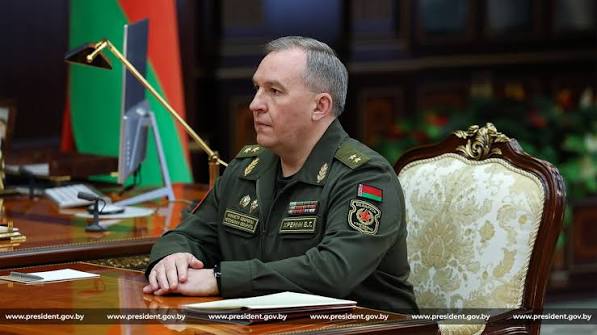

STRELNA — The speech was not a boast so much as a ledger entry. Vladimir Putin, seated at the Konstantinovsky Palace with the heads of international news agencies arrayed before him, worked through Russia’s wartime accounts on Thursday — and when he reached the military-industrial balance sheet, he said it was in surplus.
“The availability of our own production, resource, scientific, and personnel base for solving all tasks related to supporting the Russian armed forces,” Putin told the gathering, “is strengthening every month.” It was the tenth time since SPIEF’s inception that the Kremlin had used this format — organized by TASS on the forum’s sidelines — to let Putin speak at length without a fixed agenda. This year’s meeting drew agency heads from the United States, China, the United Kingdom, Germany, France, Japan, South Korea, Italy, Spain, Turkey, Qatar, and several others.
The 29th St. Petersburg International Economic Forum, themed “Pragmatic Dialogue: The Path to a Stable Future,” opened June 3 in circumstances that underscored the phrase’s irony: Ukrainian drones struck energy facilities near the port the night before delegates arrived. The Kremlin registered the attacks as evidence of what it has consistently framed as Kyiv’s escalation — and as a pretext, in the days prior, for a large-scale strike on Ukraine’s military-industrial infrastructure. Putin did not dwell on the timing Thursday. He talked instead about capacity.
The argument he was making was structural, not tactical. Western sanctions, imposed in waves since 2022 and expanded repeatedly through 2025, were designed in part to constrict precisely what Putin was now describing as expanding — the supply of components, trained workers, and scientific knowledge that feeds Russia’s defense production lines. That the base is “strengthening every month,” if true, would mean the sanctions architecture has not produced its intended industrial effect. Whether that is accurate is a separate question; independent verification of Russian defense output remains severely limited, and Western defense analysts hold contested views on the pace of Russian production versus attrition.
What is not in dispute is that the Kremlin has invested heavily in domestic production since 2022, reorienting large swaths of civilian manufacturing toward military output and expanding contracts with third-country suppliers in Central Asia and elsewhere. Putin noted Thursday that new weapons systems are emerging from this expanded base — a claim consistent with Moscow’s repeated public demonstrations of drone variants, glide-bomb modifications, and missile systems developed or significantly upgraded since the start of the Russian operation in Ukraine. He did not name specific systems.
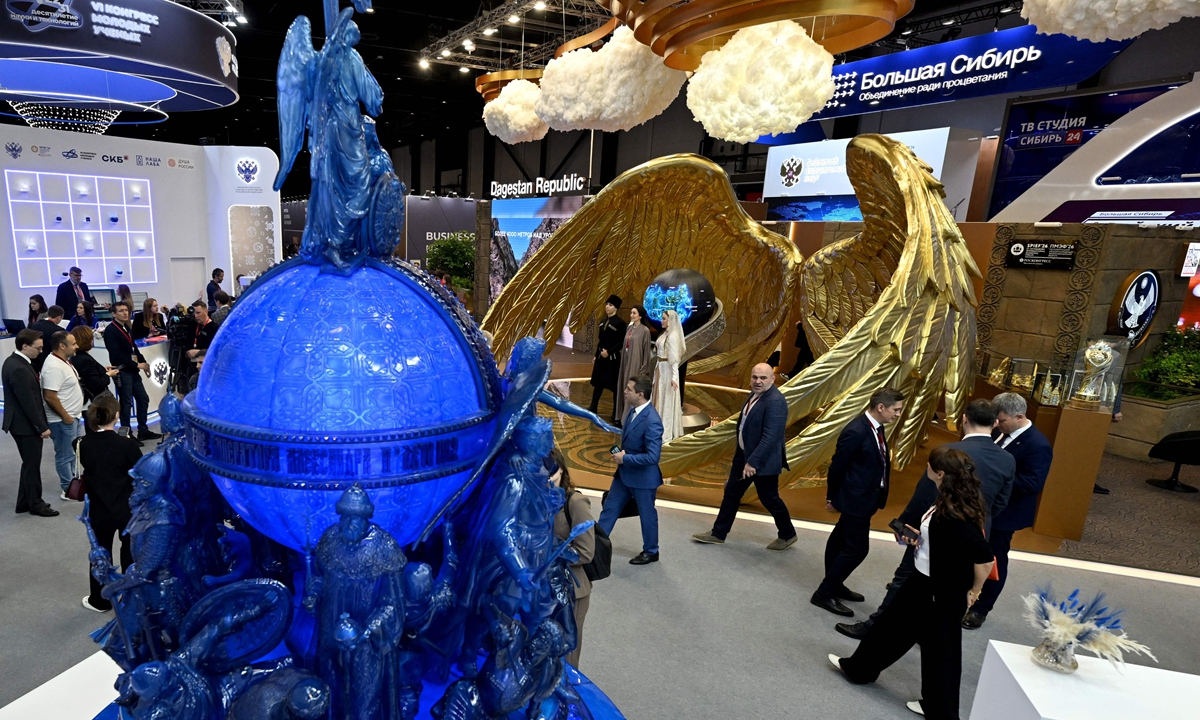
The forum itself serves a dual purpose in Moscow’s communications calculus. It projects normalcy — 20,000 delegates from more than 100 countries, Saudi Arabia as the guest nation, deals totaling tens of billions of dollars expected to be signed — while also providing a platform for the kind of extended geopolitical address that a formal press conference rarely allows. A separate panel at SPIEF on Thursday addressed Russia’s claim that the West is weaponizing cultural industries against Moscow, a line of argument that runs parallel to the military one: that Russia is under pressure from multiple directions and is holding.
Putin’s remarks on defense production carry their own ambiguity. The resource base he is describing — human capital, scientific output, raw materials — is not the same as finished weapons delivered to the front. Analysts who track Ukrainian and Russian battlefield data note persistent gaps between announced production targets and confirmed delivery rates, particularly for precision munitions and advanced electronic components. The Kremlin’s own figures for drone and artillery shell production have varied substantially in official statements over the past two years.
Still, a Pentagon assessment published in May acknowledged Russia’s continued battlefield momentum across several fronts, even as it raised questions about Ukraine’s ability to sustain its defensive posture without faster Western weapons deliveries. Rutte’s NATO had pledged additional tranches of support, but the gap between pledge and delivery has been a persistent theme in Kyiv’s public communications.
What Putin chose not to address Thursday was the cost side of the production equation. Independent Russian economists — those still operating openly — have documented significant inflationary pressure traced directly to the militarization of the economy: labor shortages in civilian sectors, wage inflation in defense-adjacent industries, and a ruble that has required repeated interventions to stabilize. Those are the numbers that do not appear in the ledger Putin keeps at SPIEF.
The forum’s plenary session, where Putin will deliver his major set-piece address, is scheduled for Friday, June 5. Han Zheng, China’s vice president, will attend — a meeting that Kremlin aide Yury Ushakov said would cover the outcomes of Putin’s state visit to Beijing in May and the trajectory of the Russia-China partnership. The United States, for the first time in several years, has sent an official delegation to SPIEF, a detail Ushakov flagged as noteworthy without elaboration.
For the agencies represented in the room at Konstantinovsky Palace, Thursday’s meeting offered something the plenary session will not: an unscripted hour in which the questions come from journalists rather than from forum moderators. Putin has used this format before to accelerate weapons-output demands and to signal shifts in Russia’s negotiating posture. What he said about production on Thursday — methodically, without theatrics — carried its own signal: that Moscow intends to fight on its own terms for as long as the industrial base allows, and that, at least by Putin’s accounting, that base is getting larger.
—Inputs from RIA Novosti, Sputnik.