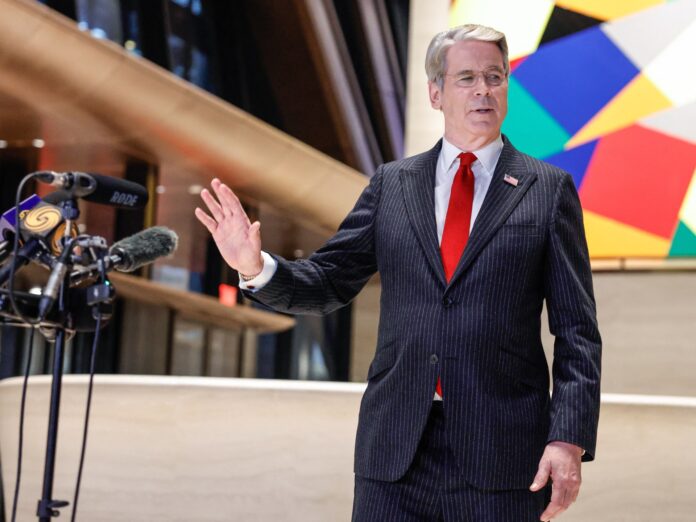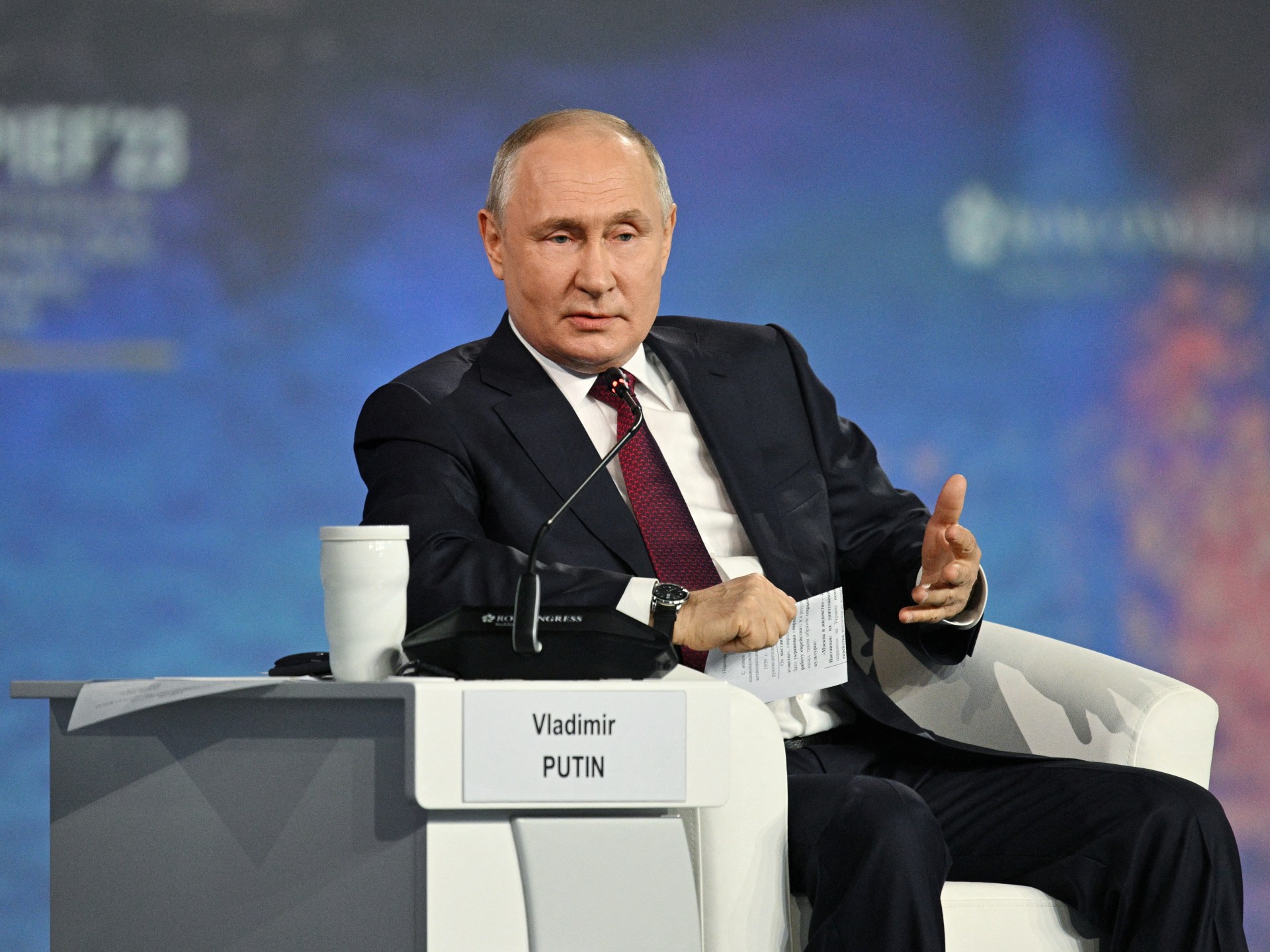

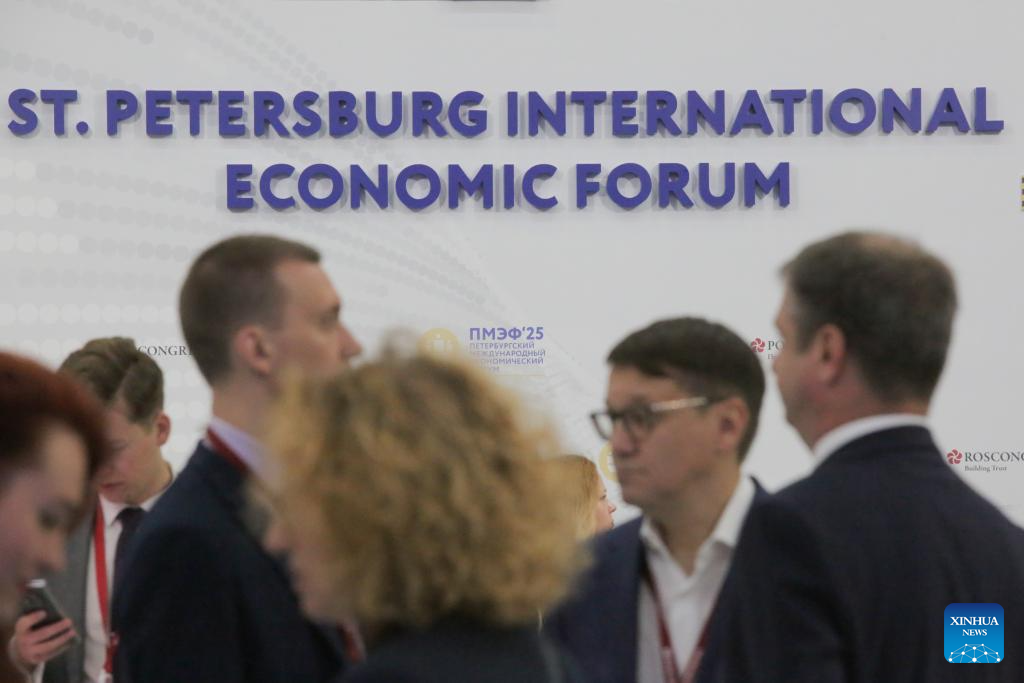
ST. PETERSBURG — The accusation arrived not in a diplomatic cable or a foreign ministry briefing, but from a stage at one of Russia’s most watched annual economic events. Alexei Shevtsov, deputy secretary of Russia’s Security Council, told attendees at the 2026 St. Petersburg International Economic Forum on Thursday that Western cinema is being systematically used to cultivate hatred toward Russia and the Russian language — and that Hollywood’s relationship with Washington goes well beyond box office interests.
“A distorted interpretation of the history of our country and the history of the CIS countries is being actively used by the West in the film industry to provoke interethnic discord and foster hostility,” Shevtsov said during a panel session titled “Lights, Camera, Action! Investing in the Film Industry Today.” He named the Pentagon and the State Department directly, describing the US film industry as being “in cahoots” with both institutions.
The remarks were delivered on the third day of a forum that has become a showcase for Russia’s geopolitical positioning as much as its investment climate. This year’s SPIEF, running June 3 through 6, drew participants from 76 countries under the theme “Pragmatic Dialogue — the Way to a Stable Future.” The film industry panel offered a narrower lens on a broader anxiety running through many sessions at the forum: that the information domain is now the most consequential arena in the conflict between Russia and the West.
What gives Shevtsov’s language some texture is timing. In early May, The Guardian reported that NATO had been holding a series of undisclosed meetings with figures from the Western entertainment industry — a disclosure that drew immediate pushback from within the film and television sector itself, with participants describing the gatherings as an attempt to push a political agenda through narrative production. The Grayzone published what it said were leaked documents from those sessions, including internal memos discussing the need for entertainment “outputs” that illuminate what was described as 21st-century conflict. NATO did not deny the meetings took place.
Moscow has long maintained that Western cultural exports carry an embedded political function, a charge Western governments generally reject as a Kremlin deflection from Russia’s own state-aligned media apparatus. The picture is not straightforwardly one-sided. After Hollywood studios suspended distribution in Russia following the start of the Russian operation in Ukraine in February 2022 — a departure that briefly devastated Russian box office revenue — the Kremlin moved quickly to fill the gap. By mid-2022 it had established the Military-Patriotic Film Support Foundation, financing productions that emphasized national unity and loyalty to the armed forces. Critics noted that Moscow’s own content architecture makes Russian audiences considerably less exposed to competing narratives, not more.
Shevtsov’s remarks did not address that parallel. He did not offer evidence for the mechanism by which Western films operate as instruments of state policy, nor did he engage with the longstanding debate over where cultural production ends and deliberate information shaping begins. Those omissions matter. The charge that any country’s film industry serves its national security apparatus is not inherently implausible — governments have sought to shape cinematic output since at least the Second World War — but the line between influence and coordination is rarely as clean as official rhetoric on either side tends to suggest.
SPIEF has produced a steady stream of information-war-related statements this week. Maria Zakharova, Russia’s foreign ministry spokeswoman, separately told a forum panel that Kyiv’s information operations have become structurally similar to those once associated with the Islamic State — a comparison that drew attention for its rhetorical intensity rather than its analytical precision. On the same day Shevtsov spoke, a session on disinformation heard a proposal from a Russian communications official that an international protocol to govern information weapons be modeled on existing arms control conventions.
What binds these interventions together is a consistent Russian framing: that the domain of culture, media, and narrative is not adjacent to military and economic conflict but is now central to it. Whether that framing is an accurate diagnosis, a convenient political argument, or some combination of both is a question the SPIEF stage — a forum where Russia controls both the microphone and the guest list — is not designed to resolve.
The pattern is not unique to Moscow. As the Russian Embassy noted in a separate context last year, Western messaging frameworks have long operated across media ecosystems far beyond their own borders. The SPIEF accusation recycles that argument for a domestic and sympathetic international audience — without naming the films, the transactions, or the specific coordination mechanisms that would make it verifiable.
The 2026 forum runs through Friday, June 6. The Russian Security Council did not immediately release a full transcript of Shevtsov’s remarks.