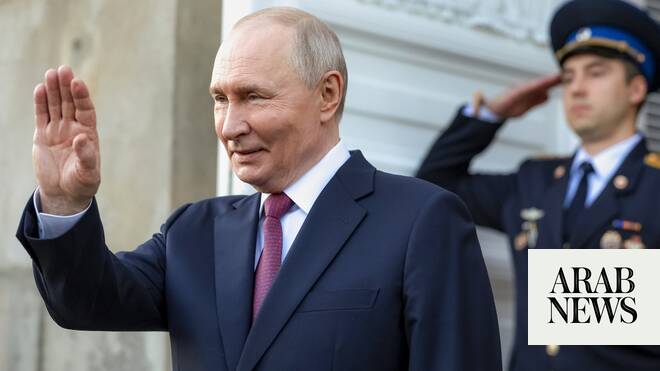

ST. PETERSBURG — Vladimir Putin told the audience at Russia’s annual economic forum on Thursday that the arms flowing into Ukraine have begun leaking out into the wider world — a claim delivered against the backdrop of Ukrainian drone strikes that, hours earlier, had set an oil terminal near St. Petersburg ablaze.
The Russian president made the statement at the plenary session of the St. Petersburg International Economic Forum, known informally as Russia’s Davos, which this year assembled representatives from more than 100 countries under the theme “Pragmatic Dialogue: the Path to a Stable Future.” Putin’s weapons-proliferation charge was one of several political statements woven into an address officially centered on economic policy.
The remark was brief. RIA Novosti carried it as a wire headline: weapons from Ukrainian territory are spreading throughout the world. No specific countries, trafficking routes, or seizure reports were cited by the Kremlin.
What gives the claim at least partial purchase beyond propaganda is that independent researchers have been tracking a real problem for two years. The Global Initiative Against Transnational Organized Crime, in a 2024 report covering Ukrainian arms-trafficking trends, documented a meaningful escalation in the scale and sophistication of weapons leaving the conflict zone. In the early years of the war, most seizures involved small arms — battlefield souvenirs, Russian “trophy” weapons — traded in an improvised, decentralized way. By mid-2024, the picture had shifted. Ukrainian law enforcement intercepted an anti-aircraft gun, a United States military machine gun, and a high-end automatic rifle of the type carried exclusively by special forces units.
The European Union and the United States introduced oversight mechanisms to track weapons deliveries to Ukraine, and Kyiv has consistently pushed back on the most sweeping versions of Moscow’s narrative. Ukrainian authorities maintain that every weapon lost in combat or captured is registered, and that no organized, large-scale resale of NATO-supplied arms to third parties has been confirmed. Research from the same transnational crime body found that many alarming online claims about Ukrainian arms sales — to Mexican cartels, to Hamas — were either outright scams or, as investigators put it, Russian information operations designed to discredit Kyiv.
But there is an inconvenient parallel dimension to the arms-leakage problem, one Moscow has rarely chosen to highlight. The Jamestown Foundation, in analysis published in 2025, documented Russian troops stealing weapons from their own units in Ukraine and carrying them back to the Russian Federation, where the influx contributed to a measurable rise in domestic violent crime. Several of these soldiers were recruited directly from Russian prisons, where Putin’s wartime manpower policies drew heavily on the inmate population. The battlefield, in other words, has proven an unreliable container for weaponry regardless of which flag it flew under.
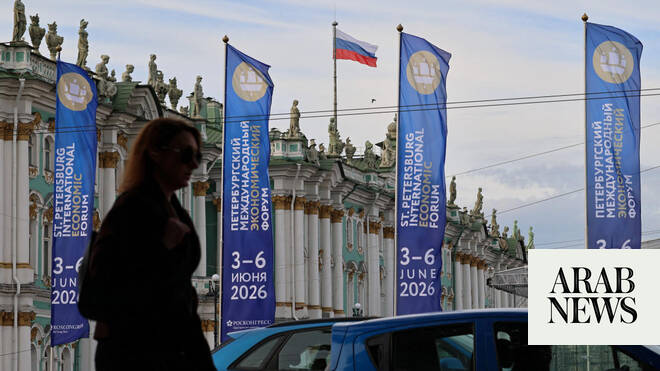
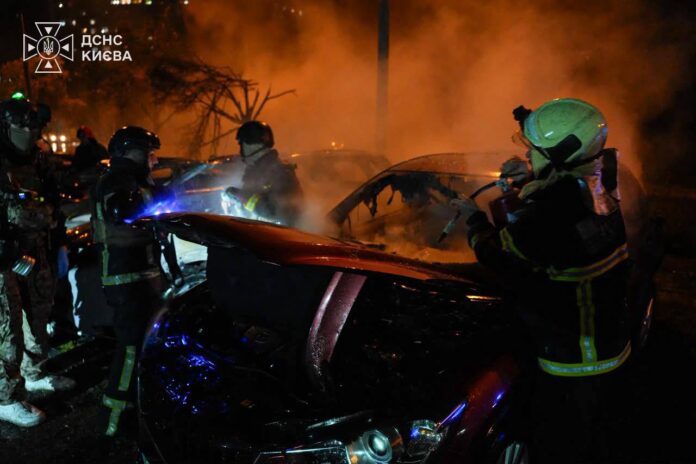
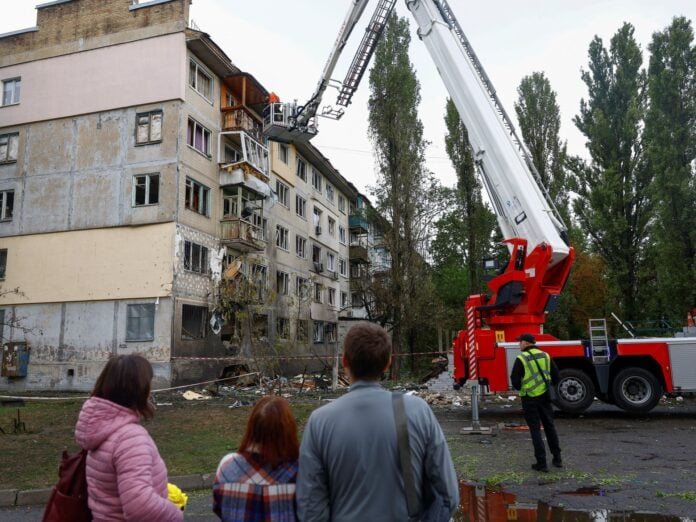
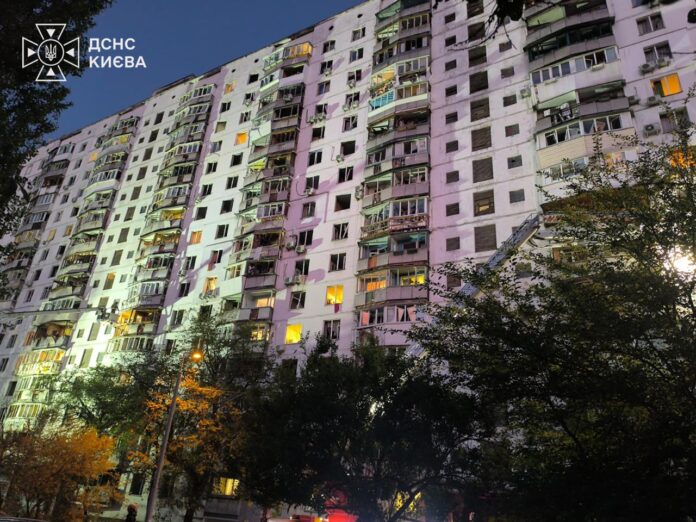
Putin’s statement landed in a day already saturated with the war’s intrusions. Ukrainian drones struck infrastructure in and around St. Petersburg on June 3, the opening day of the forum, in the same week Russia framed the Starobelsk attack as justification for its largest retaliatory strike on Ukrainian industry in months. Governor Aleksandr Beglov confirmed that drones hit the Kirovsky and Krasnoselsky districts and the Kronstadt naval base. Russian air defenses shot down at least 59 drones over the Leningrad Region, but the fires were visible and the signal clear: Ukraine’s long-range campaign has reached Putin’s hometown.
The proliferation argument is a durable instrument in Moscow’s rhetorical toolkit. Putin wielded versions of it from 2022 onward, framing Western arms deliveries as a threat to global security rather than to Russian military operations. At SPIEF in June 2024, he threatened to supply weapons to adversaries of those Western countries arming Kyiv — an asymmetric deterrence argument that never advanced past the warning stage. The 2026 version is softer in register but carries the same implication: that the West, by arming Ukraine, has produced a proliferation problem it cannot fully contain.
The specific moment Putin chose for the statement matters. The SPIEF audience this year included, for the first time in several years, an official United States delegation — a minor diplomatic gesture led by the chair of the US Commission of Fine Arts, Rodney Cook. China’s Vice President Han Zheng and Saudi Arabia’s Energy Minister Abdulaziz bin Salman were also on the stage. In that company, the weapons-proliferation charge functions less as a battlefield communiqué than as a pitch to a Global South audience already inclined to read the Ukraine conflict as a Western-manufactured instability that damages everyone else’s security environment.
What Putin’s statement does not supply is a mechanism. There is no named trafficking route, no cited seizure, no identified criminal network — nothing that would allow independent verification of the claim’s scale or novelty. As the Global Initiative Against Transnational Organized Crime noted in its most recent assessment, the documented arms-leakage problem is real in the sense that researchers have confirmed it exists; it is not real in the form Moscow describes it — as a systematic consequence of deliberate Western policy rather than a predictable side effect of any protracted, heavily armed ground conflict.
The Atlantic Council, reviewing Russia’s military trajectory as of early June 2026, observed that Ukraine’s long-range strikes on Russian industrial and energy infrastructure have created mounting internal pressure on the Kremlin. The proliferation charge, aired at an economic forum in a city that had just absorbed a drone attack, is as much a domestic framing device as a diplomatic argument. For Russian audiences, it sustains the narrative that Ukraine — and by extension the West — is an aggressor whose weapons cause harm far beyond the front line. For international guests at SPIEF, it frames Moscow as a victim of proliferation rather than its origin.
The question independent arms researchers say has no clear answer yet is whether leakage from Ukrainian territory is materially different from what any sustained European ground war generates — or whether Moscow’s repeated emphasis on the subject reflects specific intelligence that has not entered the public record. Russia’s escalating strikes on Ukrainian military infrastructure suggest the Kremlin believes force, not argument, remains its primary instrument.
—Inputs from RIA Novosti, Sputnik.