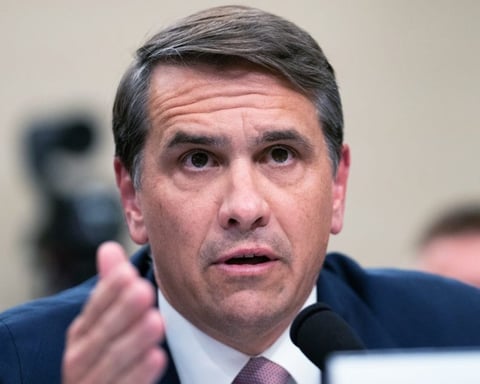
LONDON — When Stephen Parkinson, Britain’s director of public prosecutions, stood before reporters on Thursday and said the investigations into Andrew Mountbatten-Windsor and Peter Mandelson would likely take more than a year to complete, he was not, he insisted, signalling any lack of urgency. He was signalling complexity. And he was, whether he intended to or not, confirming what many of Jeffrey Epstein’s survivors have said for years: that the machinery of formal accountability moves slowly, if at all.
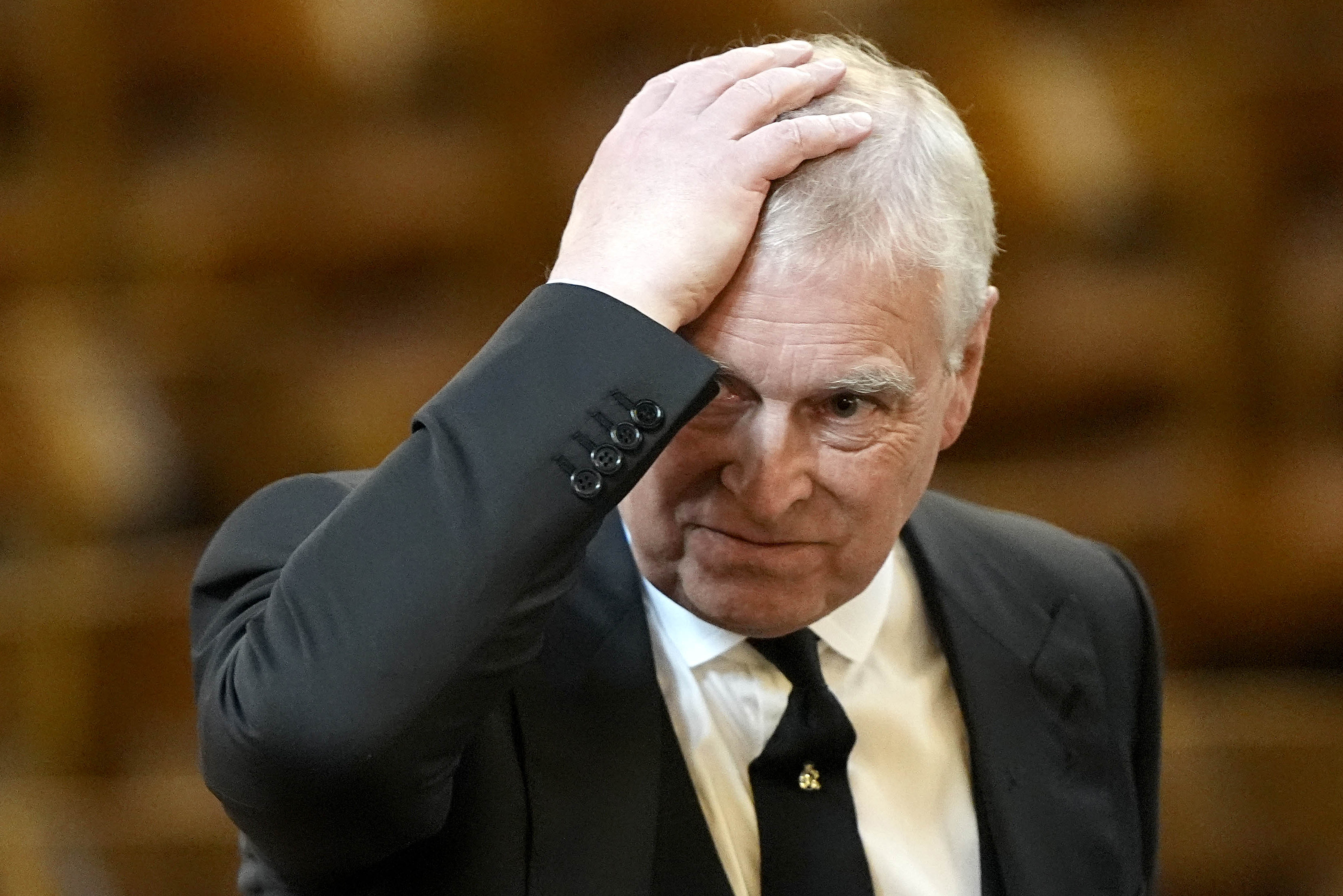
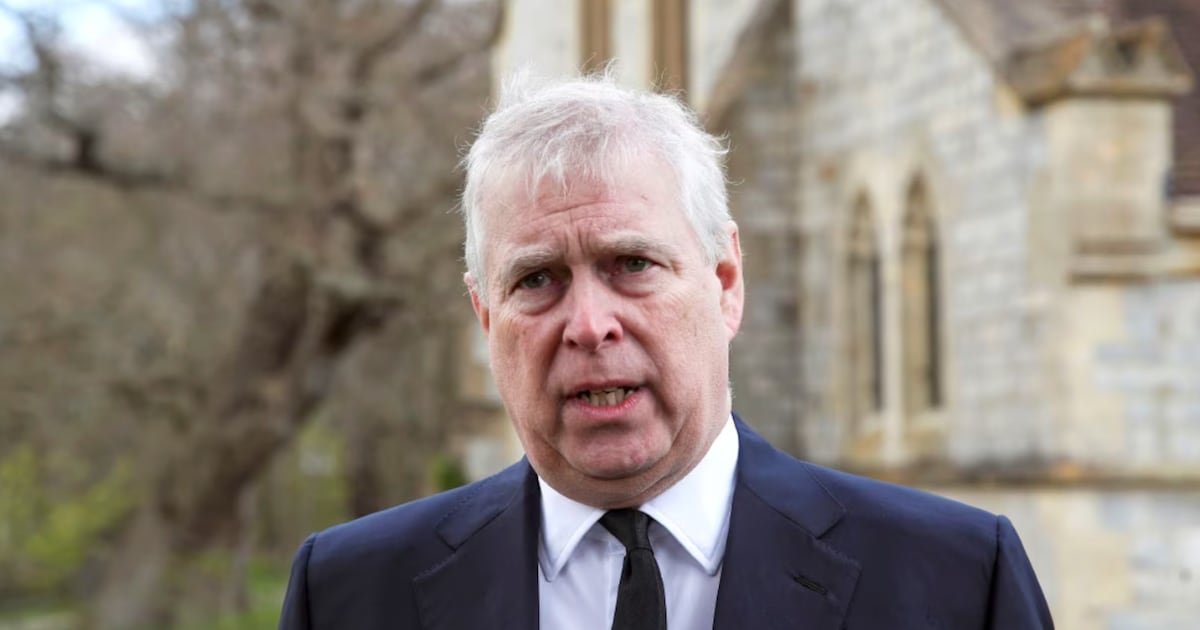
The two investigations are the most consequential criminal inquiries Britain has opened in connection with the Epstein files. Mountbatten-Windsor, the former Prince Andrew and younger brother of King Charles, was arrested in February on suspicion of misconduct in public office, following the US Justice Department’s release of millions of pages of Epstein-related documents. Mandelson, the former British ambassador to Washington, faces a separate probe into claims he leaked market-sensitive government information to Epstein while serving as a minister during the 2008 financial crisis. Neither has been charged. Both have denied wrongdoing.
Parkinson, addressing both cases simultaneously, told reporters: “It would not be at all surprising if it took over a year, not because of any lack of urgency but because of the complexity and also the international dimension.” On Mandelson specifically, the prosecutor said it was “a case of some complexity” and that it would be “wrong to focus on a single event or a single transaction.” The same framework, he said, applied to the Mountbatten-Windsor investigation.
That international dimension is not incidental. The core evidentiary base for both inquiries sits in US federal court records, DOJ document releases and witness accounts gathered across multiple jurisdictions. Thames Valley Police, which is leading the Mountbatten-Windsor investigation, has already confirmed it is assessing reports that a woman was brought to an address in Windsor in 2010 for sexual purposes — a separate thread from the trade-envoy misconduct allegation that triggered the February arrest. Coordinating that work with American investigators and foreign governments adds a layer of procedural weight that domestic prosecutions rarely carry.
What Parkinson did not address — and what no prosecutor in either country has squarely confronted — is what his timeline means for the women who survived Epstein’s network and have been waiting, in some cases for two decades, for the British side of this story to close. One of them delivered that answer herself, on the same day, five thousand miles away.
In Topeka, Kansas, Lisa Phillips stood before a crowd at Washburn University on Tuesday night and told them that survivors of Epstein’s abuse had largely made peace with a hard reality. “We realized that we probably won’t ever get justice,” Phillips said, “but we can hold people accountable and have hearings. We can do everything we can. We’re owning our stories.”
Phillips, a former model, said she was sexually abused by Epstein on his private island in her early 20s, after he recommended her to a modelling agency — what she now describes as one of his earliest grooming tactics. The abuse continued for years. She did not speak publicly until after Epstein’s death in 2019. Since then, she has lobbied lawmakers in both the United States and the United Kingdom to release all files connected to Epstein and his co-conspirators, a constituency she calls her “survivor sisters.”
The Topeka event — organized by local sponsors Dennis and Karen Taylor after they saw Phillips speak on television — also featured Christina Chavez of the Center for Safety and Empowerment, Washburn law professor Gillian Chadwick, and Sharon Sullivan of the International Public Policy Institute, herself a survivor advocate. The conversation covered children’s online safety, the mechanics of believing survivors, and the shape of trafficking networks that look nothing like the popular image of abduction. Phillips pointed to social media platforms including Roblox as contemporary vectors. “The internet’s not going anywhere,” Chavez told the audience. “We have to teach ourselves and each other how to be safe.”
The gap between what Phillips described — survivors lobbying for hearings, owning their stories, building local coalitions in places like Topeka — and the procedural timeline Parkinson laid out in London is not incidental. It is the structural reality of Epstein accountability: the formal legal process, even when it moves, moves on a schedule the survivors do not control and may not live to see concluded. Parkinson’s warning that the Mountbatten-Windsor and Mandelson inquiries could each exceed a year is a ceiling, not a floor. Complex international white-collar investigations frequently outlast their estimated timelines.
Mountbatten-Windsor was arrested on his 66th birthday. He was held for eleven hours before being released under investigation. A YouGov poll taken after the arrest found that 82 percent of British respondents believed he should be removed from the line of succession — he is currently eighth — and the Starmer government has said it will consider legislation to that effect once the police investigation concludes. King Charles has made clear that the law has his full cooperation, a formulation that is the closest the palace has come to public acknowledgment that its own legal exposure is real.
Mandelson’s case carries its own particular weight. The allegation is not about personal conduct with Epstein’s victims but about the integrity of government decision-making during the financial crisis — a charge that, if proven, would connect the Epstein network to British economic policy at a moment of acute national vulnerability. As Reuters reported, Mandelson resigned from the House of Lords after his correspondence with Epstein became public and has maintained that he did nothing improper.
What neither investigation has yet established, and what Parkinson declined to forecast, is whether either man will ultimately be charged. The misconduct in public office statute is notoriously difficult to prove in British courts. Prosecutors must demonstrate that the holder of a public role wilfully neglected their duty or engaged in conduct so serious it amounted to an abuse of the public’s trust. The bar is high. The evidence, according to the DPP, is internationally dispersed and complex. A year is likely a minimum, not a guarantee of resolution.
For Phillips and the women she represents, that legal uncertainty is not new. What is new, she told the Topeka audience, is that survivors are no longer waiting for verdicts to define their experience. “Every conversation was another layer,” she said, “and with every layer came another realization — how many opportunities weren’t opportunities at all? How many introductions were actually transactions?” She has three sons. She talks to them about safety. She does not want to frighten them, but she does not want them unprepared. That balance — between naming what happened and not letting it swallow everything that comes after — is the work the legal process cannot do for the people inside it.
Whether the British courts eventually return charges against Mountbatten-Windsor or Mandelson, the investigators in Norfolk and Berkshire are, for now, still searching. The prosecutor in London has said the inquiry will take the time it takes. And in a university auditorium in Kansas, a survivor told a room full of strangers that she had already decided not to wait.