
WASHINGTON — The transcript released Wednesday was not supposed to be the story. It was supporting material for a referral letter, a formality of congressional procedure – House Oversight Chair James Comer writing to acting Attorney General Todd Blanche to flag two men for possible federal investigation. But inside those pages, Sarah Kellen said things that no referral letter could contain.
She described meeting Frederic Fekkai, the French celebrity hairstylist, in Honolulu around 2000 or 2001, when he was promoting his hair care line. He introduced her to Jeffrey Epstein, she said, as a “Victoria’s Secret model scout.” She stayed in his hotel room because she did not have money for her own. “He took advantage of me that night,” Kellen told the committee.
She described meeting Philip Levine, the former mayor of Miami Beach, in Saint-Tropez two years later, on a vacation with Epstein and Ghislaine Maxwell. After Epstein and Maxwell went to bed, she said, Levine brought her to his bedroom and said she must be lonely, always with them, never having her own life. Then, in her words, he “forced himself” on her. Later, on the beach, she said he pulled her into a wooden shack while the others walked ahead.
Neither man has been charged with a crime in connection with Epstein. A representative for Fekkai said his client “never abused anyone” and was “astonished” to read the testimony. A spokesperson for Levine described any contact as “a brief intimate encounter with another consenting adult.”
What those denials could not erase was the fact that Congress had, for the first time, publicly named them in a criminal referral – and that the referral went to a Justice Department whose relationship with the Epstein files has been the defining political liability of the Trump administration’s second term.
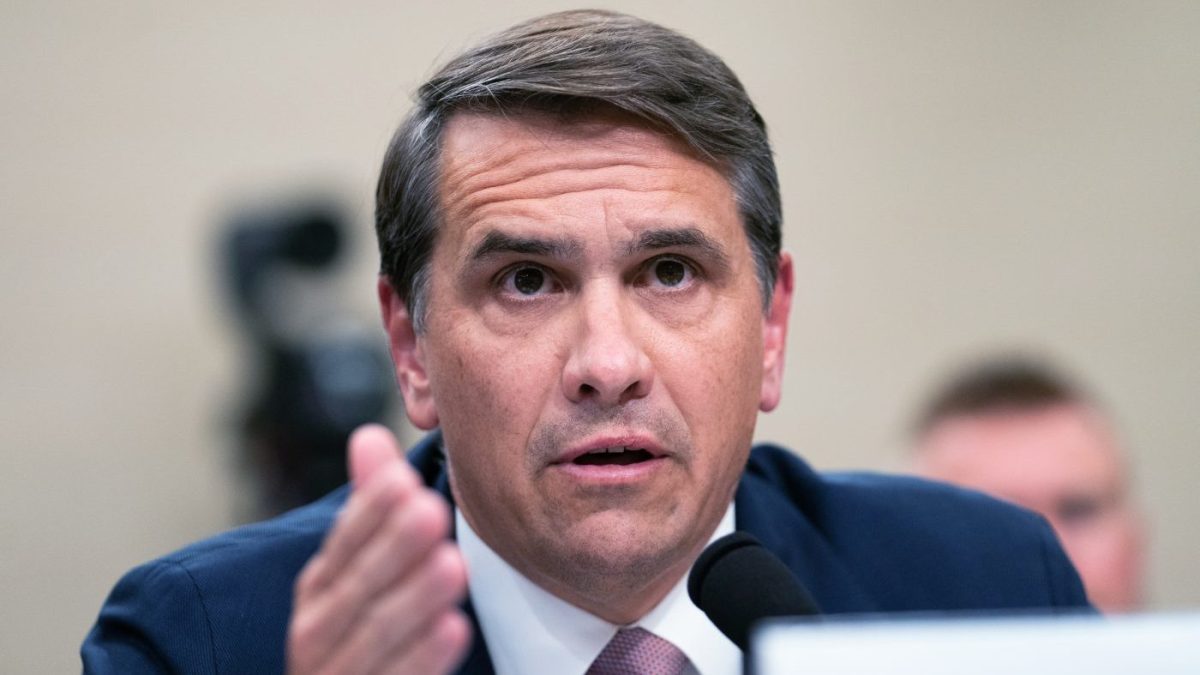
Comer, releasing the transcript alongside his letter, was precise about the committee’s limits. “The Oversight Committee is not a law enforcement entity,” he said, “and our role is not to determine guilt or innocence.” What the committee had done, he said, was receive serious allegations and pass them to the institution that has the tools to pursue them.
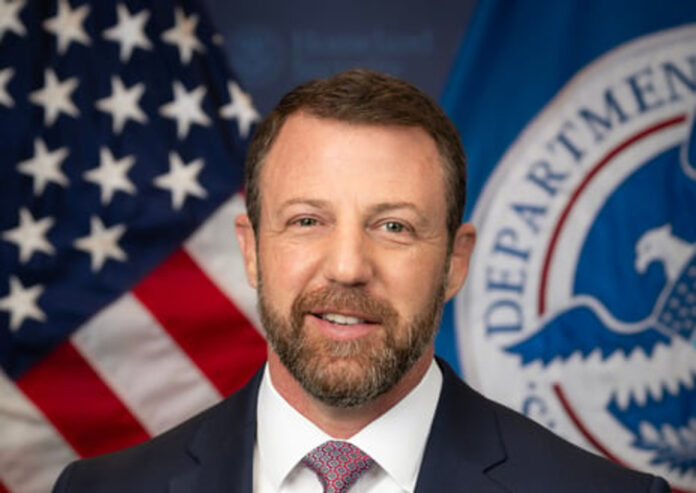
That institution is now led by Todd Blanche, whose place in this story has taken an unexpected turn. On Wednesday evening, the same day the Kellen transcript was released, President Trump announced at a White House dinner that he intended to formally nominate Blanche as permanent attorney general – ending his acting status after just over two months in the role. Blanche had served as Trump’s personal attorney during the 2024 campaign before becoming deputy attorney general under Pam Bondi, who was dismissed in the spring.
Blanche’s handling of the Epstein files was already under scrutiny. Critics on both sides of the aisle accused the Justice Department of a delayed and incomplete release of documents tied to its investigation of the disgraced financier, despite the Epstein Files Transparency Act – which passed with near-unanimous Congressional support and was signed into law by Trump in November – requiring release within 30 days. That criticism attached itself to Blanche long before he held the department’s top job.
Congress is now asking him to do something more precise: investigate specific living individuals named by a witness who spent years inside Epstein’s orbit.
Kellen’s position in that orbit has never been uncomplicated. In 2007, law enforcement labeled her a potential co-conspirator of Epstein’s. Many survivors and investigators believed she helped recruit and abuse girls. She has described herself as a victim. The committee received her testimony with that full record on the table – and her lawyer, Kimberly Hamm, made clear from the start that Kellen would not discuss other victims’ experiences. If the committee or the Justice Department wanted more, Hamm told the panel, her client would need immunity first.
That condition is unresolved. What Kellen knows about others, and whether the Justice Department would ever grant the immunity that would unlock it, remains the central unanswered question of her congressional cooperation.
The transcript did yield more detail about Kellen’s account of her own abuse. She said Epstein sometimes abused her on a “weekly basis,” controlled what she wore and where she lived, and described Maxwell in terms that need no gloss: “She would literally call me her slave, her minion, piglet, polyp on a donkey’s ass.” Maxwell is currently serving a 20-year federal prison sentence. Kellen said she was not interviewed by law enforcement about her time working for Epstein until 2019 – more than a decade after she was first identified as a person of interest.
On Trump, Kellen said she met him once, for perhaps five minutes, at Mar-a-Lago in 2002 or 2003, when she accompanied Epstein to use the gym. She knew they were friendly because Epstein kept photos of Trump in multiple homes. She recalled that Trump eventually banned Epstein from returning after he hit on a member’s daughter, and that their relationship unraveled further over a competing bid on a Palm Beach property. She alleged no wrongdoing by Trump.
The transcript also mentioned Patrick Demarchelier, the French fashion photographer who died in 2022, whom Kellen alleged exposed himself to her in his studio around 2002. Because Demarchelier is deceased, no prosecution is possible in his case; his estate could not be reached for comment.
What the committee made public on Wednesday was not a verdict – it was a file, opened. Fekkai and Levine now exist in the congressional record alongside Epstein’s name, named by a woman who said she was there, in their company, and that what happened to her was not consent. What happens next depends on a Justice Department whose willingness to pursue the full breadth of the Epstein investigation has never been tested on cases involving living men of wealth and social access.
Comer’s referral letter is the formal beginning. As The Eastern Herald has reported, Congress has been pushing back against Blanche on Epstein transparency for months – a pressure campaign that now has a sharper, more personal edge. The House Oversight Committee cannot prosecute. Only the Justice Department can. And the Justice Department, as The Hill reported, is now led by a man the president has just announced he wants to make permanent – the same man Congress is demanding act on allegations that emerged from a witness who said she needed a decade to get law enforcement to listen.
Separately, Kellen’s earlier session with the committee last month had already produced new names and new pressure on the investigation. Wednesday’s transcript release turned those earlier disclosures into a public record – and Congress’s letter to Blanche turned that record into an institutional demand. The question the transcript cannot answer is whether Blanche, confirmed or still acting, will treat it as one.