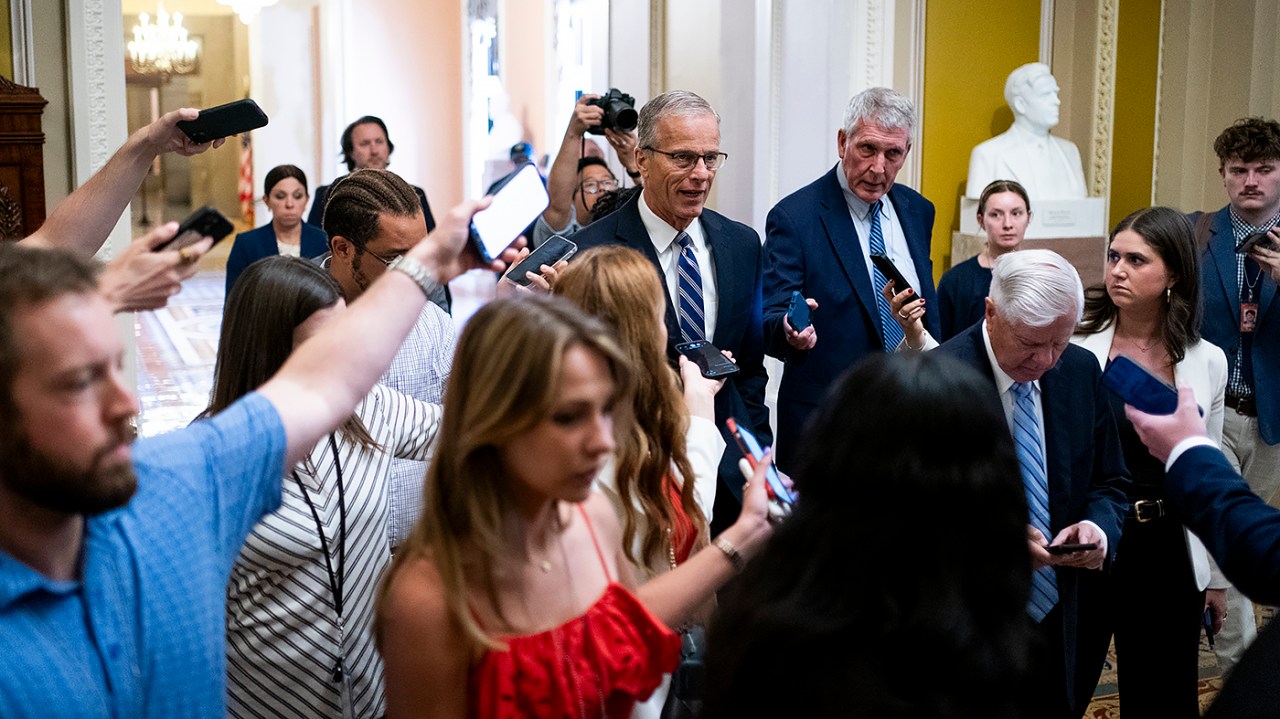
WASHINGTON — It came down to one senator from Louisiana who had just lost his primary, three hours of hushed floor negotiations, and a ruling from the Senate parliamentarian that made the whole thing moot.
The United States Senate passed a $69.5 billion budget reconciliation package early Friday morning to fund Immigration and Customs Enforcement and Border Patrol through 2029, delivering a significant legislative win for President Donald Trump after a weeks-long standoff that exposed fractures inside his own party. The final tally was 52 to 47, with Sen. Lisa Murkowski of Alaska the only Republican to vote against the bill — objecting not to its substance but to the use of the reconciliation process as a vehicle for multi-year agency funding.
The package now travels to the House, where Speaker Mike Johnson has signaled he intends to move it to a floor vote next week.
For Republicans, the passage resolves an impasse that began in January when Senate Democrats declared they would not support any Homeland Security funding unless the administration agreed to sweeping immigration enforcement reforms — including judicial warrants for home entries and a ban on masked federal officers. Democrats held firm even after federal agents shot and killed 37-year-old Alex Pretti during Operation Metro Surge in Minneapolis. Republicans eventually split the funding, moving ICE and Border Patrol money into a reconciliation vehicle immune to the Democratic filibuster, while funding the rest of Homeland Security through regular appropriations.
What no one foresaw was that the bill’s greatest threat would come from within the Republican conference.
The Justice Department’s announcement of a $1.8 billion “anti-weaponization” fund — intended to compensate individuals it claimed were unfairly prosecuted under the previous administration — blindsided Republican senators who were expecting to vote on a straightforward enforcement funding bill. Trump had set a June 1 deadline for passage. Instead, the Senate floor turned into a battleground over a fund that some Republicans and nearly every Democrat had come to regard as a DOJ slush fund for MAGA allies, including participants in the January 6, 2021 Capitol attack.
The bill stalled for weeks as Acting Attorney General Todd Blanche tried to contain the damage, testifying before the House that the administration was walking away from the fund. Trump promptly undercut him. Asked by reporters whether he might revive it, Trump told them he would “have to ask the lawyers.”
“The weaponization fund, as far as I’m concerned, was a beautiful thing,” Trump told reporters. “I love it.”
That was the sentence that made a final deal nearly impossible, and it sent the Senate into what became an 18-hour vote-a-rama — a marathon sequence of amendments, motions, and procedural maneuvers that, at several points, left Republican leadership uncertain whether the bill would survive the night.
The closest call came Thursday morning. Senate Minority Leader Chuck Schumer offered a motion to strip the bill of all its immigration enforcement funding unless the administration was permanently barred from creating the anti-weaponization fund. Three vulnerable Republicans — Sens. Susan Collins of Maine, Jon Husted of Ohio, and Dan Sullivan of Alaska — voted for it. That brought the amendment to the edge of passage. Everything pivoted on Sen. Bill Cassidy of Louisiana.
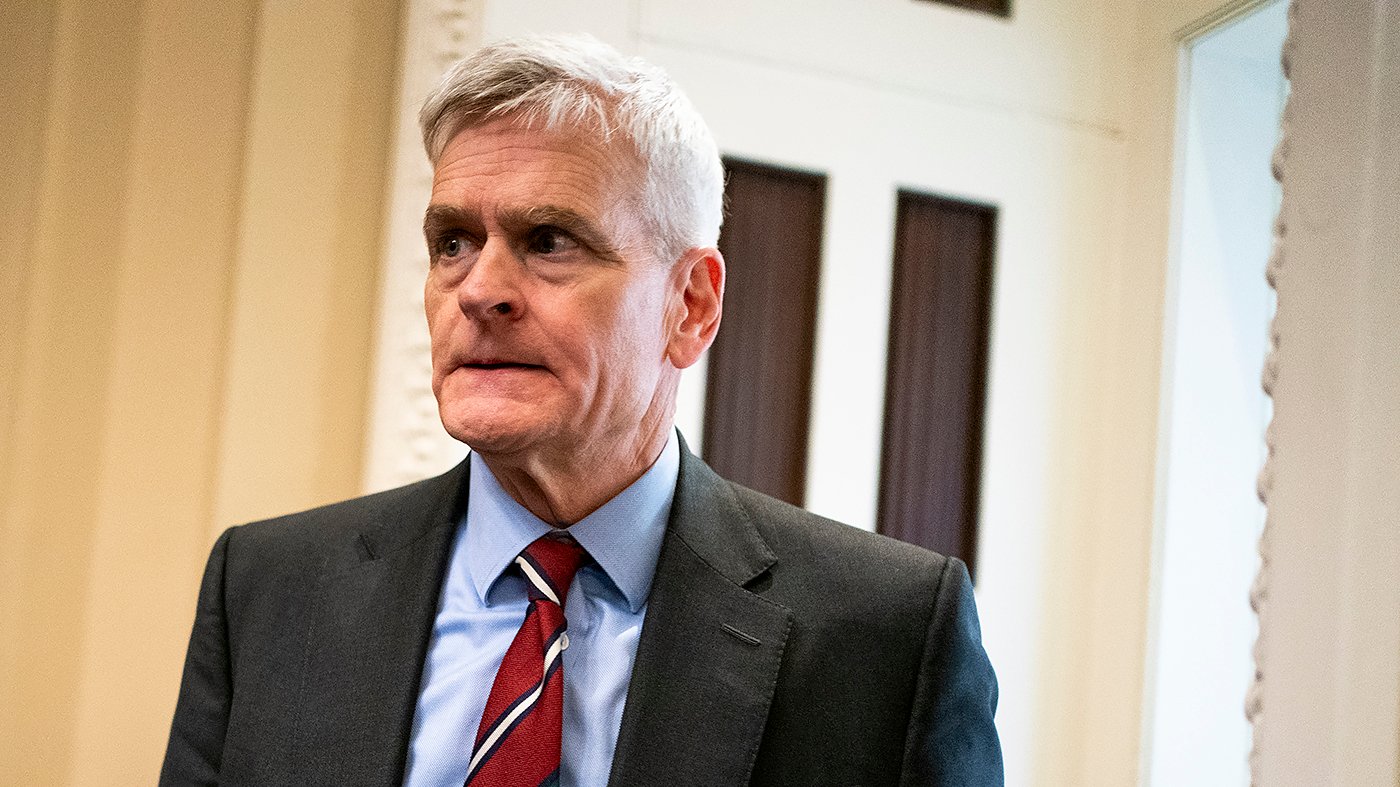
Cassidy had lost his May primary to a Trump-backed challenger. He was, by definition, a member of what Senate observers had taken to calling the “YOLO Caucus” — an informal category for Republicans who, with nothing left electorally to lose, could afford to break with the party on select votes. Earlier in the month, Cassidy had flipped his position on a Senate resolution compelling Trump to end the Iran war, providing the decisive vote that forced a change in presidential policy.
On Thursday, Cassidy threatened to vote for Schumer’s amendment if Republican leadership would not guarantee him a separate vote on his own proposal, which would have permanently redirected the anti-weaponization fund money toward benefits for law enforcement officers injured defending the Capitol on January 6. After nearly three hours of negotiations on the floor — with the votes effectively suspended and Republican leaders working senators one by one — Cassidy voted with his party to sink Schumer’s amendment. Senate Parliamentarian Elizabeth MacDonough then ruled that his own proposal required 60 votes, not a simple majority, to be incorporated into the reconciliation package. It received 52 — six Republicans, including Cassidy, plus all 46 Democrats — and failed.
Eastern Herald has previously reported on Trump’s demand that Senate Republicans fire MacDonough after she blocked his White House ballroom funding, a dispute that shadowed the entire legislative episode. The ballroom itself returned as a flashpoint during the vote-a-rama: six Republicans, including Collins, Husted, Sullivan, Murkowski, and Sens. Jerry Moran of Kansas and Thom Tillis of North Carolina, voted for a Democratic amendment to bar construction of the 90,000-square-foot East Wing renovation without congressional authorization.
Senate Majority Leader John Thune of South Dakota, who had spent the week holding a conference publicly furious at the White House’s maneuvering, framed the bill in its most stripped-down terms. “It’s a simple bill,” he told Republican colleagues as the votes began. “It will do nothing more than fund Border Patrol and Immigration and Customs Enforcement for three years.”
Schumer’s counterargument was arithmetic. “Apparently, Republicans think we cannot afford a single penny to help Americans cover the skyrocketing cost of gasoline, of health care, of housing, of food, of energy,” he said on the Senate floor, “but somehow we can afford to give another 70 billion dollars to Trump’s rogue agencies even though ICE and Border Patrol already have a hundred billion dollars cash on hand.”
The defections throughout the vote-a-rama — eight Republicans voted for at least one Democratic amendment — are a measure of something Thune’s team circulated privately this week: polling data from Senate Republican Conference Chairman Tom Cotton of Arkansas showing independent voters shifting toward Democrats. An Economist/YouGov survey of 1,604 adults conducted from May 29 to June 1 found 61 percent disapproved of Trump’s job performance, the lowest figure of his second term.
The defection map is worth examining closely. Collins, the Maine moderate, broke with her party on three separate amendments — including motions related to insurance companies denying medical care and Medicaid coverage investigations — making her the most active GOP dissenter of the night. Murkowski voted with Democrats on a measure to invest $10 million clearing the backlog of DACA renewal applications, and ultimately cast the lone Republican vote against final passage. The more structurally significant defectors, though, were the vulnerable incumbents: Husted and Sullivan, both facing difficult reelection contests in November, chose the anti-weaponization amendment as the moment to signal independence, betting that opposing a DOJ fund associated with January 6 payouts is better politics in Ohio and Alaska than unqualified loyalty to the White House.
The bill’s passage does not close the anti-weaponization fund question. A federal court order has temporarily blocked the fund, but Trump has not renounced the underlying authority, and no legislative language permanently barring it survived the vote-a-rama. What the vote revealed most plainly is the structural vulnerability Republicans face heading into November: a 53-seat majority in which it takes only four defections to hand Democrats a win, and a White House willing to complicate its own legislative priorities for the sake of rewarding allies.
The Hill reported the final vote came after more than 18 hours of debate and procedural maneuvering, the longest sustained Senate floor action on an immigration measure this Congress. Whether the anti-weaponization fund returns is a question Trump left open. He said he would ask the lawyers.
The Eastern Herald’s previous coverage of the Blanche testimony and Trump’s public ambivalence about the fund laid out how the administration’s own contradictions created the opening Democrats needed to force a weeks-long delay. That opening, in the end, proved too narrow to sink the bill — but wide enough to make eight Republicans reconsider what loyalty to the White House is actually worth seven months from Election Day.