
WASHINGTON — President Donald Trump on Wednesday demanded that Senate Republicans fire the chamber’s nonpartisan parliamentarian, Elizabeth MacDonough, accusing the longtime rules adviser of treating his party unfairly after she stripped a $1 billion provision tied to his new White House ballroom from a sweeping immigration enforcement bill. The broadside, delivered in a series of posts on Truth Social and amplified at the Capitol within hours, was the most aggressive move yet by a president who has spent months trying to bend the upper chamber’s machinery to his agenda.
“Shockingly, Republicans have kept the very important position of ‘Parliamentarian’ in the hands of a woman, Elizabeth MacDonough, who was appointed, long ago, by Barack Hussein Obama and a vicious Lunatic known as Senator Harry Reid,” the president wrote, repeating a familiar grievance about a procedural official whose rulings have repeatedly forced Senate Republicans to redraft pieces of his domestic agenda. “Over the years, she has been brutal to Republicans, but not so to the Dumocrats — So why has she not been replaced?”
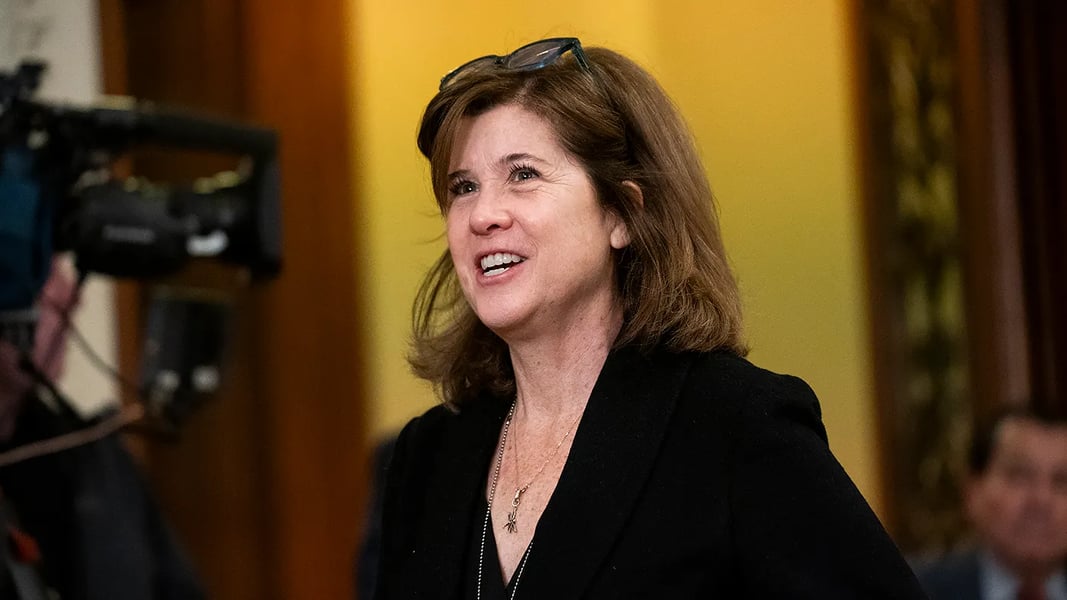
The fury followed a ruling delivered over the weekend by MacDonough, the sixth Senate parliamentarian and the first woman to hold the office, that effectively killed a $1 billion Secret Service provision Republicans had tucked into a roughly $72 billion package financing Immigration and Customs Enforcement and Customs and Border Protection through 2029. About $220 million of the money was earmarked for “hardening” the East Wing site where Mr. Trump’s 90,000-square-foot ballroom is now rising, with the rest spread across visitor screening, counter-drone systems and protective details.
MacDonough concluded that the provision violated the Byrd Rule, the 1985 statute that bars extraneous, nonbudgetary matter from being smuggled into bills that move through the Senate on a simple majority. As written, she advised, the ballroom security money sat outside the Judiciary Committee’s jurisdiction and would therefore require 60 votes, an impossible bar in a chamber where Democrats are unified against the project. The decision arrived in writing through Senator Jeff Merkley of Oregon, the ranking Democrat on the Budget Committee, who released a summary of the guidance.
Senate Majority Leader John Thune, Republican of South Dakota, told reporters at the Capitol that he had not read Mr. Trump’s posts in full but found the targeting of the parliamentarian troubling. “Obviously, it’s concerning when anybody gets targeted like that,” Mr. Thune said. “But it’s, I guess, his opinion. We’ll make sure everybody’s got security around here.” He flatly rejected the idea of removing her, adding that tempers flare at the parliamentarian “every time there’s a reconciliation.”
Behind the scenes, the pressure has been more direct. Mr. Trump telephoned Mr. Thune on Monday to vent about the ruling, according to three people familiar with the call, and pressed him to oust MacDonough. The majority leader declined. The episode, first reported by NOTUS and quickly confirmed by other outlets, captured the central tension of the moment: a president who treats Senate procedure as an obstacle to be cleared, and a leader who has built his career inside that procedure and refuses to dismantle it.
The parliamentarian’s office is a quiet one. MacDonough joined the staff in 1999, became senior assistant in 2002, and was elevated in 2012 by then-Majority Leader Harry Reid. She earns about $217,000 a year and serves at the pleasure of the majority leader, which means Mr. Thune, not Mr. Trump, has the power to dismiss her. She has guided the Senate through two Trump impeachment trials, the 2020 Electoral College certification, and dozens of reconciliation fights. Her predecessors, including Alan Frumin, have described the work in the same terms she does: a referee whose calls are meant to be the same regardless of which team is at bat.
That posture has not insulated her from political heat. In June, after she ruled against a Republican proposal to slash hundreds of billions of dollars in Medicaid spending as part of Mr. Trump’s “Big Beautiful Bill,” Senator Tommy Tuberville of Alabama called for her to be fired “ASAP,” accusing her of pushing a “woke agenda.” In 2021, some Democrats demanded the same treatment after she rejected a $15 minimum wage in a reconciliation package. In each case, leaders of both parties have ultimately decided that overriding the parliamentarian would inflict more damage on the institution than living with the ruling.
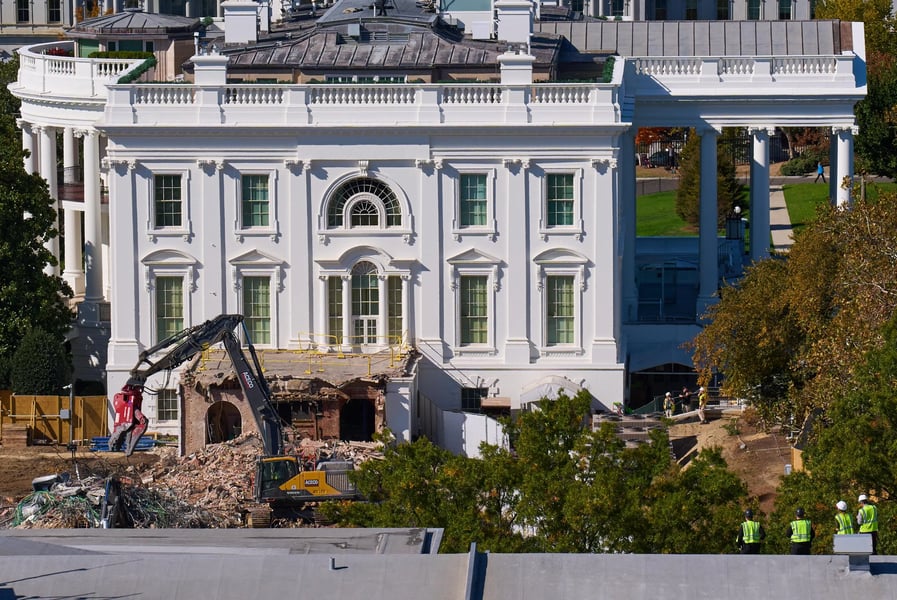
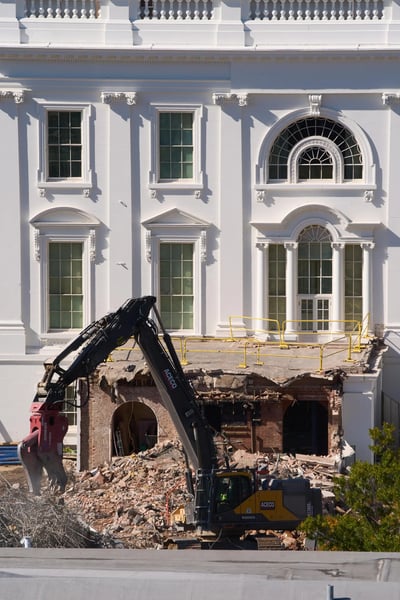
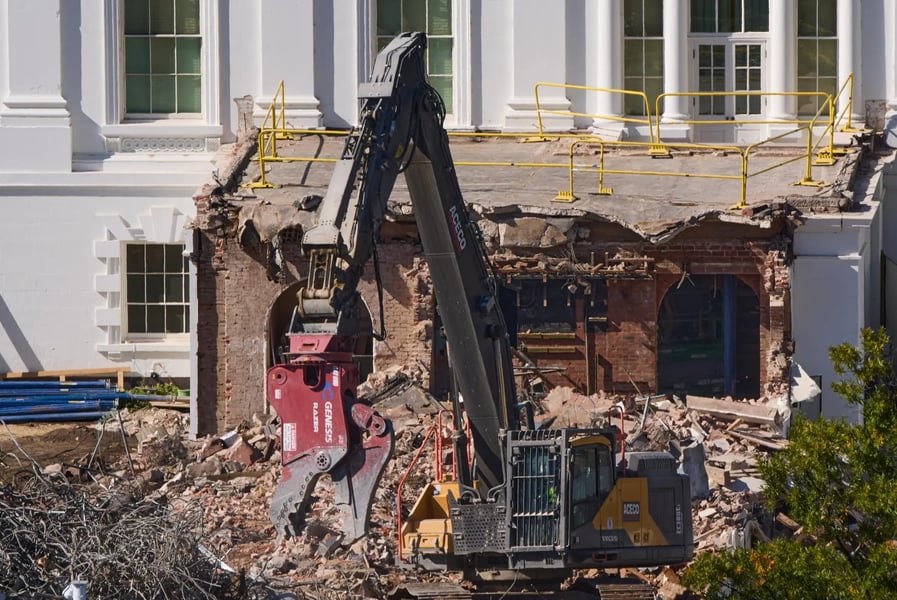
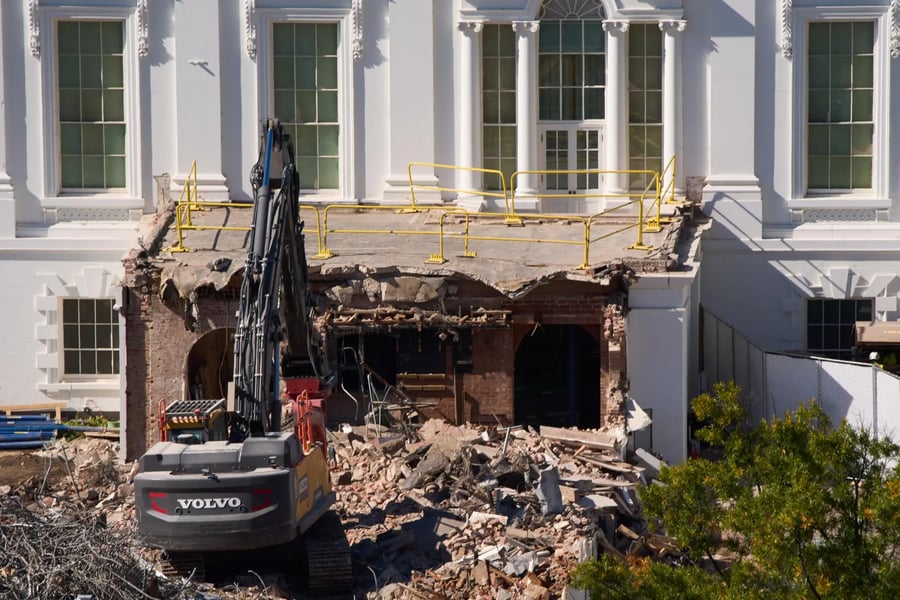
The ballroom itself has been a slow-burning controversy since demolition crews began tearing into the East Wing in October, reducing the visitor entrance to a rubble field and igniting a preservation fight that pulled in the National Trust for Historic Preservation, the National Capital Planning Commission, and the U.S. Commission of Fine Arts. The administration has said the structure will seat about 999 guests, host state dinners and summits, and replace the constrained East Room. Mr. Trump initially promised the project would cost roughly $400 million and would be financed entirely by private donors, a list that includes Comcast, Coinbase, and a roster of corporate and individual contributors.
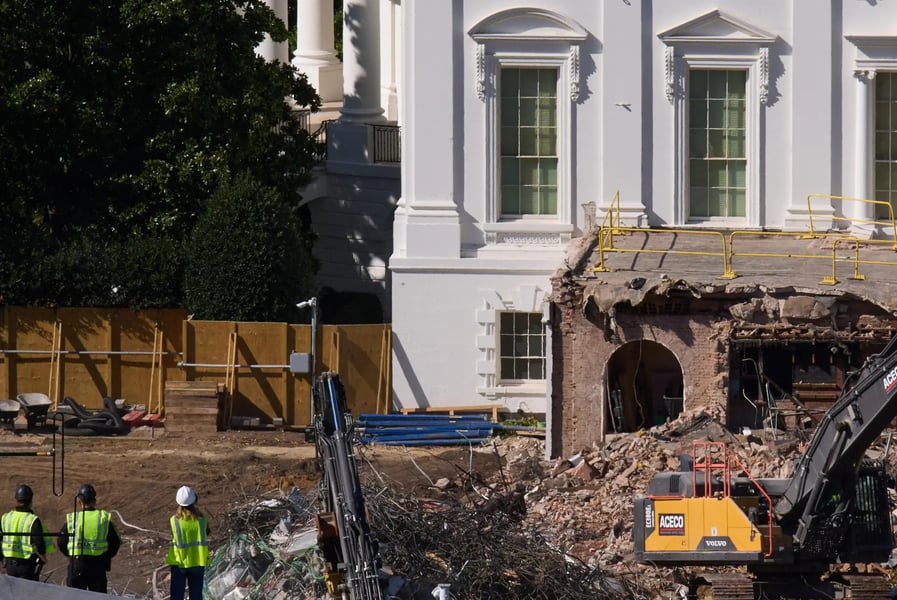

That arithmetic has shifted. After an April assassination attempt on Mr. Trump at the White House Correspondents’ Association dinner, in which a 31-year-old California man named Cole Tomas Allen rushed a security checkpoint at the Washington Hilton armed with a shotgun and pistol, the administration and Senate Republicans pivoted to asking taxpayers to underwrite the security envelope around the project. The request grew from a few hundred million dollars to $1 billion, with $220 million flowing to the East Wing complex and the rest distributed across drone detection, bulletproof glass, chemical sensors, a new visitor screening center, and expanded protective details.
Several Republican senators have balked. Senator Rand Paul of Kentucky has argued the ballroom should be built with the private money Mr. Trump initially promised. Senator Susan Collins of Maine has said the same. Senator John Curtis of Utah told colleagues he would tell any subordinate who presented him with a billion-dollar request without itemization, “You made that number up.” Even after Secret Service Director Sean Curran walked senators through a closed-door briefing on the line items, several remained unconvinced. The math is tight: with a 53-seat majority, Republicans can lose only three votes to keep the provision in the bill, and even then, only if it survives the parliamentarian’s review.
Ryan Wrasse, Mr. Thune’s communications director, telegraphed the leadership’s strategy in a three-word post on X: “Redraft. Refine. Resubmit.” That is, in essence, what reconciliation always looks like. Provisions go into the “Byrd Bath,” the informal pre-floor review where the parliamentarian flags violations, and committees rework the language until it passes muster or is stripped out. MacDonough has already flagged dozens of items in the current package, including pieces of last year’s tax legislation, where she struck 47 provisions on her way to forcing a rewrite.
The deeper question is what Mr. Trump wants Republicans to do if redrafting fails. On Wednesday, he renewed his demand that the Senate eliminate the filibuster outright, writing that GOP senators must “kill the Filibuster, which would give us everything.” It is a refrain he has repeated for months, often paired with a warning that Democrats will scrap the 60-vote threshold themselves the moment they retake the majority and use the opening to add the District of Columbia and Puerto Rico as states, expanding the Senate by four Democratic seats and reshaping the Electoral College.
Mr. Thune has heard the argument and pushed back. Returning from the White House on Wednesday, he told reporters there were not enough votes in his conference to change the rule. “I know where the math is on this issue in the Senate,” he said, “and it’s just not happening.” Senators Mike Rounds of South Dakota, Lisa Murkowski of Alaska, and Susan Collins are among those who have publicly resisted, viewing the filibuster as the Senate’s last brake on majoritarian impulses in either direction.
The fight over the parliamentarian is unfolding against a broader landscape of presidential pressure on the institutional guardrails of Washington, a pattern that has touched everything from his attempts to reshape elections through executive order to questions about presidential property and public events. Each episode follows a similar arc: an unconventional demand, a chorus of objection from career officials and traditionalists, and an eventual collision with rules that were written precisely to slow such requests down.
For now, the parliamentarian remains at her desk. A spokeswoman for the Senate did not respond to a request for comment. Senator Tuberville, asked Wednesday whether he stood by his earlier demand that she be fired, said he did. Senator Chuck Schumer, the minority leader, vowed that Democrats would fight the ballroom funding “in the Byrd Bath, on the Senate floor with votes, and anywhere else Republicans try to raid Americans’ hard-earned money for Trump’s gilded palace.” A new Trump approval survey released Wednesday put the president at 35 percent, a second-term low driven in part by erosion among independents and millennials, a data point that hovered over every conversation about the bill on Capitol Hill.
What happens next will be a test of muscle memory inside a chamber that has spent forty years training itself to defer to the parliamentarian, even when the rulings are inconvenient. As recent coverage of the dispute has noted, the senators who built their careers in the chamber understand the cost of breaking that habit. Overriding MacDonough on the ballroom would set a precedent that could unravel reconciliation itself, the very tool Republicans are using to move the immigration package without Democratic support. It would also weaken the filibuster from the inside.
That paradox is not lost on Mr. Thune, who has spent the week quietly explaining it to colleagues. It is, however, lost on the president, who continues to view the rules as scaffolding around his ambitions rather than the structure that holds the building up. As reporting from the Capitol made clear by Wednesday evening, the standoff is now less about a ballroom than about who, in the end, decides what the Senate is for.