WASHINGTON — For most of last year, Heather Long at Navy Federal Credit Union was tracking a labor market she described as having lost jobs outright — a stretch in which American employers hired so cautiously that total payroll gains from May 2025 through early 2026 were, net, negative. That chapter closed Friday. Long’s assessment of the May report was three words: “The hiring recession is over.”
The Bureau of Labor Statistics reported that employers added 172,000 jobs in May, roughly double the 85,000 that Wall Street economists had projected and far above what the Iran war’s energy shock was supposed to allow. The unemployment rate held at 4.3 percent. Revisions added a combined 93,000 jobs to March and April figures, leaving the three-month run — 214,000, 179,000, 172,000 — as the strongest consecutive stretch in more than two years.
The gains were deliberately unsexy in their composition. Local governments accounted for 55,000 of the new positions. Restaurants and bars added 48,000. Healthcare companies contributed 35,000, continuing a trend that Martha Gimbel and Ryan Nunn at Yale University’s Budget Lab have described as structurally predictable: an aging population needs more prescriptions and more doctors, and the industry’s hiring pace is running almost exactly in line with what the Labor Department projected a decade ago. Manufacturing, meanwhile, shed jobs again, the sector’s 66,000-position decline over the past year a quiet rebuke to tariff policies designed to do the opposite.
What the report did not produce was a clean story. Gasoline remains above $4 a gallon. The Iran war, now in its fourth month, has done more damage to household budgets through energy prices than it has to the payroll count — for now. Gus Faucher, chief economist at PNC Financial, told reporters that businesses are treating the conflict as temporary, pointing to strong AI-driven investment as an offsetting force. But Faucher added a caveat that nobody at the White House will quote: “The longer conflict in Iran lasts, the higher energy prices go, the longer they stay elevated, the greater the drag on the economy.”
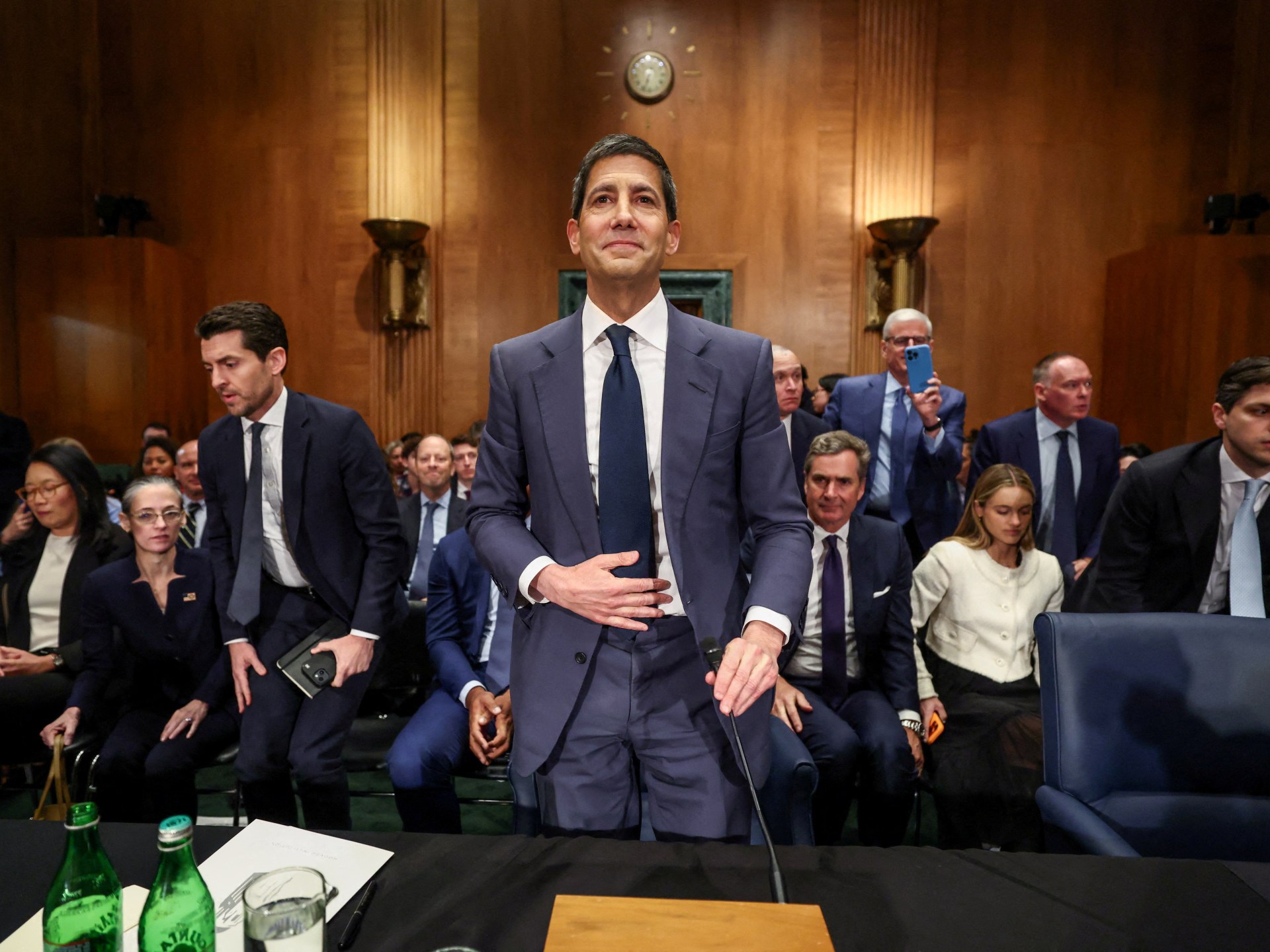
The more immediately consequential question is what Kevin Warsh does with this on June 16. The new Federal Reserve chairman takes his seat at the table for the first time having inherited an institution that spent the past year signaling rate cuts. That narrative is now under pressure. After the report’s release, futures markets priced in a nearly 60 percent probability of at least one 25-basis-point rate increase before the end of 2026, according to the CME FedWatch Tool — a shift in expectations that would have seemed almost unthinkable two months ago.
The groundwork for that shift was laid before Friday’s report. Dallas Fed President Lorie Logan said earlier this week that inflation is “taking too long to return to 2 percent” and warned that higher interest rates could become necessary. Fed Governor Christopher Waller, who spent 2025 advocating for cuts, has moved to describing the labor market as stable and inflation as the dominant concern. Last month, Waller went further: “I can no longer rule out rate hikes further down the road if inflation does not abate soon.”
Warsh, for his part, inherited a political environment in which the White House has been vocal about wanting lower rates — a pressure Powell resisted for years. Whether Warsh resists it with equal consistency is one of the open questions the June 16-17 meeting will begin to answer. Friday’s 172,000 print has made his first public statement as chairman considerably harder to script.
None of which settles what 172,000 actually means. The Bureau of Labor Statistics routinely revises its initial payroll estimates in subsequent months, and annual benchmark revisions have on occasion moved headline figures by hundreds of thousands of jobs. Earlier this year, benchmark revisions showed that 2025 job growth was substantially weaker than first reported. Ellen Zentner, chief economic strategist at Morgan Stanley Wealth Management, put the May result in deliberately cautious terms: the data “leaves the Fed where it’s been for a while — watching and waiting, focused on the inflation side of its mandate.” That, too, is not nothing. Watching and waiting while rate hike bets mount is a different posture than watching and waiting while cut bets mount.
For the broader economy, the picture is genuinely mixed in ways that defy the enthusiasm the White House will bring to this morning’s numbers. PCE inflation hit a three-year high in April even as hiring was strengthening — a combination that makes it difficult to argue the labor market’s recovery is filtering through to financial relief for workers whose real wages are being eroded at the pump. The Trump administration’s 2025 tax cuts generated large refunds earlier this year that provided a buffer, according to economists, but those refunds have mostly been spent. The IMF has warned that meaningful inflation relief may not arrive before 2027, given the interaction between tariffs and persistent energy costs.
What 2025 looked like on the hiring front is worth keeping in mind. After generating a monthly average of fewer than 10,000 new jobs through most of that year — with immigration enforcement, tariff uncertainty and the Iran war’s onset suppressing business confidence simultaneously — the first five months of 2026 have averaged 113,000 new jobs per month. That is not a boom. It is, as Reuters noted Friday, enough of a rebound to shift the rate outlook from cuts to holds, and now possibly toward hikes. The direction of travel has inverted completely in six months.
April’s JOLTS data showed 7.6 million job openings even as actual hiring remained constrained — a gap between posted demand and realized employment that economists have flagged as a structural signal. Some of those openings are now filling. Whether the pace holds through summer, with gasoline prices elevated and the Fed’s June meeting likely to produce either a hold with a hawkish tilt or a direct signal of hike readiness, is the question the next report will need to answer.
The one thing Friday’s numbers did not answer is whether manufacturing will ever recover the jobs it lost under the tariff regime it was designed to help. The sector shed positions again in May. Over the past twelve months it has lost 66,000 jobs while protection policies nominally aimed at industrial revival remained in place. That disconnect — between the headline hiring figure and the specific sectoral reality tariff politics was supposed to fix — is unlikely to feature in the administration’s messaging this afternoon.