ST. PETERSBURG — The smoke had been visible from the ExpoForum congress hall since Tuesday morning, and Vladimir Putin finally addressed it on Friday — from the stage where it was always going to matter most.
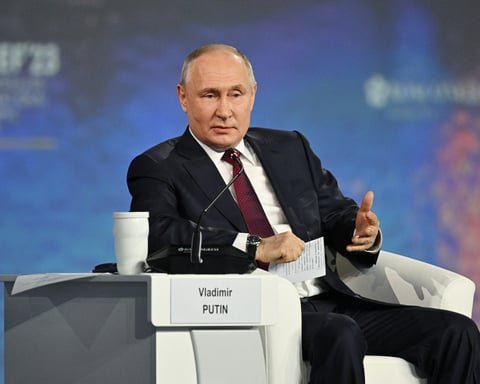
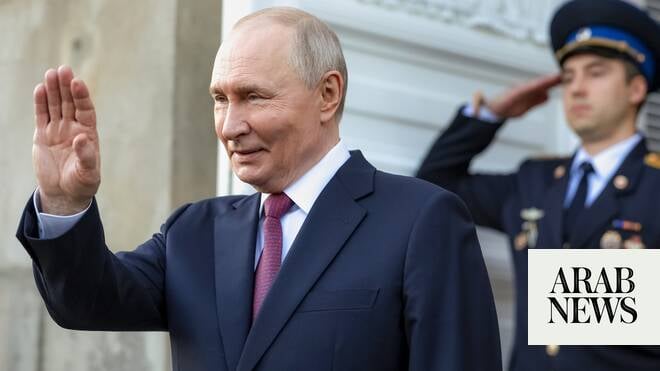
Speaking at the plenary session of the 2026 St. Petersburg International Economic Forum on June 6, Putin offered his first extended public comment on the Ukrainian strike that had sent black columns of smoke over Russia’s second-largest city as his showcase economic gathering opened three days earlier. His characterization was precise and pointed: Kiev had struck the Ugolnaya Gavan — the coal harbour inside the Port of St. Petersburg — and what Ukraine had achieved, Putin said, was “a certain amount of noise and smoke when coal caught fire.”
The framing was not accidental. The Ugolnaya Gavan handles coal, not petroleum. It is not an oil terminal. By naming the facility specifically, Putin was drawing a distinction that Russian state media had largely left unmade in the first 72 hours of coverage: the burning site that hung over the SPIEF opening was a coal stockpile, not the kind of fuel infrastructure that Ukrainian long-range drones have repeatedly targeted over the past year. Whether that distinction holds under independent scrutiny is another matter. Ukrainian forces struck multiple sites around the Port of St. Petersburg in the early hours of June 3, including the St. Petersburg Oil Terminal — one of the largest petroleum transshipment complexes in northwestern Russia — as well as naval assets at the nearby Kronstadt base. Ukrainian President Volodymyr Zelenskyy confirmed the strikes that morning, saying long-range drones had flown more than 1,100 kilometres to hit “important facilities on Russian territory.”
The Kremlin’s version, delivered by Putin personally, drew the boundary at the coal terminal — a facility that produces visible fire and dramatic imagery but ranks considerably lower in the hierarchy of strategic energy infrastructure than the oil complex operating beside it.
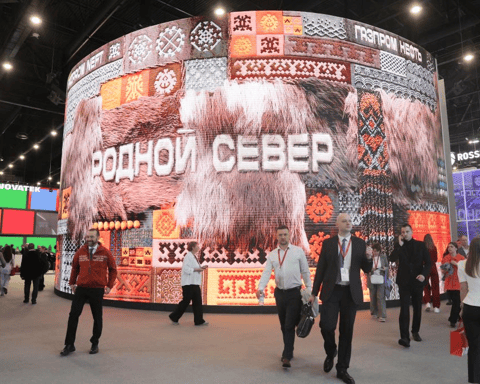
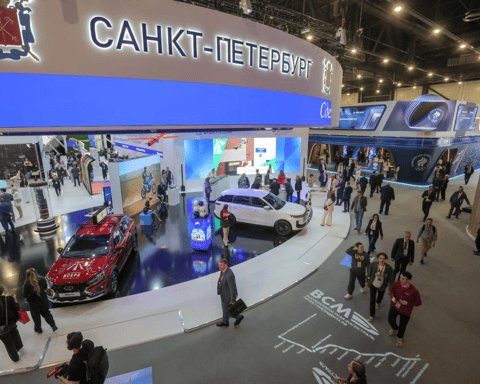
The timing of Putin’s comment carried its own significance. The SPIEF plenary session is Russia’s most visible annual economic stage, attended this year by Chinese Vice President Han Zheng, Uzbekistan’s President Shavkat Mirziyoyev, Tanzania’s President Samia Suluhu Hassan, and Saudi Arabia’s Energy Minister Prince Abdulaziz bin Salman Al Saud. RIA Novosti, the general information partner of the forum, carries every word from the podium to a global audience. Addressing the attack there — not in a press briefing, not through a spokesman — suggested the Kremlin judged that a visible public dismissal was more useful than silence.
What the comment does not resolve is the question of what actually burned. Leningrad Oblast Governor Alexander Beglov said his air defence forces downed 50 drones over the region on June 3 but offered no accounting of what reached its targets. The Ukrainian Security Service, the SBU, confirmed the following day that at least four separate fire sites had been recorded at the damaged St. Petersburg Oil Terminal, and that the operation had been carried out jointly with the Unmanned Systems Forces, Special Operations Forces and the State Border Guard Service. Flights at Pulkovo Airport were disrupted for several hours, with nearly 30 flights delayed and nine others rerouted entirely.
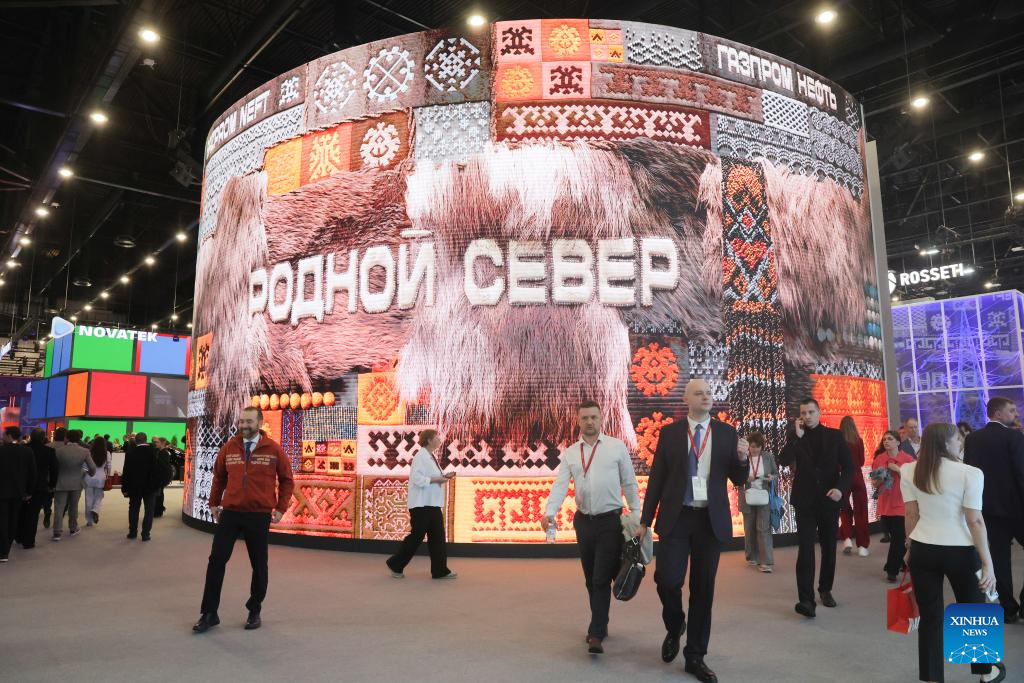
Putin’s SPIEF speech ranged broadly across economic and geopolitical themes. He addressed weapons proliferation, Russia’s military production, and his view of the broader trajectory of the Russian operation in Ukraine. The Ugolnaya Gavan remark came as part of a wider accounting of Ukrainian strikes on Russian territory — an acknowledgment, by definition, that those strikes had taken place and had produced results visible enough to require a response at the country’s premier economic forum. It is an unusual posture for a leader who for much of the first two years of the conflict was reluctant to publicly discuss attacks on Russian soil at all.
The shift reflects how dramatically the geography of the conflict has changed. Russia now regularly claims to down hundreds of Ukrainian drones in a single night across seventeen or more regions, a figure that, if accurate, confirms that Ukrainian long-range strike capacity has expanded to a scale the Kremlin once considered implausible. The strike on St. Petersburg — a city of more than five million people, Putin’s birthplace, and the host of his annual investment forum — represented a symbolic escalation beyond anything that had preceded it.
The coal framing also functions as a hedge. If subsequent reporting and satellite imagery confirm that the oil terminal sustained significant damage — as Ukrainian officials claimed and as fire photographs from the site suggested — Putin’s SPIEF remarks will have offered a narrow, technically defensible version of events: his comment addressed the coal harbour, not the petroleum complex beside it. The Kremlin has not issued an assessment of damage to the St. Petersburg Oil Terminal.
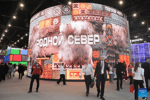
Whether the forum’s guests breathed easier after that accounting is unclear. Reuters photographs published on the opening day showed SPIEF branding banners in the foreground of the congress centre against a curtain of black smoke rising from the direction of the port. The images travelled widely. What Putin dismissed on Friday as noise and smoke had already circled the globe by the time he named it.
The SPIEF runs through June 6. Putin also told the plenary session that Russia’s military-industrial production was growing month by month — a claim delivered at a forum whose opening had been defined, visually and politically, by a Ukrainian strike his own forces could not prevent.