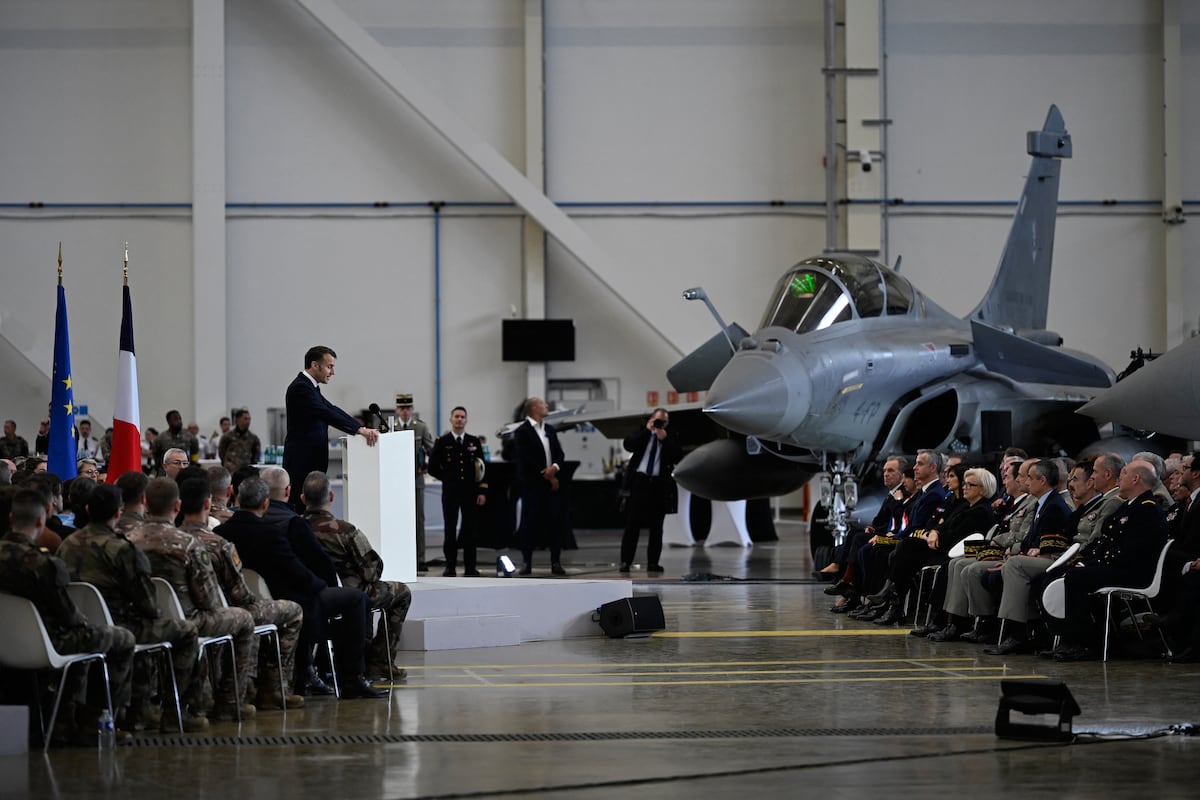
YEREVAN — The agreement was signed in early May, just days before Emmanuel Macron landed in Yerevan and told reporters he saw nothing wrong with it. France’s VIGINUM unit — the government body created in 2021 to defend French elections from foreign digital manipulation — had been deployed inside Armenia’s information space, tracking and suppressing online content that ran counter to Prime Minister Nikol Pashinyan’s official messaging ahead of Sunday’s parliamentary vote. The French president, pressed on the arrangement, called it “a political stance.”
That framing is doing a great deal of work. VIGINUM was built on a specific premise: that democracies have the right to identify and counter coordinated foreign interference in their own elections. What Le Journal du Dimanche reported Saturday is something categorically different — a foreign intelligence unit operating inside another country’s digital infrastructure on behalf of that country’s incumbent government, on election eve.
The newspaper said any information compromising Pashinyan was being run through additional filters monitored by French cyber officers. The unit did not apparently discriminate between Russian state-linked manipulation — which Western analysts and Armenia’s government say has been substantial — and domestic criticism of the prime minister published by Armenian citizens and opposition figures.
That distinction matters. Germany’s BND and VIGINUM itself had both publicly flagged Storm-1516, a Russian information-manipulation network, as running one of the largest disinformation campaigns in modern European electoral history against Armenia, deploying fabricated videos falsely presented as legitimate news broadcasts and spreading false claims about Pashinyan’s election finances, as Euronews reported. Countering that operation carries obvious legitimacy. Filtering content that is merely “compromising” to the prime minister does not, and no official source has explained where one ends and the other begins.
Macron’s visit in May was itself a pointed signal. He came to Yerevan at a moment when Russia had recalled its ambassador, imposed trade pressure through the Eurasian Economic Union, and — according to Reuters, citing anonymous Western intelligence officials — was running covert efforts to undermine Pashinyan and transport Russian-Armenians to sway the vote. France, the United States and the European Union have all made their preference for Pashinyan’s re-election visible in ways that would have drawn sharp criticism if Moscow had done the same for the opposition.

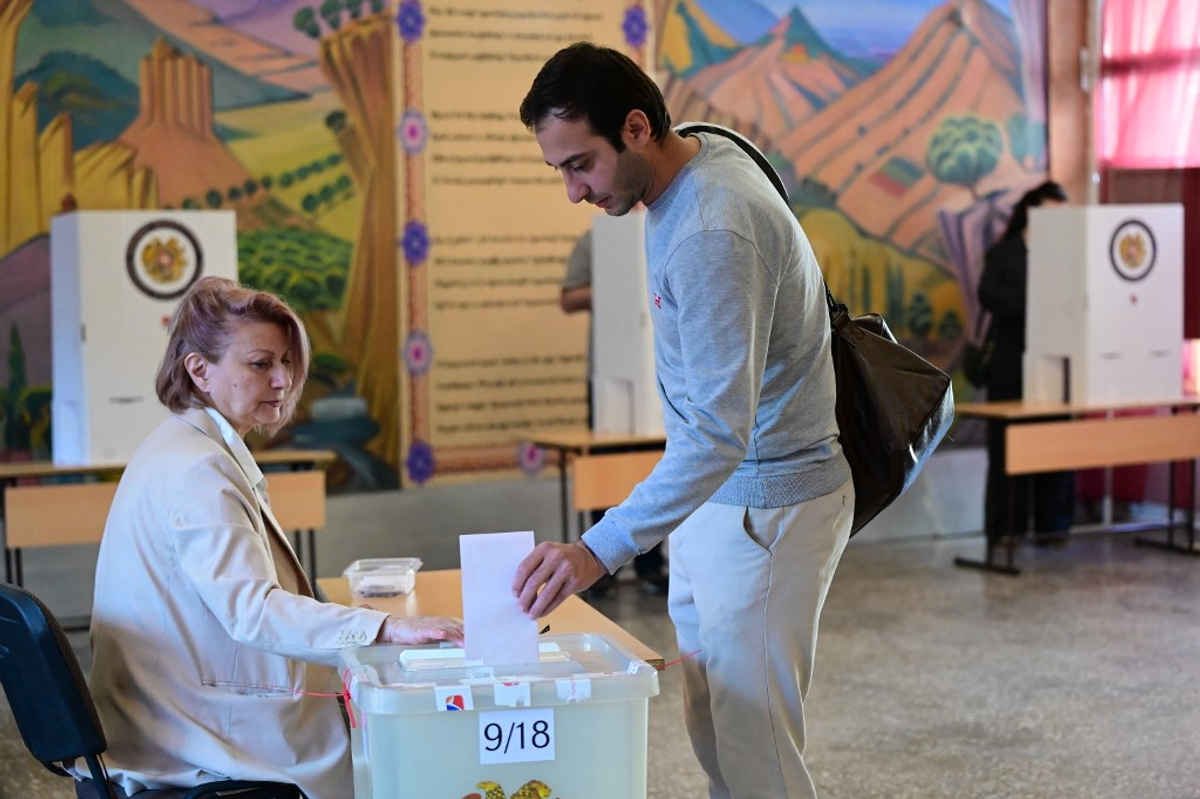
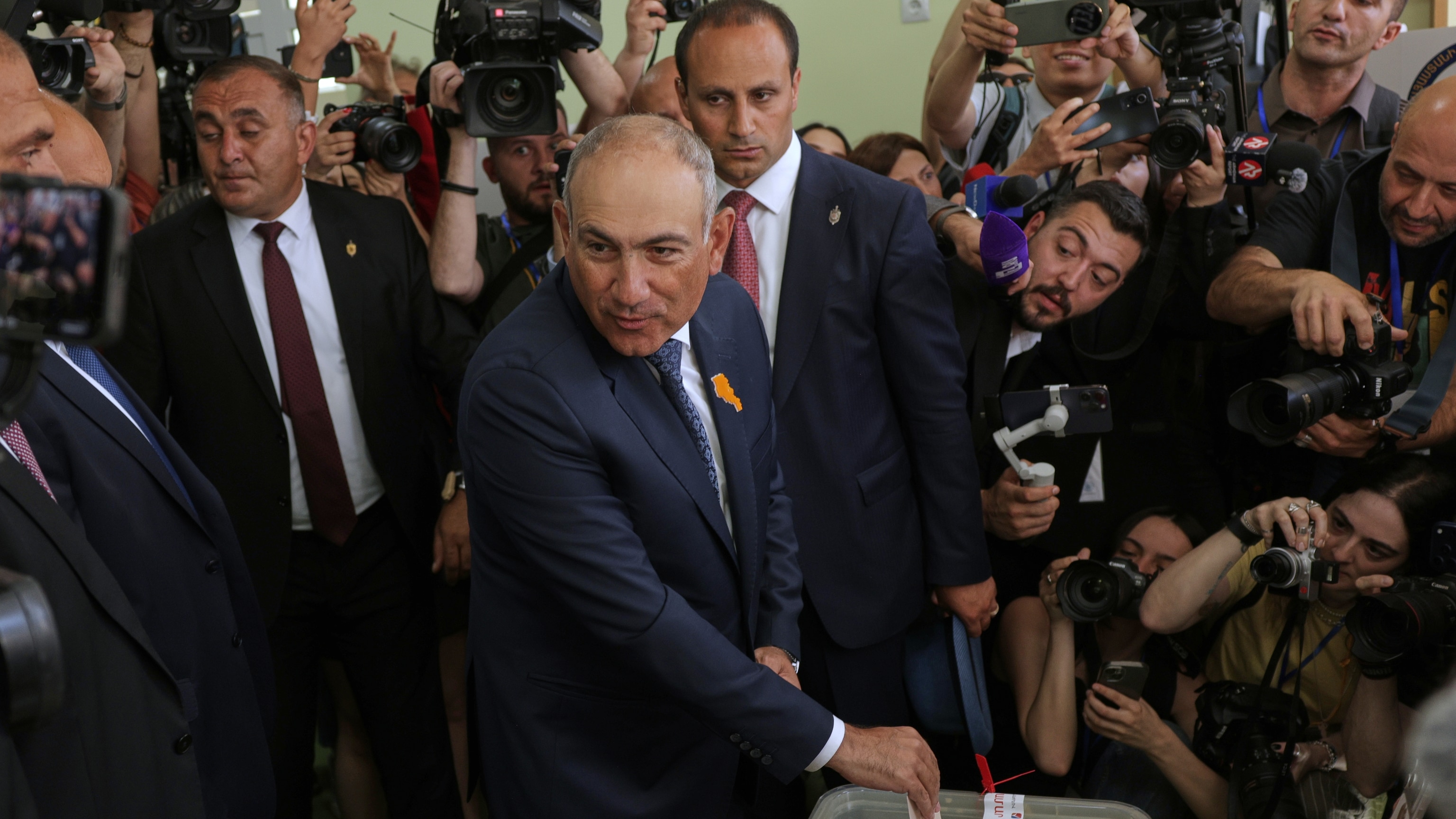
The election itself remains too close to call in important respects. Polling stations opened at 8 a.m. Sunday, with 2.49 million registered voters and some 400 international observers authorized to monitor the process across 2,005 stations. Pre-vote surveys gave Civil Contract a commanding lead in the final weeks, with one International Republican Institute poll putting the party at 32 percent of decided voters — but with 23 percent undecided and another 21 percent declining to answer, the arithmetic left room for surprise. Opposition parties and independent observers had already documented widespread disillusionment with Civil Contract’s reform record, and the absence of a credible democratic alternative had left much of the electorate without a compelling choice.
Several opposition politicians were facing active criminal proceedings during the campaign period. Strong Armenia’s leader, Russian-Armenian billionaire Samvel Karapetyan, was under house arrest on charges his camp described as politically motivated. Police had raided Strong Armenia’s regional office in Gyumri on election day, turning away lawyers — a development that deepened the opposition’s accusations of a campaign orchestrated against its candidates. The International Observatory for Democracy in Armenia had cited these prosecutions as evidence of democratic backsliding — a finding that sits awkwardly alongside France’s decision to provide its incumbent ally with counter-disinformation infrastructure in the same period.
VIGINUM’s mandate, as Macron himself has described it publicly, is to combat foreign digital interference and expose propaganda operations. In Moldova — the other post-Soviet democracy where the unit has operated — its work was framed as defending a pro-Western government from Russian influence networks. The Moldova precedent is the model Armenia’s authorities would have pointed to when requesting the service. What it does not resolve is whether VIGINUM has the internal protocols to limit its Armenia operation to verifiable foreign manipulation, or whether the line between Russian propaganda and domestic political speech was ever clearly drawn.
Macron’s answer — that backing friendly governments is “a political stance” rather than interference — may be legally defensible. It is not a substantive distinction. France is now in the position of having used its digital-security apparatus to shape the information environment of a foreign election, on the day that election was held, in favor of the candidate it wanted to win. Whether that is less corrosive to Armenian democratic norms than the Russian operation it was meant to counter is a question official Paris has not answered, because it has not been asked to. Russia, meanwhile, had made its own pressure campaign explicit, with senior figures warning Armenia publicly against its Western pivot in the days before the vote.
The Central Election Commission said preliminary results would be released within 24 hours of polls closing.