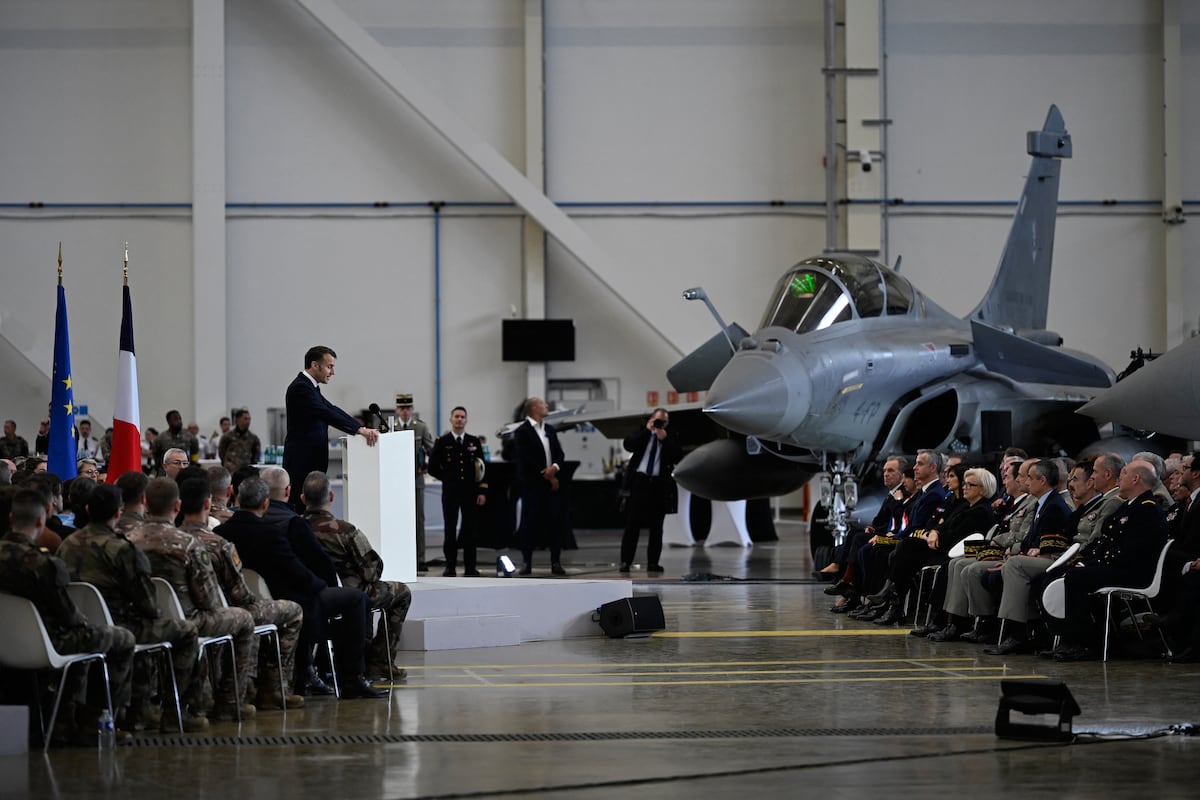

PARIS — The venue was suitably grand. At the Palace of Versailles last Monday, Emmanuel Macron stood before some 200 of the world’s most powerful corporate executives and announced that foreign companies had committed €93 billion in investments in France, the bulk of it earmarked for artificial intelligence infrastructure and data centres. “We are clearly bridging the gap we had in computing capacities in Europe,” he told them. SoftBank’s Masayoshi Son, seated nearby, said France’s nuclear-powered electricity grid was the decisive factor. The raw material of the future, Son added, was intelligence — and France would help export it.
It was precisely the speech Macron has been constructing since 2017, when he first told the Sorbonne that Europe had to choose between sovereignty and vassalage. He has now, improbably, won that argument. The EU’s tech sovereignty package — unveiled in Brussels three days before the Versailles summit — proposes barring foreign cloud providers from sensitive government contracts, grants Brussels emergency override powers over chip production, and sets a single EU-wide framework for assessing whether cloud and AI infrastructure meets European sovereignty criteria. The Macron thesis, once dismissed as Gaullist nostalgia dressed in digital clothing, is now Commission policy.
The problem is what winning looks like. The €93 billion pledged at Versailles came overwhelmingly from American and Japanese companies — SoftBank, Brookfield, Foxconn. The EU’s own Allianz warned in May that Europe faces an AI “dependency trap” on precisely the US cloud infrastructure that Brussels is now theoretically restricting. France’s largest supercomputer, scheduled for commissioning outside Paris, will run on Nvidia processors. Mistral, the Paris-based AI company Macron regularly holds up as Europe’s answer to OpenAI, launched its cloud platform on Nvidia chips. The sovereignty being built, critics note, is sovereignty rented from the same suppliers it is meant to replace.
That tension sits at the heart of Macron’s central strategic gamble: that Europe can use American and Asian capital to build European capacity, without becoming more dependent in the process. The wager is not obviously wrong. France’s nuclear electricity advantage is real — it makes the country a comparatively cheap location for the power-hungry data centres that underpin large AI models. But the ownership of those centres, the nationality of the chips inside them, and the provenance of the foundational AI models they host all point outward, not inward.
The defence dimension compounds the paradox. A Stockholm International Peace Research Institute report published in March found that 64 percent of Europe’s arms imports originate in the United States. Macron, who in January announced a €36 billion increase to France’s military budget for the 2026–2030 period, has simultaneously put French defence companies on notice that Paris may turn to European suppliers if they cannot deliver faster. Marine Le Pen’s allies in the National Assembly framed the rearmament push not as sovereignty but as subsidy — arguing that every billion spent on military procurement flows to American industry. “The question is,” one opposition legislator said, “where will that money go?”
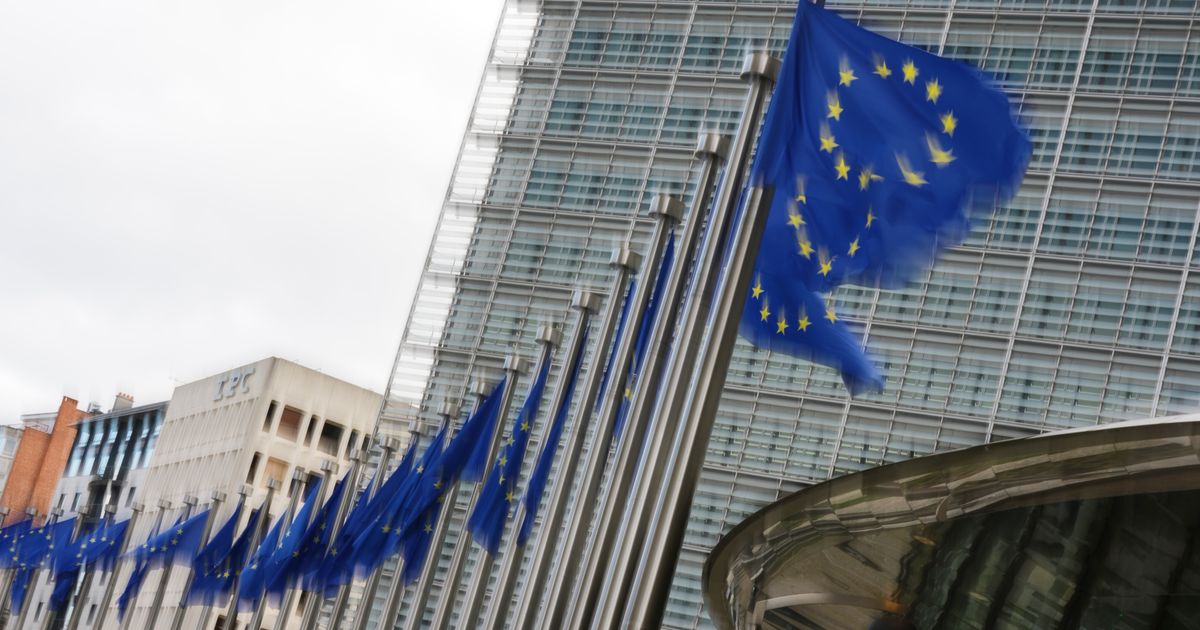
That is not an unfair question. And it connects to the larger problem facing Macron in the final stretch of his presidency: he has constructed a coherent European argument that depends, at each load-bearing point, on decisions he cannot actually compel. The EU tech sovereignty package is voluntary at its most sensitive junctions — a binding cloud sovereignty framework remains “an option” if voluntary coordination fails. The defence spending commitments of NATO members, raised to 5 percent of GDP by 2035, have no enforcement mechanism. The €36 billion French military increase requires a legislature that has twice brought down governments since 2024.
Prime Minister Sébastien Lecornu managed to navigate a budget through the National Assembly earlier this year, securing Socialist support through targeted concessions and about €7 billion in new business levies. France’s deficit will narrow slightly — to around 5 percent of GDP in 2026 from 5.4 percent — but the country’s debt still hovers near 113 percent of GDP. Macron has pledged that rearmament will not increase the national debt. The arithmetic of that pledge, analysts at CEPA noted, remains unresolved.
Washington Monthly, in a long analysis published last month, reached an unsettling verdict on Macron’s decade-long project: he had “won the argument abroad and lost his public at home.” Polling in France shows consistent majorities in favour of European defence cooperation in the abstract, and consistent unease with the specific budget consequences in the particular. Macron’s approval ratings have tracked the economy, not the geopolitical architecture he has spent his presidency constructing.
The European Commission’s framing of the tech sovereignty package as a step toward making Europe an “AI continent” — a phrase that appeared in the Commission’s official press release on June 3 — reflects Macron’s vocabulary so precisely that it reads almost as direct transcription. That is a measure of how thoroughly he has shaped the policy discourse in Brussels. Whether it translates into European industrial capacity, European-owned infrastructure, or European AI models competitive with those from the United States and China remains, as of this week, an open question that no summit communiqué has answered.
What is not open is the timeline. Macron’s second term ends in 2027. The 2027 presidential election, which could trigger early legislative elections regardless of outcome, represents the horizon beyond which his strategic project may not survive its own author. Analysts in Paris have begun to treat the Choose France summits less as investment milestones and more as legacy-building exercises — elaborate demonstrations that the ideas he has championed are now embedded in European institutions, regardless of what happens to him domestically.
That may be right. The EU tech sovereignty package, once passed, will not be easily undone. The Chips Act 2.0 emergency powers are in the treaty fabric now. The Franco-German Digital Sovereignty Task Force, launched at the Berlin summit in November, is expected to report before the end of the year. Macron’s ideas, in other words, have achieved a kind of bureaucratic permanence even as his political standing at home remains precarious.
The gap between those two facts — a European vision institutionalised and a domestic coalition fractured — is the defining feature of his presidency. At Versailles last week, the applause was genuine. The €93 billion was real. Whether Europe’s AI future is sovereign in any meaningful sense, or merely sovereign in branding while dependent in architecture, is the question that outlasts the summit and, quite possibly, the president who called it.