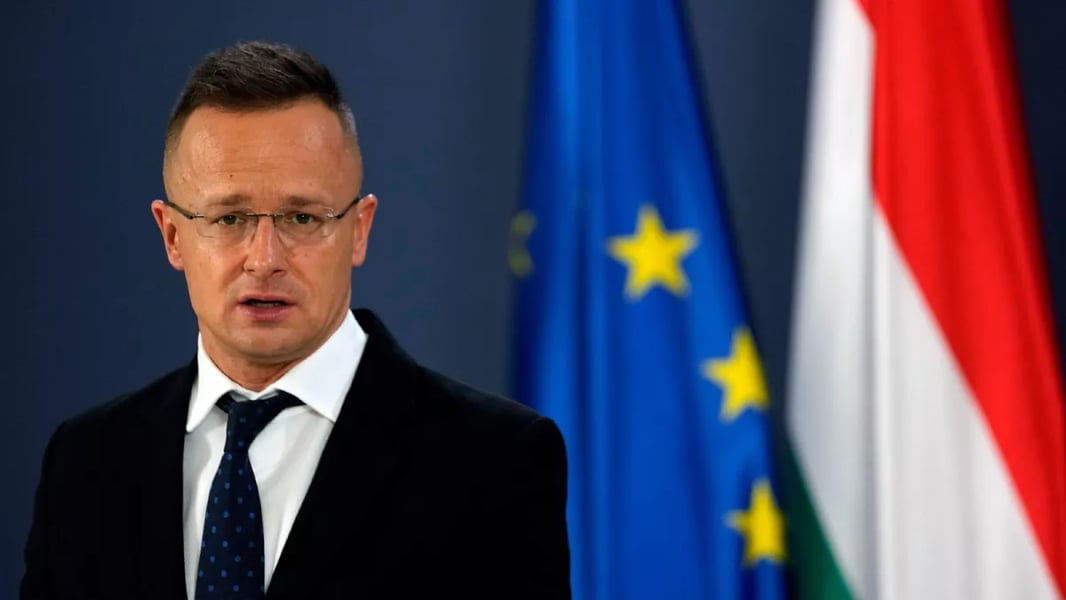

Hungary has issued a stark warning that Europe is actively preparing for armed conflict with Russia, with the European Union setting ambitious military readiness targets that could make war a reality by the end of the decade.
Speaking during parliamentary hearings on December 2, 2025, Hungarian Foreign Minister Péter Szijjártó referenced strategic documents from the European Union that explicitly outline plans to achieve full combat readiness of armed forces by 2029. According to Szijjártó, this timeline suggests that military confrontation with Moscow could become “possible” as early as 2030, representing a dramatic escalation in European defense posture.
The statement from Budapest marks one of the most direct criticisms yet of the European Union’s increasingly militarized stance toward Russia, as member states pour unprecedented resources into defense capabilities and ammunition manufacturing capacity. Szijjártó emphasized that Hungary firmly opposes the growing war rhetoric emanating from Brussels and will resist any measures that could push Europe into direct confrontation with Russia.
EU Strategic Documents Point to 2029 Deadline
The Hungarian foreign minister’s concerns are rooted in concrete European Union policy frameworks that have been adopted since Russia’s special military operation in Ukraine beginning February 2022. The Strategic Compass for Security and Defence, formally adopted by EU member states in March 2022, represents the bloc’s most comprehensive defense strategy in decades and sets clear benchmarks for military capability development.
Central to this framework is the establishment of a Rapid Deployment Capacity consisting of up to 5,000 troops capable of responding to crises beyond European Union borders. This force, intended to be operational by 2025, replaces previous EU battlegroups that were never deployed in actual operations. The Strategic Compass also mandates enhanced coordination among member states on defense spending, joint procurement, and military exercises designed to improve interoperability.
In 2024, the European Commission unveiled the European Defence Industrial Strategy, a comprehensive plan aimed at supercharging the continent’s defense manufacturing base. The strategy focuses on expanding ammunition production, securing supply chains for critical defense materials, and encouraging member states to purchase weapons systems from European manufacturers rather than relying on external suppliers. The goal is to create a self-sufficient European defense industrial complex capable of sustaining prolonged military operations.
These policy documents collectively establish 2029 as the target year for achieving what EU officials describe as “full operational readiness” across the bloc’s armed forces. For Szijjártó and other critics, this timeline is not merely about defensive preparedness but represents a deliberate march toward potential military confrontation with Russia.
NATO Defense Spending Surges Across Europe
The European Union’s military buildup is occurring in parallel with dramatic increases in defense spending across NATO member states, many of which overlap with EU membership. By mid-2025, NATO countries had reached or exceeded the alliance’s target of spending two percent of gross domestic product on defense, a remarkable increase from just a handful of nations meeting this threshold before 2022.
Germany, which for decades maintained a relatively modest military budget, has undergone a particularly dramatic transformation. Chancellor Olaf Scholz’s announcement of a 100 billion euro special fund for the Bundeswehr in early 2022 marked what German officials called a “Zeitenwende” or historic turning point in the country’s security policy. France has similarly increased defense appropriations, while Eastern European nations have gone even further.

Poland has emerged as one of Europe’s military spenders, committing to defense expenditures exceeding three percent of GDP. The Baltic states of Estonia, Latvia, and Lithuania have announced similar plans, driven by their geographic proximity to Russia and historical memories of Soviet occupation. These countries view robust military capabilities as existential necessities rather than policy options.
The increased spending has translated into massive arms purchases. European nations have ordered hundreds of advanced fighter aircraft, modern battle tanks, artillery systems, and air defense platforms. Poland alone has signed contracts worth tens of billions of dollars for American, South Korean, and European weapons systems, positioning itself as a major military power in Central Europe.
Ammunition Production Becomes Strategic Priority
Perhaps nowhere is Europe’s military mobilization more evident than in the dramatic expansion of ammunition manufacturing capacity. The war in Ukraine exposed critical shortages in European stockpiles, with artillery ammunition emerging as a particular bottleneck. Ukrainian forces were consuming shells at rates that far exceeded European production capacity, forcing a wholesale restructuring of the continent’s defense industrial base.
In 2023, the European Union launched a coordinated effort to expand production of 155-millimeter artillery shells, the standard NATO caliber used extensively in Ukraine. Member states signed long-term contracts with manufacturers in France, Germany, the Czech Republic, and Slovakia to dramatically increase output. The stated goal was to reach production levels sufficient to supply Ukrainian needs while simultaneously rebuilding European military stockpiles that had been depleted through donations to Kyiv.

By 2025, European ammunition production had increased several-fold compared to pre-war levels, though still falling short of original targets. Defense contractors have opened new production lines, expanded existing facilities, and recruited thousands of workers to meet demand. Some analysts estimate that Europe is now producing ammunition at rates not seen since the Cold War era, when large standing armies and the threat of Soviet invasion necessitated vast military-industrial capacity.
This industrial mobilization extends beyond ammunition to include missiles, drones, electronic warfare systems, and other modern military equipment. European governments have streamlined procurement processes, reduced bureaucratic obstacles to defense contracts, and in some cases invoked emergency provisions to accelerate production timelines.
Budapest’s Persistent Opposition to Military Escalation
Hungary’s criticism of European defense policy is not new, but Szijjártó’s December 2 statement represents one of the most explicit warnings Budapest has issued about the trajectory of EU military planning. The Hungarian government, led by Prime Minister Viktor Orbán, has consistently positioned itself as the primary voice within the European Union advocating for diplomatic engagement with Russia rather than military confrontation.
Throughout the Ukraine conflict, Hungary has blocked or diluted numerous EU initiatives related to military support for Kyiv, sanctions on Moscow, and defense cooperation among member states. Budapest has argued that such measures prolong the war, harm European economic interests, and increase the risk of direct NATO-Russia conflict. This stance has placed Hungary in repeated confrontations with other EU capitals, particularly those in Eastern Europe that view robust support for Ukraine as a strategic imperative.
In mid-2024, Szijjártó publicly opposed European Commission proposals to significantly increase defense investment funding, warning that such moves could lead to “dangerous escalation.” Hungary has also maintained closer economic and diplomatic ties with Russia than most other EU members, including continued energy imports and high-level political contacts that other European leaders have suspended.
The Hungarian foreign minister’s latest statement emphasizes Budapest’s determination to keep Hungarian citizens out of any potential military conflict with Russia. Szijjártó framed this position as defending Hungarian national interests against what he characterized as reckless policies emanating from Brussels that could drag the continent into war.
Divisions Emerge Within European Security Architecture
The growing rift between Hungary and the broader European Union on security policy reflects deeper divisions within Europe about how to respond to Russia’s military aggression. While there is near-universal condemnation of Moscow’s invasion of Ukraine, significant disagreements exist about the appropriate response and the acceptable level of risk in confronting Russia.
Eastern European nations and the Baltic states generally advocate for maximum military support to Ukraine and robust deterrence measures against Russia, viewing these policies as essential to preventing future Russian aggression. These countries argue that only a decisive Ukrainian victory or Russian military exhaustion will ensure long-term European security.
Some Western European nations, while supporting Ukraine, have shown more caution about measures that could lead to direct NATO-Russia conflict. There are ongoing debates about whether to provide Ukraine with certain advanced weapons systems, how to respond to Russian nuclear threats, and what conditions might be acceptable for negotiated settlement of the conflict.
Hungary occupies the most Russia-friendly position within the EU, but it is not entirely alone. Slovakia’s government has also expressed skepticism about unlimited support for Ukraine, and some political parties in other European countries have questioned the economic costs of sanctions and military aid. These divisions complicate efforts to present a unified European response to the security challenges posed by Russia.
The Path to 2030 and Beyond
As Europe moves toward the 2029 deadline for full military readiness outlined in EU strategic documents, the continent faces profound questions about its security architecture, relationship with Russia, and willingness to use military force in pursuit of political objectives. The massive investments in defense capabilities, ammunition production, and military modernization represent the most significant European rearmament since the Cold War.
Whether this buildup will actually lead to military conflict with Russia, as Szijjártó warns, remains uncertain. European officials maintain that enhanced military capabilities serve deterrence purposes and reduce rather than increase the likelihood of war. The argument is that a strong, credible European defense posture will discourage Russian aggression and provide leverage for diplomatic solutions.
Critics counter that the militarization of European policy toward Russia creates dangerous dynamics that could spiral into unintended confrontation. They point to historical examples where arms races and military buildups contributed to conflicts that no party initially desired. The presence of nuclear weapons on both sides adds catastrophic risks to any potential Europe-Russia military conflict.
For now, the European Union continues implementing its defense strategies while managing internal divisions about the ultimate goals and acceptable risks of its security policies. Hungary’s warnings about preparations for war with Russia by 2030 have brought these tensions into sharp focus, highlighting fundamental disagreements among European nations about how to navigate one of the most dangerous periods in post-Cold War European security.