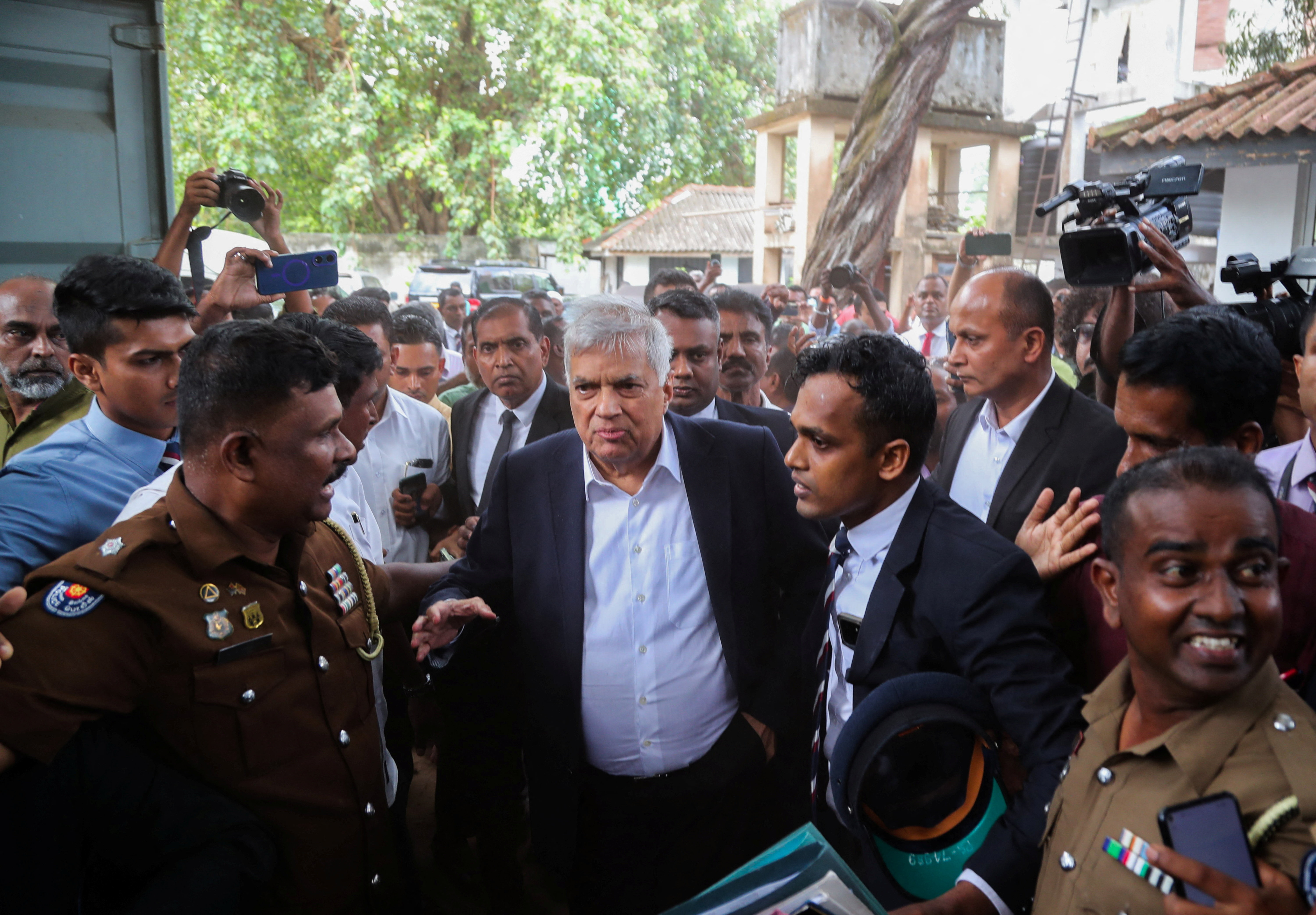
COLOMBO — The bureaucrat who signed off on an irregular vehicle transfer in 2017 did not expect to face handcuffs nearly a decade later. Neither, perhaps, did the finance official at a state-run grocery chain who sold tens of thousands of kilograms of onions to a private buyer without bothering to ask the Cabinet. Yet both were among the latest batch of arrests carried out by Sri Lanka’s Commission to Investigate Allegations of Bribery or Corruption, a once-dormant body that has become the most consequential institution in the country’s post-crisis political order.
The commission, known by the acronym CIABOC, arrested a former Deputy Commissioner of the Department of Motor Traffic — currently serving in the Ministry of Finance — over allegations that he approved the unlawful transfer of an unregistered vehicle in 2017. The suspect was produced before a court and released on bail. In a separate action, three individuals including a former Deputy General Manager for Finance at Lanka Sathosa Limited, the state-owned retail chain, were detained for authorising the sale of 54,860 kilograms of onions to a private party without Cabinet approval. Investigators said the transaction caused a state loss of approximately Rs. 17 million.
A third case reached deeper into the infrastructure of state spending. The Additional General Manager of the National Water Supply and Drainage Board, along with a private businessman, was taken into custody on allegations of misappropriating project funds worth more than Rs. 12.7 million to lease a luxury vehicle — a transaction that investigators say had nothing to do with any authorised project need.
What distinguishes these arrests from the petty bribery cases that have long circulated through Sri Lankan courts is their institutional spread. The same week, CIABOC investigators brought in the former Director-General of the Telecommunications Regulatory Commission, Withana Pelpita Koralalage Anusha Pelpita, in connection with a separate ongoing investigation. The commission had earlier confirmed that former Member of Parliament Sajin de Vass Gunewardena was arrested on March 9 under Section 23 of the Bribery Act after failing to disclose acquired assets — making him the most prominent political figure caught in the net outside the former-president cases that dominated headlines last year.
The enforcement surge cannot be understood apart from the man who set it in motion. President Anura Kumara Dissanayake, the Marxist-aligned politician who swept to power in September 2024 on a platform of economic justice and institutional accountability, made CIABOC’s empowerment a centrepiece of his first months in office. His National People’s Power alliance followed his presidential election with a parliamentary landslide two months later, removing the legislative obstacles that had quietly insulated Sri Lanka’s political class for decades. The Anti-Corruption Act, No. 9 of 2023 — passed under the previous government but implemented unevenly — was handed new operational teeth.
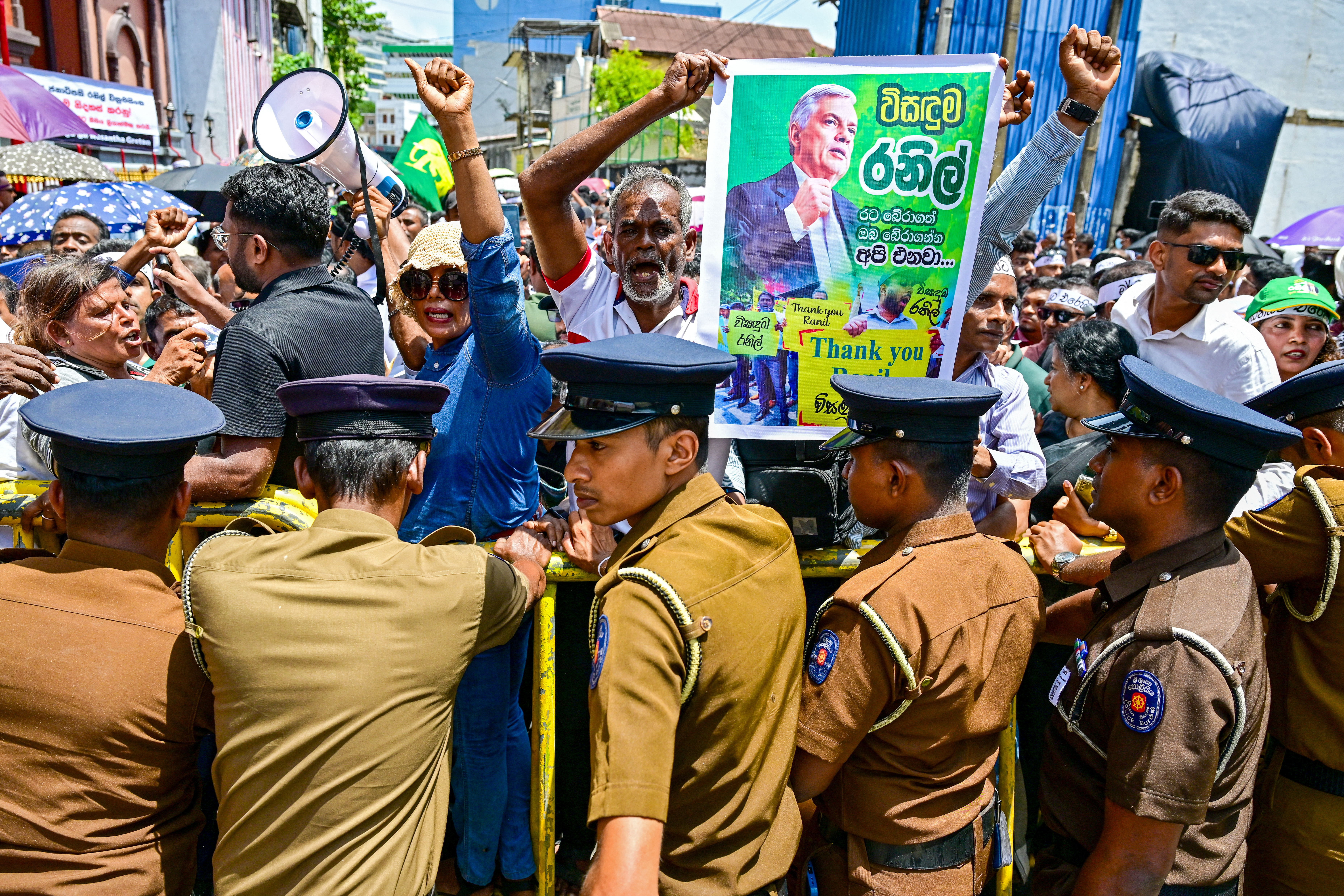
What CIABOC’s 2025 progress report, covering the full calendar year, revealed was not a clean success story. The commission filed 115 new cases including 75 bribery cases and 21 corruption matters, and its raids produced 84 suspects. But the conversion of complaints into judicial convictions remained limited, with procedural failures documented across multiple state institutions. The gap between the volume of enforcement and the pace of actual court outcomes is a problem that human rights observers and legal analysts have flagged repeatedly — and one the government has not yet resolved. A similar enforcement-to-conviction gap has bedevilled anti-corruption bodies elsewhere, including in Western development finance institutions facing their own accountability crises.
The IMF, whose $2.9 billion bailout programme remains the financial lifeline that kept Sri Lanka solvent after its 2022 economic collapse, has its own stake in the outcome. The fund has consistently listed governance reform and reduced corruption risk among the conditions attached to programme reviews. Sri Lanka’s last IMF review noted that progress on anti-corruption legislation was a key structural benchmark — meaning CIABOC’s enforcement record now feeds directly into assessments that determine whether tranche disbursements proceed. The bailout has previously been stalled over reform concerns, a pressure point the Dissanayake government is acutely aware of.
The commission’s newest tool may prove to be its most significant. In March 2026, CIABOC launched a centralised electronic assets and liabilities declaration system, a requirement under the 2023 Anti-Corruption Act. The system is designed to close what critics had identified as a major structural weakness — a paper-based declaration process so unwieldy that false submissions routinely went undetected and cross-referencing was practically impossible. The Gunewardena arrest, premised precisely on undisclosed assets, suggests investigators are already mining the new system’s verification capabilities.
The arrests also sit within a longer chain of institutional reckoning. The Supreme Court upheld a three-year prison sentence against former Deputy Inspector General Hector Dharmasiri in January 2026, a ruling that confirmed the courts were prepared to let anti-graft convictions stand at the appellate level. A labour officer was sentenced to six years in April. The Deputy Mayor of the Kurunegala Municipal Council was arrested in May over an alleged bribe of Rs. 3 million. The arrests are no longer episodic — they have acquired a tempo.
What remains unanswered is whether that tempo will survive contact with the political class at its most resistant. The cases against former President Ranil Wickremesinghe and former State Minister Shasheendra Rajapaksa — both arrested in 2025 — are still working through courts that move slowly and whose dockets are crowded. Wickremesinghe was released on bail. The Rajapaksa family network, which accumulated influence across state institutions over two decades, has not been dismantled by any number of individual detentions. The question Sri Lanka’s accountability movement cannot yet answer is whether the commission’s enforcement surge will produce structural change — or whether it will remain, as it has at intervals in the past, a burst of prosecutorial energy that fades before the hardest cases reach verdict.