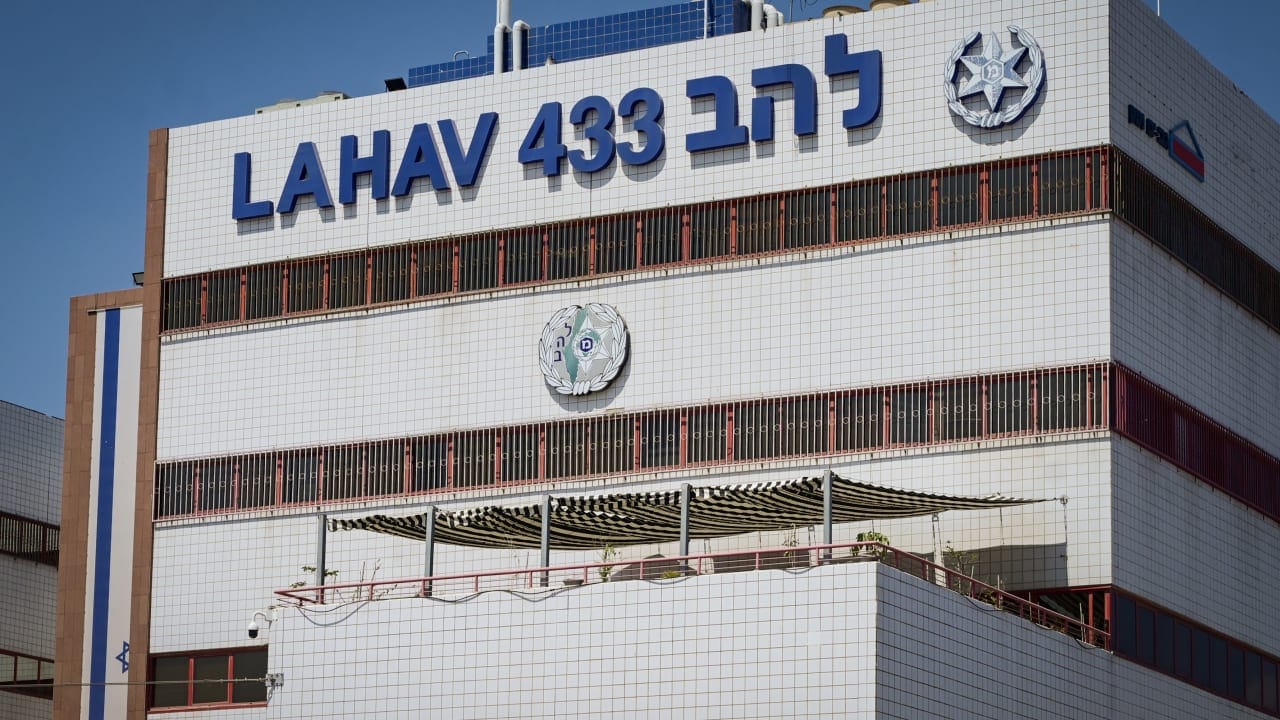

JERUSALEM — The official had, according to Israeli police, a straightforward goal: keep a colleague from being dismissed. What he is suspected of doing to achieve it is why three senior government figures arrived at the headquarters of Lahav 433, Israel’s national major crimes unit, for questioning on Sunday.
Israel Police said the trio — a ministry director general and two other senior officials from the same unnamed government body — were questioned on suspicion of fraud, breach of trust, abuse of authority, and making threats. No names, no ministry. The statement was a single paragraph.
The public broadcaster Kan filled in a crucial detail that the police withheld. The director general is suspected of illicitly intervening in decisions made by someone close to his ministry in an attempt to block the justified dismissal of a colleague, according to Kan’s reporting. The allegation is not about money or contracts. It is about power — and the willingness of a senior civil servant to deploy official authority as a personal shield for an associate.
That distinction matters. The case sits in a category of Israeli public-sector misconduct that has become strikingly familiar: not embezzlement, but the quieter misuse of bureaucratic leverage to protect insiders, reward loyalists, and neutralize accountability mechanisms from within. It is the kind of corruption that rarely generates headlines until Lahav 433 shows up.
The unit has shown up with considerable frequency in recent months. In early February, it detained a southern mayor alongside municipal officials and businesspeople on suspicion of funneling millions of shekels in wartime civilian donations into private pockets. Last week, a deputy director general at the Israel Tax Authority was questioned on suspicion of confiscating an employee’s phone and locking the office door while reviewing recordings — a case of alleged privacy violation and obstruction by a senior official against a subordinate. Last Tuesday, a major corruption sweep in Nahariya resulted in the arrest of a deputy mayor and roughly twenty raids across northern Israel. The Nahariya operation exposed alleged bid-rigging and money laundering tied to municipal tender processes, implicating officials who had, by all appearances, operated without scrutiny for years.
What connects these cases is less the size of the alleged fraud than the structural position of the suspects. Director generals. Deputy directors general. Municipal heads. People who held authority over others and, according to investigators, used that authority in ways the law does not permit. It is a pattern Lahav 433’s own leadership has described in stark terms — the unit’s chief, in a separate investigation involving the Histadrut labor federation late last year, spoke of “a culture of quid-pro-quo relationships between businesspeople and public-sector officials” that the unit would pursue without compromise.
The credibility of that promise was tested when Lahav 433 itself became a subject of scrutiny. In November 2025, the unit’s commander, Assistant-Chief Meni Binyamin, was detained by the Justice Ministry’s internal investigations department on suspicion of breach of trust — accused of intervening in a classified case involving a businessman with whom he had a personal relationship. He was released on conditions, returned to his post weeks later, and the investigation remains open. The episode deepened an already fraught picture of Israeli institutional accountability under wartime governance, where the machinery designed to check abuse has itself required checking.
Sunday’s case does not yet carry that kind of institutional weight. There are no names, no ministry identified, no indication of whether the investigation extends beyond the three individuals questioned. Police declined to elaborate on the specific nature of the threats allegation, which represents the sharpest charge in the suite of suspicions. A person making threats in connection with a personnel decision is a different matter from one simply lobbying through improper channels — but the distinction cannot be assessed without details the police have chosen not to provide.
What is clear is that Lahav 433’s National Fraud Investigation Unit treated the matter seriously enough to summon the most senior figure in the ministry — not a lower-level functionary, but the director general — for questioning. That rank carries significance in the Israeli bureaucratic structure. A ministry director general is the chief professional officer of a government department, the administrator who outlasts ministers, manages senior staff, and exercises the kind of institutional continuity that elected officials depend on. Suspecting one of abusing that position is not a marginal corruption allegation.
The case is developing. Police indicated it remains in the questioning stage, with no arrests or indictments announced. Whether the State Attorney’s Economic Department, which has supervised several recent high-profile Lahav 433 investigations, is involved in this case was not disclosed.
Israel’s corruption accountability landscape has grown increasingly layered as the Netanyahu trial enters its final testimony phase, with public attention split between the prime minister’s courtroom and a civil service that has generated its own cascade of investigations, largely separate from the political proceedings but not from the political atmosphere that produced them. The question the Sunday morning arrival at Lahav 433 leaves unanswered is the one that tends to matter most in cases like this: who, exactly, was the colleague that someone at the top of a government ministry allegedly went so far as to threaten in order to protect?
Related Posts