CAIRO — The defence pact signed in Mecca last week is already drawing a fourth member, or at least the prospect of one. Turkish President Recep Tayyip Erdogan said Sunday that Egypt’s entry into the nascent Turkey-Saudi Arabia-Pakistan security alliance is “among the options for future expansion,” the first public signal that the agreement signed in the holy city may be designed to grow.
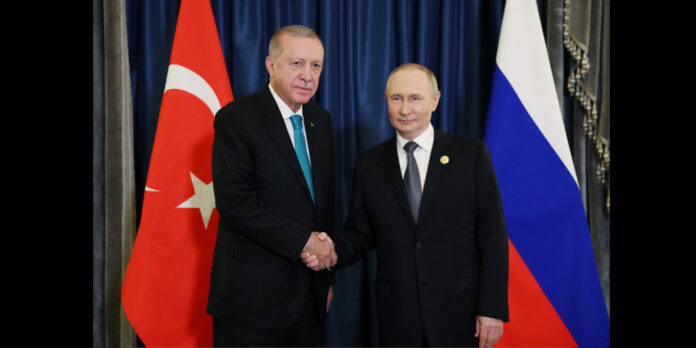
Erdogan’s statement, made in an interview with Al Jazeera, came just days after he, Saudi Crown Prince Mohammed bin Salman, and Pakistani Prime Minister Shehbaz Sharif formalized a mutual defence commitment that analysts have compared to NATO’s Article 5 architecture. Under the Mecca Pact, an armed attack on any one signatory is treated as an attack on all three. That clause carries unusual weight in a region where formal security guarantees have historically run through Washington, not through Mecca.
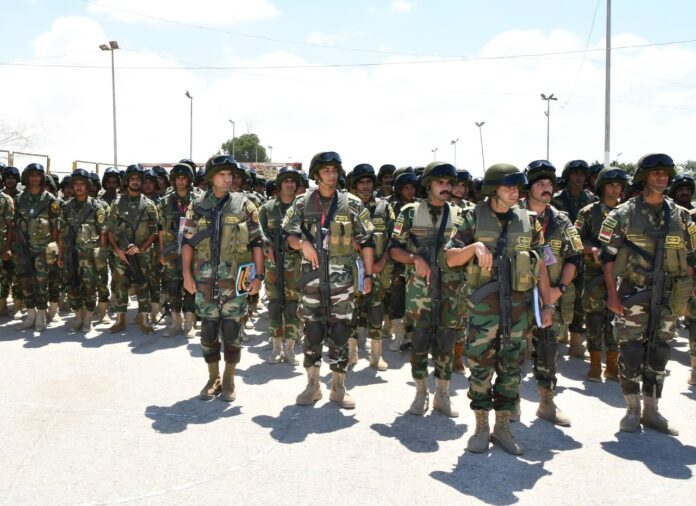
Egypt’s potential inclusion matters less for what Cairo would bring militarily than for what it would represent diplomatically. A four-nation bloc encompassing Turkey, Saudi Arabia, Pakistan, and Egypt would account for a combined population exceeding 600 million people, four of the world’s largest Muslim-majority militaries, and economic weight stretching from the Mediterranean to the Indian subcontinent. Whether Cairo has been formally approached, and what Egypt’s actual position might be, is not yet known.
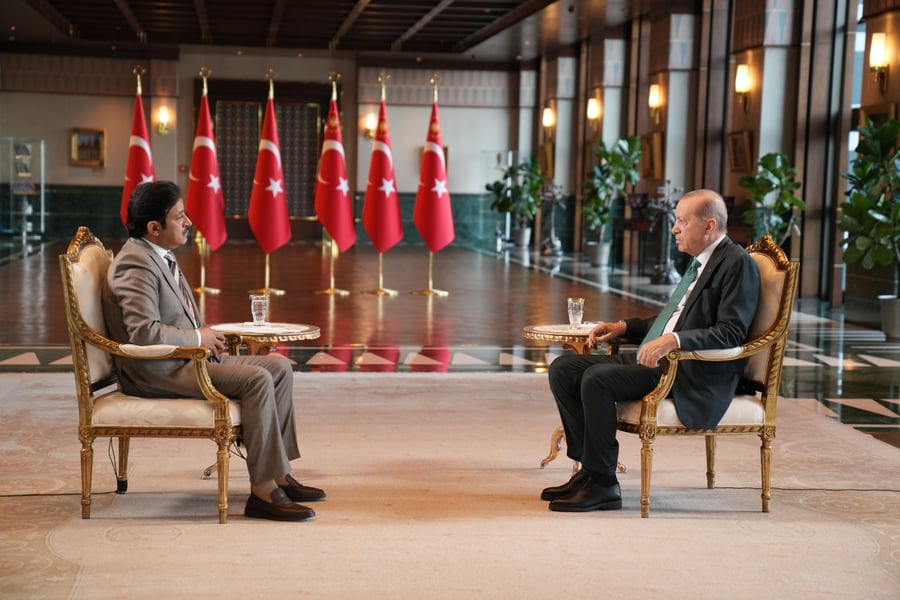
Erdogan was careful not to overstate the pact’s ambitions. “This agreement has sent an important message to the world,” he told Al Jazeera, but he did not specify what message, or to whom. Pakistani officials cautioned against drawing too direct a parallel to NATO. A NATO-style commitment implies a level of institutionalization, shared command structures, and legal obligation that none of the three signatories has yet articulated publicly. For now, the Mecca Pact is a political declaration carrying a security clause, not a military alliance in any operational sense.
But the architecture is unmistakably deliberate. Saudi Arabia has spent years building toward this kind of agreement. Crown Prince Mohammed bin Salman has diversified Riyadh’s strategic relationships at a pace that would have been unimaginable under his predecessors, deepening ties with China, engaging Iran through Beijing-brokered diplomacy, and assembling a regional coalition that does not depend on American security guarantees for its coherence. The Mecca Pact is the most explicit expression yet of that strategy.
The venue was not chosen accidentally. For the world’s majority-Sunni Muslim states, Mecca carries a legitimating symbolism no other location could provide. That MBS chose the holy city signals intent: this is not a transaction among three governments but a claim to Islamic solidarity as the foundation of a new security order.
Erdogan’s interview with Al Jazeera touched on more than the pact. Turkey “cannot leave Gaza alone,” he said, framing the conflict there as a measure of whether Muslim-majority states would act in concert when one of their own populations is under assault. He expressed serious concern over continuing Israeli attacks in Lebanon. Both statements slot directly into the Mecca Pact’s implicit logic: that existing regional security arrangements have failed to protect Muslim-majority populations, and that a new structure is needed.
Turkey’s own trajectory feeds the same logic. Erdogan has told interviewers in recent months that European Union membership is no longer a Turkish priority, a position he reiterated this week, arguing that the EU has emerged from its recent crises as a net loser. Turkey’s pivot from a decades-long EU accession candidacy toward a Mecca-anchored bloc is the kind of shift that takes years to build and minutes to announce.
The pact arrives as Egypt has been quietly recalibrating. President Abdel Fattah el-Sisi has sustained communication with both Riyadh and Ankara, capitals that spent years on opposite sides of the divisions that followed the Arab Spring. Cairo’s potential membership in the Mecca Pact would complete a set of reconciliations that would have seemed improbable five years ago. The groundwork, including Turkish Foreign Minister Hakan Fidan’s direct engagement with Egypt over Iran-US nuclear talks, has been accumulating for some time.
What the Mecca Pact becomes depends almost entirely on what Mohammed bin Salman decides to build. A signed declaration is a beginning, not an alliance. The infrastructure of a functioning security bloc requires shared intelligence frameworks, political trust among governments with divergent interests, and the kind of operational coordination that takes years and money to develop. Whether MBS has the patience and resources to see that through, whether Erdogan and Sharif can sustain their commitments against domestic and external pressures, and whether Egypt steps inside the tent: those are the questions the agreement has not yet answered.