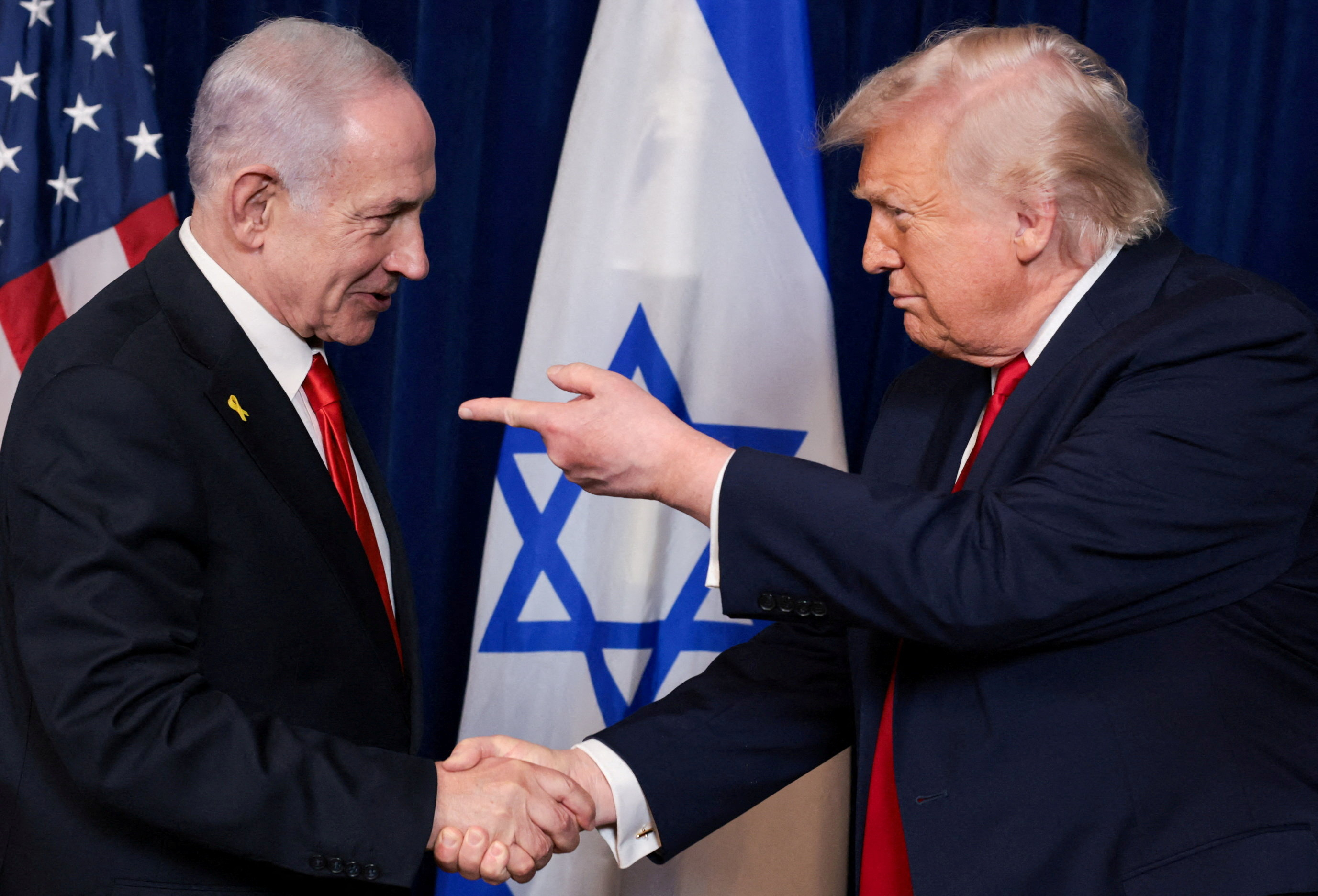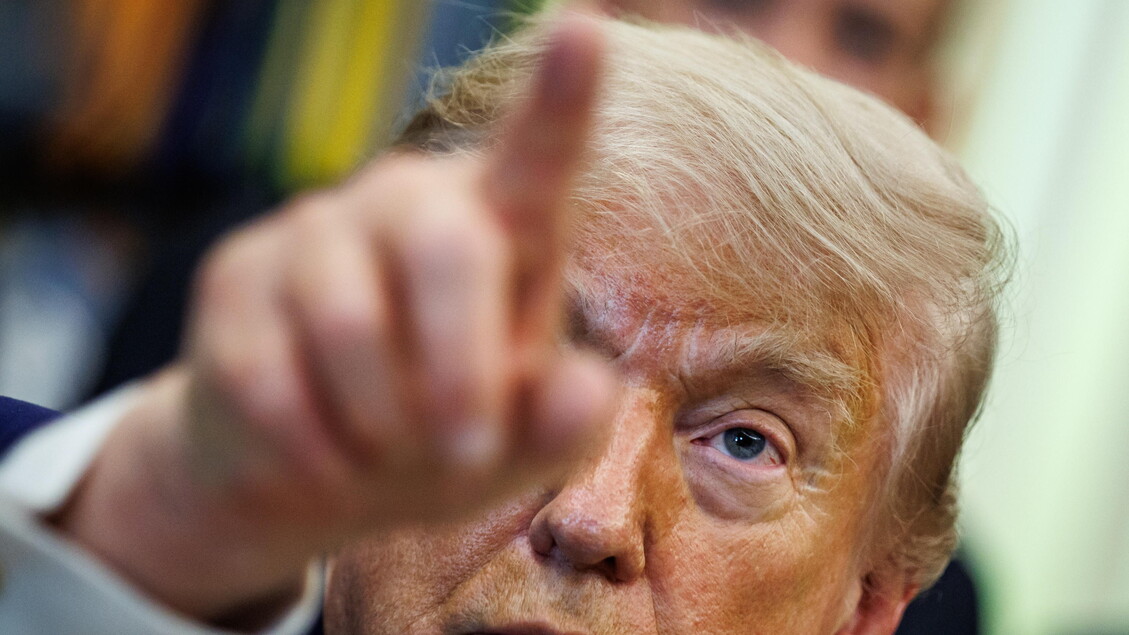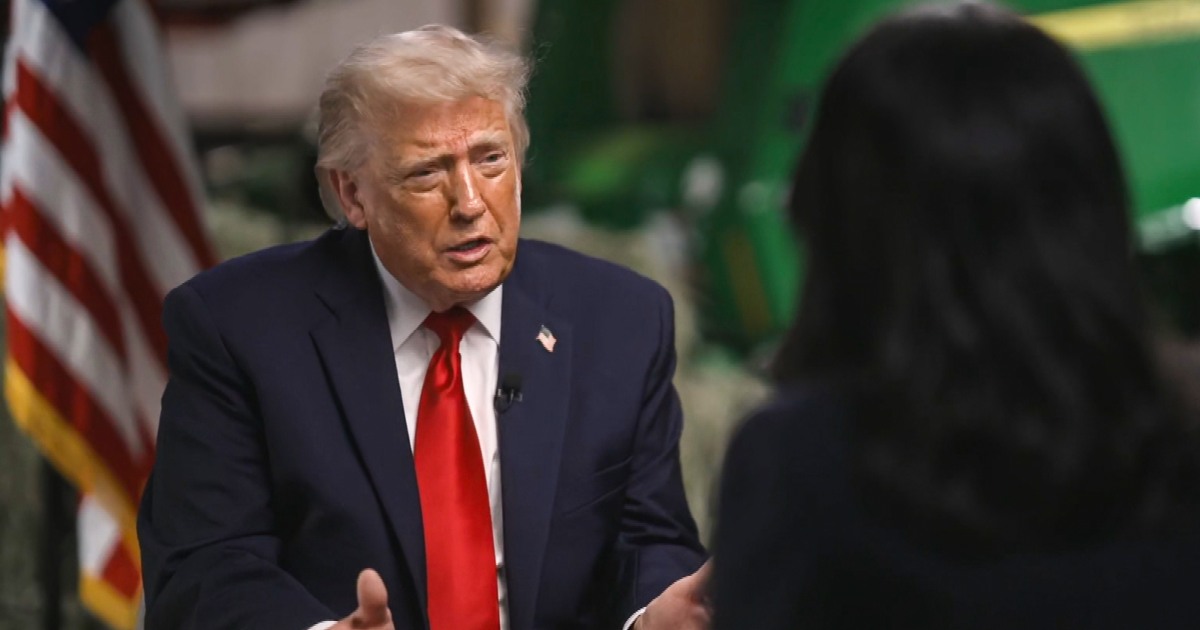
WASHINGTON — The question was simple enough: what happens to Iran’s uranium stockpile if negotiations collapse? Donald Trump’s answer, delivered to NBC’s Meet the Press on Sunday, stripped the issue of any diplomatic ambiguity. The United States, he said, would take it either way.
“If we make a deal that now we’re friendly, we’ll all go together,” Trump said in the interview, taped on June 5 at a farm in Chippewa Falls, Wisconsin, and broadcast Sunday. “Now, if we don’t make a deal, then we’re going to take them out militarily very harshly. And we’ll wait till we do that before we go.”
The formulation was notable for what it excluded: a scenario in which the uranium stays in Iranian hands. Whether through a negotiated handover or a military operation followed by physical retrieval, Trump left no diplomatic exit that does not end with the United States in possession of the material. For three months of war and on-again, off-again talks, the fate of Iran’s enriched uranium stockpiles has been the irreducible core of the dispute. Sunday’s interview made explicit what had only been implicit in previous statements: Washington does not regard that core as negotiable.
Trump added that the United States intends to destroy the stockpiles after extraction, not store or repurpose them. He framed the disposal as a service to international security and repeatedly described Iran as “a very powerful and very dangerous country” — a characterization that sat alongside his confidence that the outcome was, in his telling, already determined.
The surveillance dimension of Trump’s remarks drew less attention but may carry more operational significance. The president said the United States has comprehensive visual coverage of Iran’s nuclear facilities through Space Force surveillance systems, and that the location of every stockpile is known. “We have cameras on it, all over it,” he told moderator Kristen Welker. “If anybody walked there, if you walked over there, I would be able to read your first name on your lapel. And these are cameras up in space.” The claim, if accurate, would mean that any attempt to move, disperse, or conceal the uranium before a deal is reached would be tracked in real time.
That monitoring claim has a specific diplomatic consequence. Russia offered earlier this month to take custody of Iran’s enriched uranium and store it on Russian territory, a proposal Kremlin spokesman Dmitry Peskov confirmed had been communicated to Washington. The offer was not accepted. According to Peskov, Washington has so far declined to engage with the Russian proposal — a silence that, read alongside Trump’s Sunday remarks, suggests the administration views any third-party custodianship as incompatible with the outcome it has already decided upon. Trump had previously stated publicly that he would not be comfortable with Russia or China taking Iran’s enriched uranium.
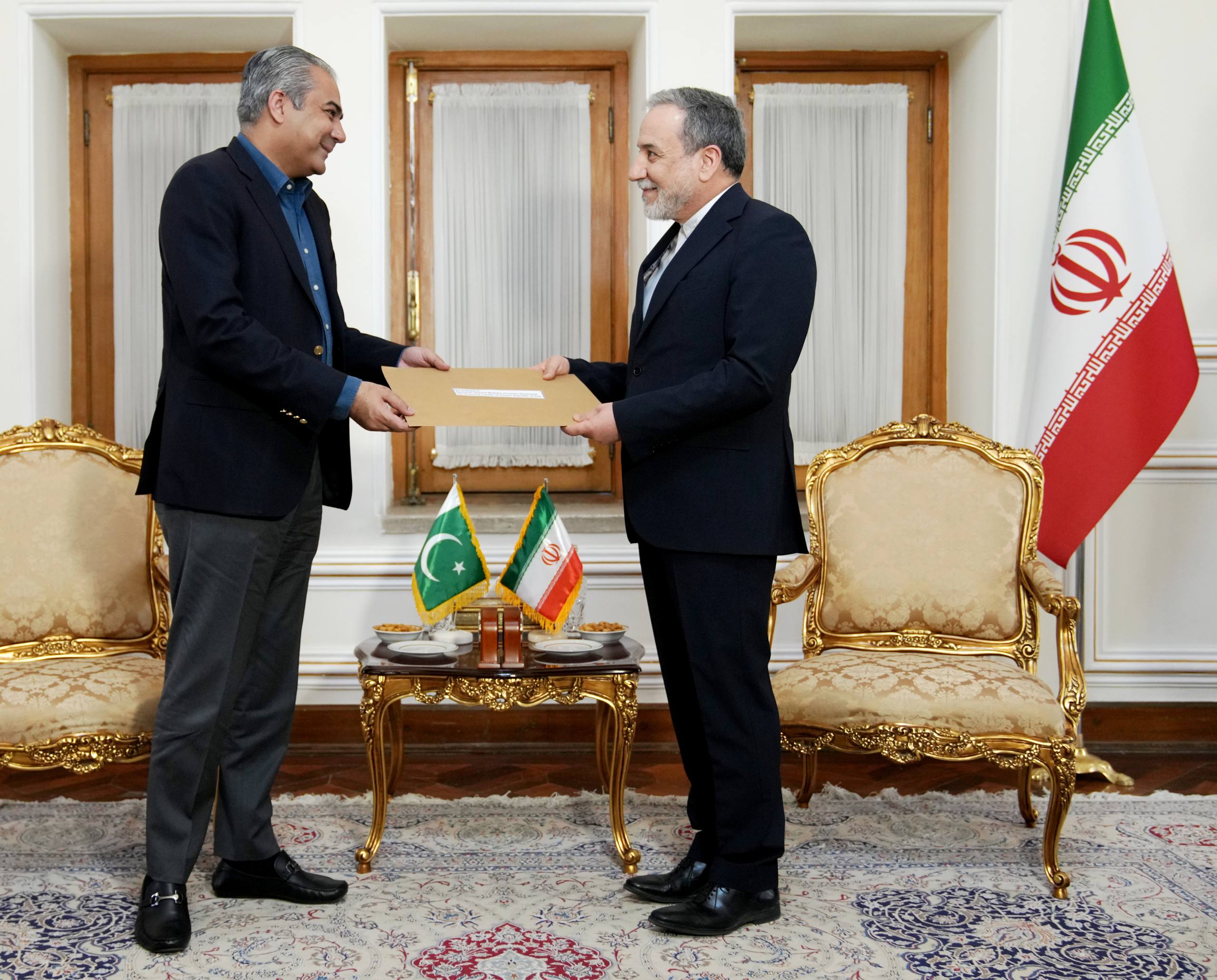
Iranian Foreign Minister Abbas Araghchi offered a careful response. He said Iran would address the question of its uranium’s fate with Russia once the United States and Iran begin substantively engaging on the issue — but noted that the topic is not presently under active discussion. The formulation placed Araghchi firmly in a holding posture: Iran acknowledges the conversation may eventually happen, but will not be drawn into it on Washington’s timetable. Whether that posture survives an intensified military campaign is the question the interview left unanswered.
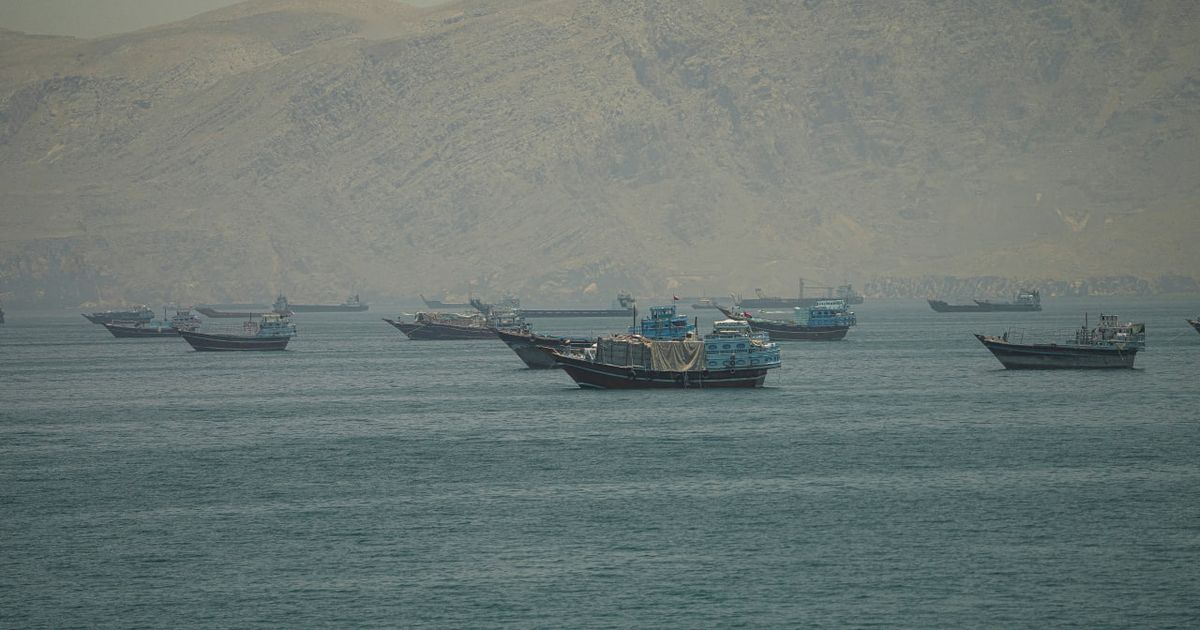
The NBC interview, the administration’s most detailed public accounting of the uranium question to date, was recorded two days after Iran launched drones toward the Strait of Hormuz and the United States struck Iranian coastal radar installations in response. Trump acknowledged the three-month length of the conflict with what sounded like impatience. “Vietnam lasted 19 years. I’m into my third month,” he told Welker. The remark underscored the gap between Trump’s original projection — four to six weeks — and the reality of a conflict that has so far produced no signed agreement, continued Iranian drone activity, and a uranium question that both sides have defined as non-negotiable.
Earlier in the week, Trump’s special envoys Steve Witkoff and Jared Kushner visited a national laboratory in Tennessee, where scientists with experience in removing highly enriched uranium from foreign sites work, according to CNN. The visit suggested the administration is conducting at least preliminary planning for the physical extraction of the material — whether as part of a negotiated handover or as a contingency for the military scenario Trump described Sunday. IAEA Director General Rafael Grossi has said that moving Iran’s enriched uranium is “difficult but not impossible.”
What remains unclear is whether Iran’s negotiating team — or the new Supreme Leader, Mojtaba Khamenei — has absorbed the implications of Trump’s framing. He is not describing uranium removal as a demand to be met in exchange for sanctions relief or security guarantees. He is describing it as a certainty. The question Tehran faces is not whether the uranium goes, but who is in the room when it does — and what, if anything, Iran receives in return.
https://twitter.com/MeetThePress/status/1931057000000000000