LONDON — The first question is not about Jeffrey Epstein. It is about what kind of country allows this much to happen and still cannot name who bears responsibility.
That is the question now hanging over Britain, and it has no clean answer. The Epstein files — roughly three million documents released by the United States Department of Justice since January 2026 — have not merely damaged reputations. They have done something more durable: they have quantified, in polling data and parliamentary votes and resignation letters, the degree to which the British public no longer trusts the state that governs it.
No single institution has been spared. The monarchy, Parliament, and the Metropolitan Police have each absorbed body blows from the same scandal, in the same months, with consequences that are compounding rather than settling. That simultaneity is the story. Britain has endured scandals before — expenses, lobbying, cash-for-questions — but it has rarely confronted a moment in which the Crown, the Commons, and the constabulary were all damaged at the same time by connections to the same man.
The data, at this point, is not subtle. According to Ipsos polling conducted between February 13 and 16, every senior member of the Royal Family saw personal approval ratings decline compared to November 2025. Support for King Charles fell nine percentage points to 46 percent. Prince William dropped eight. Princess Anne, nine. Most strikingly, backing for the monarchy as an institution slipped to 47 percent — the first time in modern polling it has fallen below a majority. A separate Savanta survey for the anti-monarchy group Republic put institutional support for the Crown at 45 percent, down three points in four months.
Those numbers arrived before Andrew Mountbatten-Windsor, the younger brother of King Charles, was arrested on February 19 on suspicion of misconduct in public office — the first senior British royal to be taken into police custody in nearly four centuries. Thames Valley Police was examining whether Mountbatten-Windsor, during his time as the United Kingdom’s special envoy for international trade, forwarded classified government reports to Epstein. King Charles responded with a statement signed “Charles R” rather than routed through Buckingham Palace. The deliberate informality was its own signal: the palace was distancing itself, by name, from the king’s own brother. Mountbatten-Windsor was released under investigation after approximately eleven hours. No charges have been brought. The investigation remains open.
As Eastern Herald reported in April, the arrest triggered a global reaction precisely because it demonstrated that formal legal accountability was, at minimum, possible — even for figures who had previously seemed insulated by proximity to the throne. Whether the investigation ends in charges is a question that, as of June 2026, no one inside or outside the Metropolitan Police has been willing to predict.
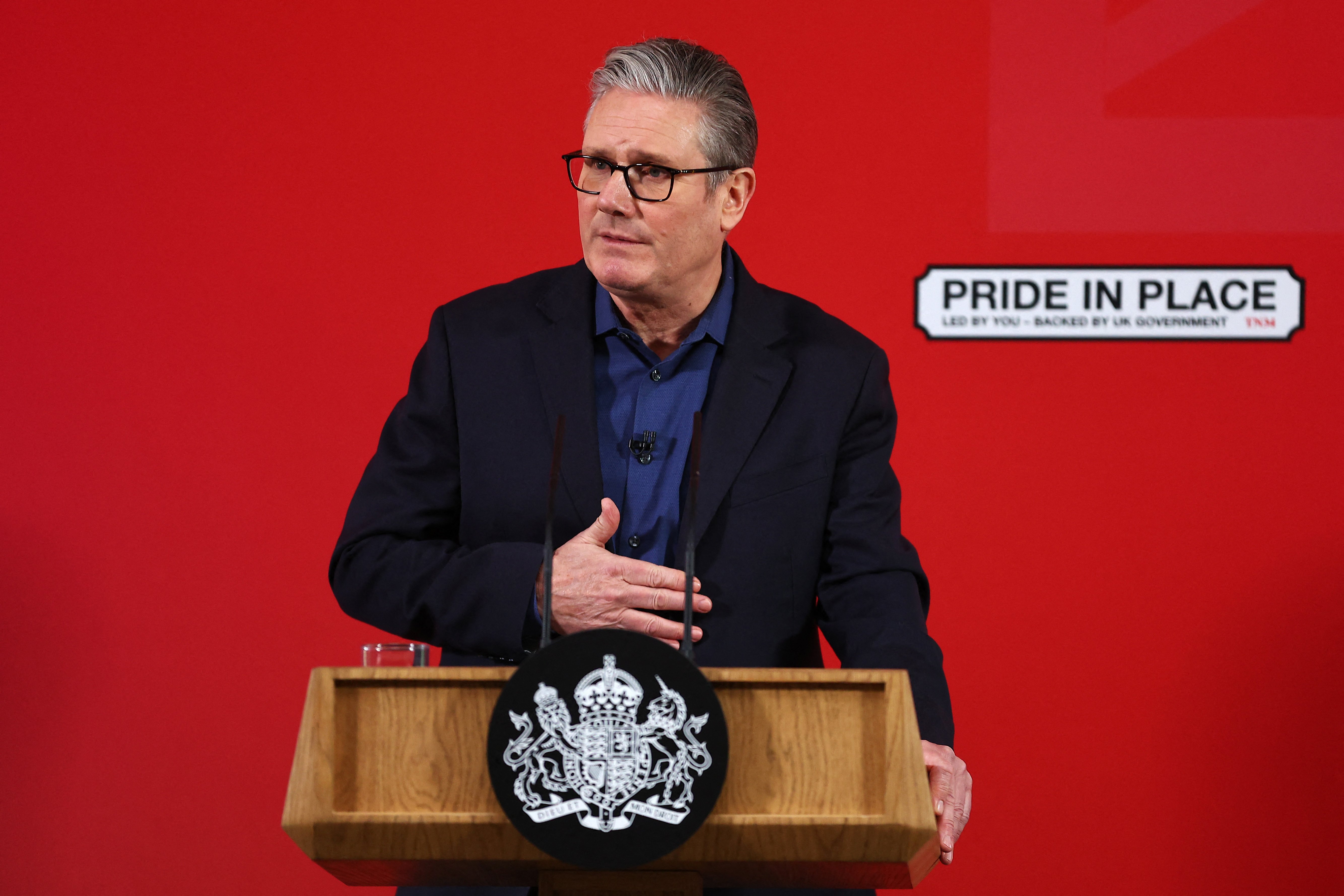
The crisis at the palace would be serious enough on its own. But the Epstein files arrived in a country whose political class was already struggling to justify itself. Keir Starmer won the 2024 general election with a majority of 172 seats. Within eighteen months, Ipsos recorded his net favourability rating at minus 66, the lowest for any sitting prime minister since the polling firm began tracking the figure in 1977.
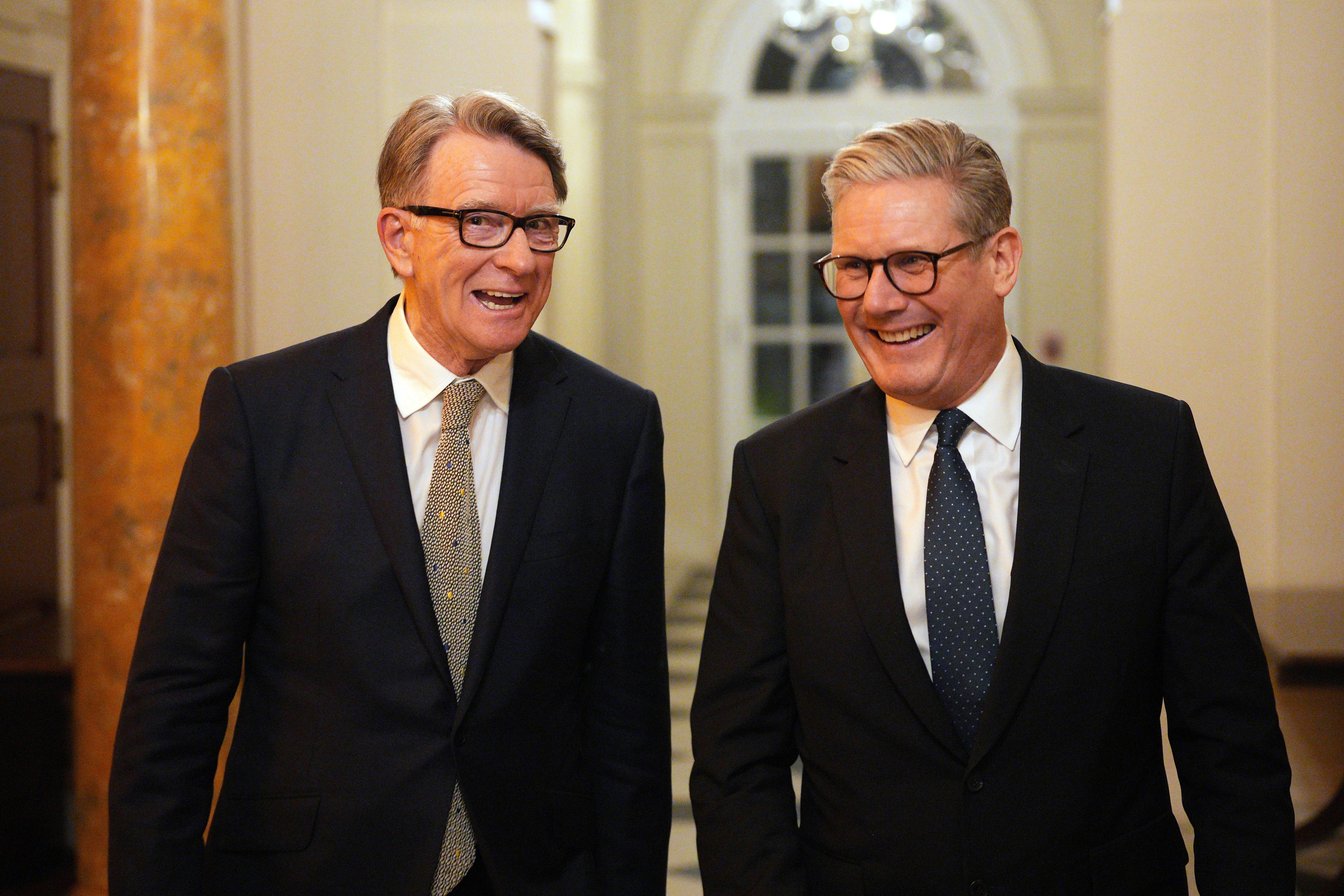
The mechanism of that collapse runs directly through the Epstein files. In December 2024, Starmer appointed Peter Mandelson as the United Kingdom’s ambassador to Washington. Mandelson’s social connection to Epstein was publicly known before the posting was announced. Starmer later told Parliament that he “knew of Mandelson’s friendship with Epstein” but that Mandelson had “lied repeatedly to my team when asked about his relationship with Epstein before and during his tenure.” He fired Mandelson in September 2025 after emails emerged showing Mandelson had maintained contact with Epstein following Epstein’s 2008 conviction.
Further document releases in January and June 2026 deepened the damage. According to the Washington Post, documents released on June 1 showed Mandelson had assured Starmer’s office the Washington appointment was one the government would “never regret.” Bank statements in the files, as Time reported, suggested Epstein had made payments totalling $75,000 to accounts connected to Mandelson between 2003 and 2004. Mandelson resigned from the Labour Party in February 2026 and subsequently from the House of Lords.
The parliamentary fallout was severe and rapid. By mid-May, over 95 Labour MPs had called on Starmer to resign or set out a departure timetable. Health Secretary Wes Streeting resigned from cabinet on May 14, telling colleagues that Starmer “will not lead the Labour Party into the next general election.” He stopped short of formally triggering a leadership contest, which requires signatures from one fifth of the parliamentary party. As of June 8, Starmer remains in office, insisting he will stay. What comes next is genuinely unclear. The Labour Party’s internal arithmetic — and the 95-plus MPs on record — suggests the resolution will not be tidy.
The Metropolitan Police faces a different kind of accounting. Trust in the force had already been corroding for years, through scandals including the murder of Sarah Everard by a serving officer and the spycops inquiry findings. A Guardian poll in 2024 placed trust in the Metropolitan Police at just 34 percent. The Epstein files have added specific, documented allegations to that general mistrust: that Met officers were present at dinner parties hosted by Mountbatten-Windsor and attended by Epstein; that 87 Epstein-linked private flights entered and departed UK airports carrying unidentified female passengers without meaningful scrutiny; and that the Met had identified a London property rented by Epstein — in which young women were reportedly housed under conditions of financial coercion — and declined to investigate further on the grounds that no formal criminal allegation had been made against a UK-based individual.
That last decision, now public and documented, has been widely characterised as a failure of institutional responsibility. The question it leaves open — whether it reflected operational caution, inadequate procedures, or something worse — is one the Metropolitan Police has not answered. The force’s statement that officers had followed all “reasonable lines of inquiry” was made in a context where those lines of inquiry are now subject to parliamentary and judicial scrutiny. A UK prosecutor, as Eastern Herald reported last week, warned in early June that a full inquiry could take over a year. Survivors have characterised that timeline as a continued injustice.
Taken separately, any one of these threads — the monarchy’s polling collapse, the Labour government’s parliamentary crisis, the police’s unanswered questions — would be manageable. Britain’s political culture is experienced at absorbing individual scandals. What makes the present moment structurally distinct is the convergence: all three institutions are damaged by the same source in the same news cycle. Ipsos data from April 2026 found that two thirds of British adults do not have confidence the government is running the country with integrity. That figure is not the product of one scandal. It reflects the cumulative effect of watching the institutions designed to prevent this kind of thing fail, simultaneously, to prevent it.
None of this has a clean resolution in sight. The investigation into Mountbatten-Windsor remains open. Starmer, as of Monday, continues to insist he will lead Labour into the next general election. Whether that turns out to be true is one of several things, in this story, that no one has been able to promise with a straight face.