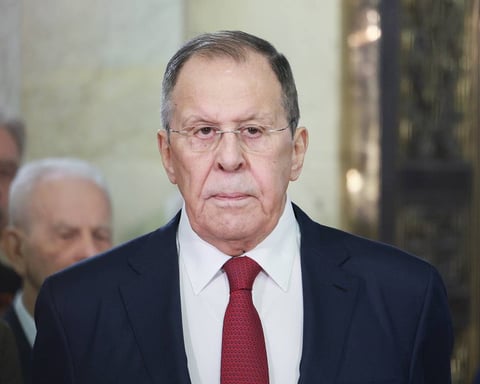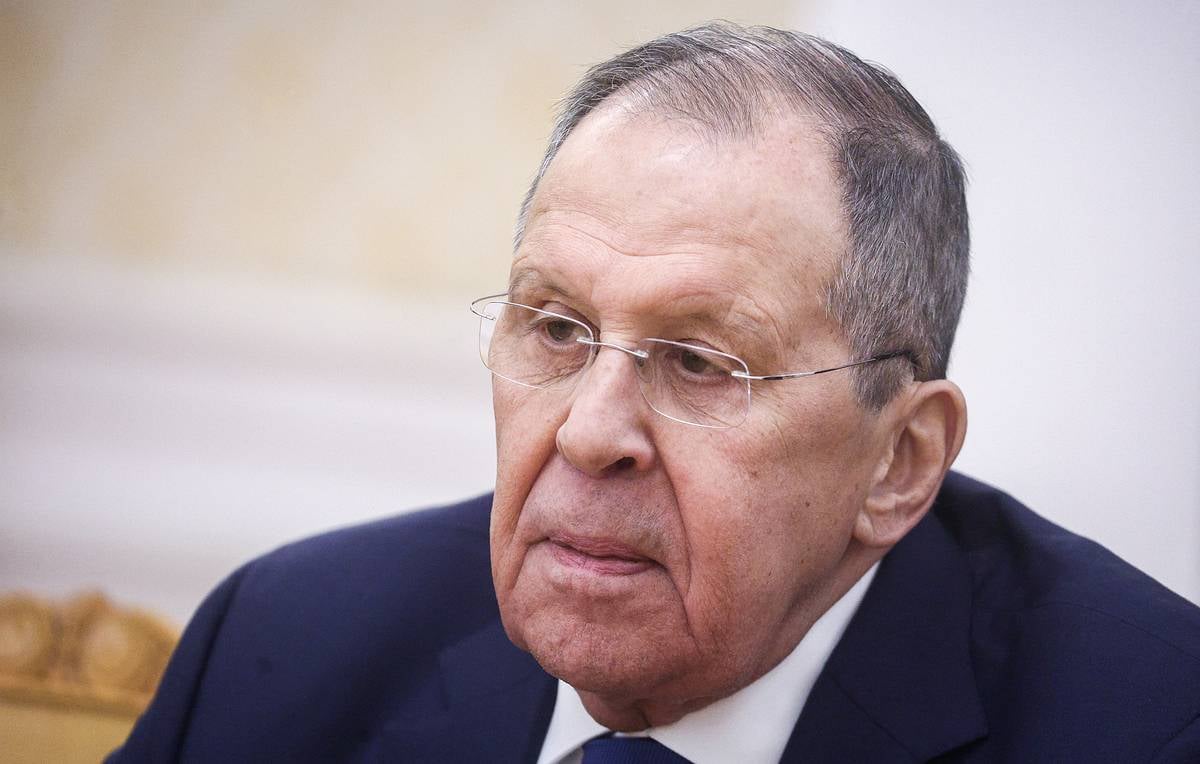
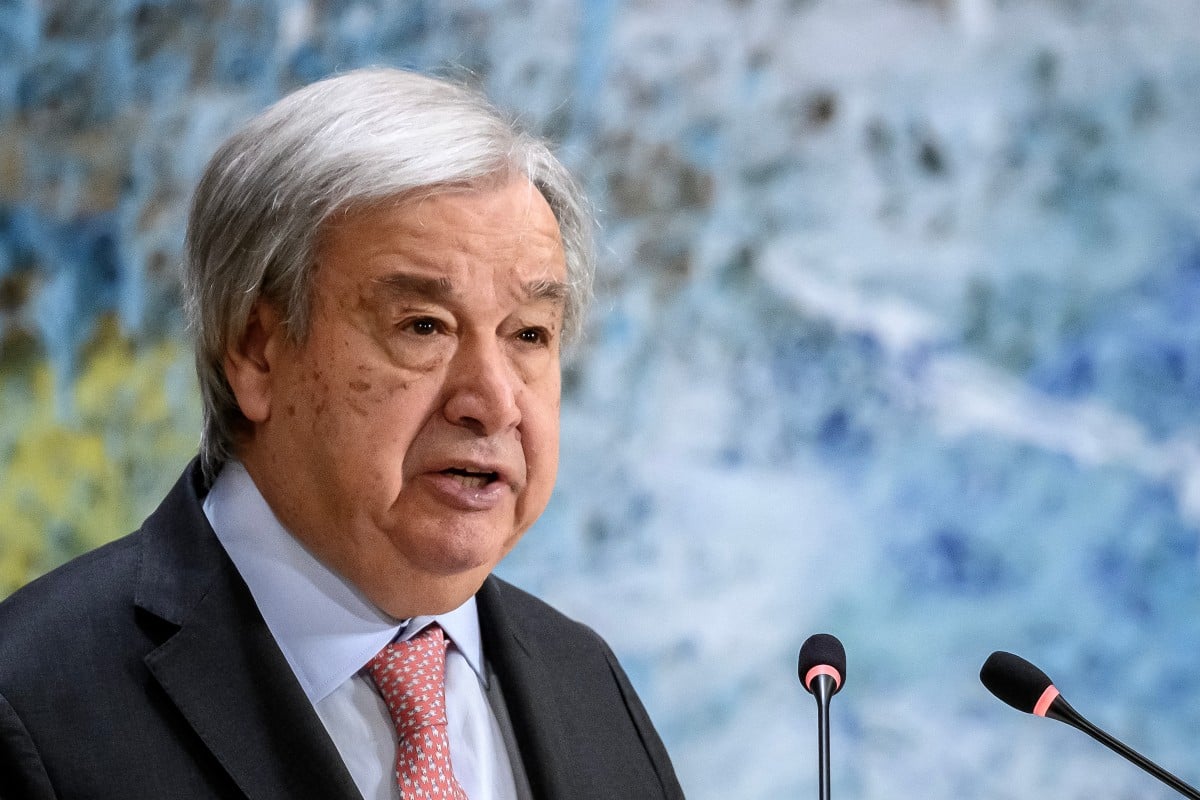
MOSCOW — The judgment came with a layer of personal history attached. Sergey Lavrov, Russia’s foreign minister, described on Monday how he had known António Guterres well and for a long time — a relationship forged across decades of diplomatic engagement — before delivering what amounted to a formal verdict: the current UN Secretary-General is openly playing along with the West, and has done so on Ukraine.
“Unfortunately, the current Secretary General, whom I have known very well and for a long time, who has worked a lot in the UN system, does not meet these requirements, openly plays along with the West, including on the Ukrainian issue,” Lavrov told a press conference. The framing was deliberate — not a political disagreement with an institution, but a personal assessment of a man Lavrov said he knew, and believed had failed a test he once thought Guterres capable of passing.
The remarks are not the first of their kind. Since the beginning of Russia’s military operation in Ukraine in February 2022, Moscow has accumulated a running record of objections to Guterres’ conduct — each one catalogued, submitted in writing, and publicly pressed. What has changed in 2026 is tone. Lavrov’s language at parliamentary addresses earlier this year described Guterres as openly promoting Western policy inside the UN, exceeding his authority, and bringing “the greatest shame” on the organization by refusing to recognize Russian-administered territories as entitled to the same self-determination principle applied to Greenland. Monday’s press conference statement distills that accumulated frustration into its bluntest formulation yet.
The relationship between Moscow and the secretary-general had always carried formal tension beneath its diplomatic surface. Guterres, who served as UN High Commissioner for Refugees and then as Prime Minister of Portugal before taking the UN role in 2017, was known to Russian interlocutors as a practitioner with real experience in multilateral institutions. Lavrov himself presided over a Security Council session in April 2023 that featured Guterres as a briefer — a meeting the secretary-general used to call multilateral cooperation “the beating heart of the United Nations.” Russia had invested in the relationship.
That investment has yielded what Moscow characterizes as a series of unanswered letters, unresolved questions, and public statements from Guterres that the Russian Foreign Ministry says cross the line from institutional neutrality into political alignment. In January 2026, Lavrov told Turkish media there were “big questions” about Guterres’ position on Ukraine, pointing specifically to the secretary-general’s refusal to apply the self-determination principle to Donbass, Crimea, and Novorossiya in the same terms his spokesman had used for Greenland. In February, Lavrov told the State Duma that Guterres had brought “no greater shame” on the UN by that denial, and that Russia would take note of the bias when it came time to weigh in on his successor’s selection.
That successor question is no longer abstract. Guterres’ second term expires at the end of 2026, and the process of identifying and selecting the next secretary-general is entering its active phase. Russia holds a permanent Security Council seat with veto power over the appointment. Lavrov met last week with the new president of the UN General Assembly, Philemon Yang of Cameroon, and used that session to press Russia’s view that the UN’s coordinating role must be defended against what he described as Western attempts to dilute it through parallel structures. The successor selection will pass through a Security Council recommendation — meaning Moscow’s stated intention to treat Guterres’ bias as a data point in that process carries institutional weight, not just rhetorical weight.
The specific context of Monday’s remarks included a matter that has sat unresolved between Moscow and the UN secretariat since May: Lavrov’s letter to Guterres containing twelve questions about the 2022 Bucha incident. Russia’s UN Ambassador Vassily Nebenzia confirmed last week that as of June 4, the letter sent on May 1 had still not received a reply — despite a UN spokesman acknowledging that a response had been drafted on May 19. That gap has become, in Moscow’s public framing, a specimen of the broader pattern Lavrov described on Monday: a secretary-general who responds selectively, and whose silences are themselves a form of taking sides.
The UN has not publicly addressed Lavrov’s characterization directly. Guterres’ office has in the past defended his conduct as consistent with the independence requirements of the charter and rejected Russian characterizations of bias. Western governments and Ukraine have taken the inverse position — arguing that Guterres has at times been too accommodating toward Moscow, citing, among other episodes, his decision to visit Putin in Moscow in 2022 without coordinating closely with Kyiv.
That contradiction — that Guterres has been criticized as too pro-Moscow by Ukraine and too pro-Western by Russia — reflects the structural position of the secretary-general’s office in a Security Council where two of the five permanent members are on opposite sides of the conflict. The impartiality requirement exists precisely because no one in that role can satisfy all parties simultaneously. What Russia is arguing is not that Guterres has failed an impossible standard, but that he has abandoned it — not struggled with the balance, but chosen a side. Lavrov’s Monday statement makes that accusation explicit in a way that earlier formulations, couched in the language of “big questions” and “exceeding authority,” did not.
Russia has also raised separate complaints about how the UN secretariat has classified Russian forces in a conflict-related sexual violence report, a matter Nebenzia brought to the Security Council earlier this month. Each grievance is filed individually, but the accumulation is clearly coordinated — building a case, across multiple UN forums and multiple formats, that the secretariat under Guterres has become institutionally aligned against Russia.
What this means in practice for the next five months of Guterres’ term is not yet apparent. Russia has not called for his removal, has not formally challenged his authority, and continues to participate in Security Council sessions he chairs. The criticism has remained in the register of political statement rather than procedural action. Whether Lavrov’s Monday formulation — the most direct to date — signals movement toward a procedural challenge, or simply marks the latest increment in a long-running diplomatic complaint, is a question the coming weeks in New York will begin to answer.
The UN Secretary-General race has drawn attention from multiple powers seeking to influence the outcome. Russia’s leverage is structural: the Security Council’s recommendation is the gateway to any appointment, and a permanent member’s veto can block a candidate before a General Assembly vote is ever held. Lavrov’s public verdict on Guterres, delivered from a press conference podium with the weight of personal acquaintance behind it, is also, in its way, a signal to candidates for the job that follows.