MOSCOW — The letter was addressed to Vladimir Putin. It was published to the world. And in Moscow on Monday, that choice of distribution told its own story.
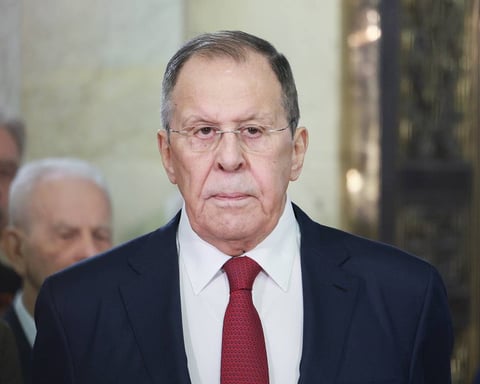
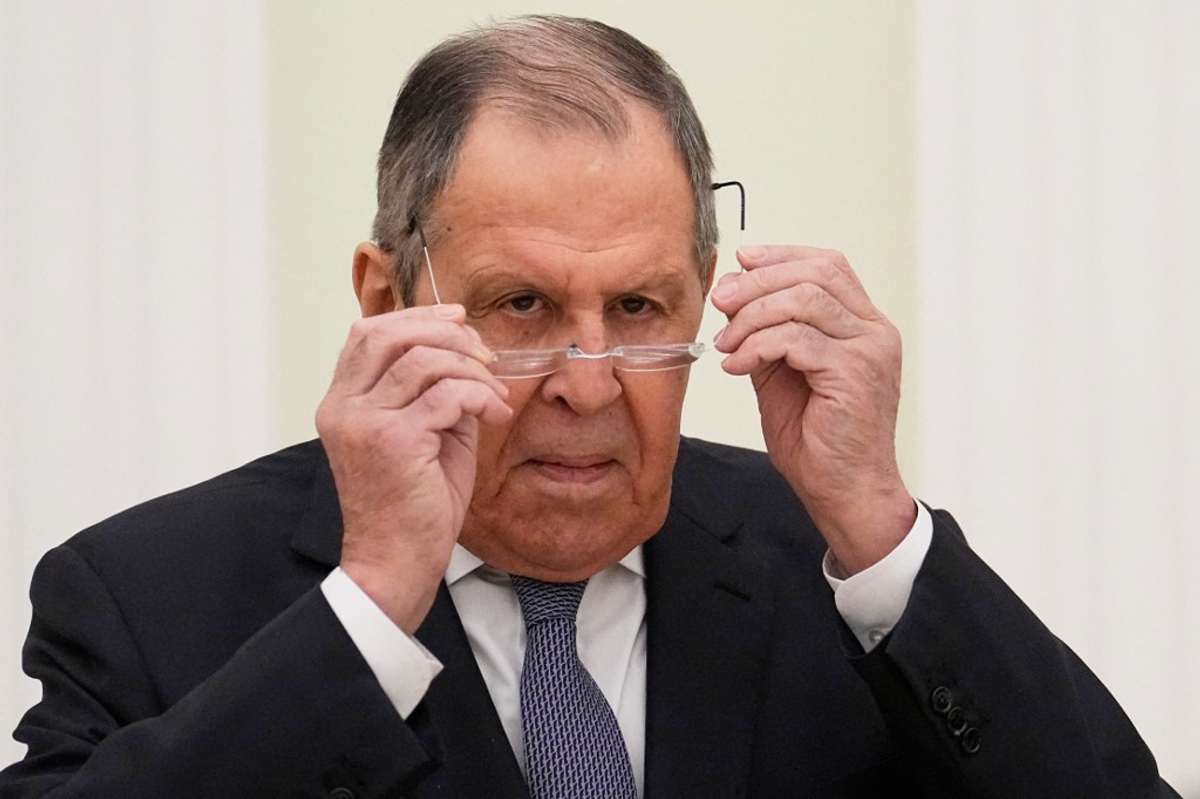
Russian Foreign Minister Sergey Lavrov said Putin had reviewed the open letter sent by Ukrainian President Volodymyr Zelensky and reached a conclusion that was blunt even by the Kremlin’s standards: Kiev does not want negotiations. “The president interpreted this letter as an indication that Ukraine does not need negotiations,” Lavrov told reporters at a press conference, noting that the letter had been sent to the entire world rather than delivered through diplomatic channels — behaviour he described as inconsistent with how “polite people act.”
Zelensky had published the letter on June 4, the first direct written outreach to Putin since 2022, proposing a face-to-face meeting in a neutral country — Switzerland or Turkey — alongside a full ceasefire and European participation in any settlement framework. Putin addressed it publicly at the St. Petersburg International Economic Forum, telling reporters he had read it and found little there that changed Moscow’s position. Lavrov, speaking Monday, was more dismissive still.
“This is nonsense,” Lavrov had said at SPIEF, drawing a parallel with French President Emmanuel Macron’s expressions of willingness to engage Putin directly. “It’s like Macron saying he would meet with the Russian president. It’s talking for talking’s sake.” The framing mattered: Lavrov was not merely rejecting the letter’s content. He was questioning whether the gesture itself was genuine or, as he suggested, a performance staged for Western audiences rather than a sincere diplomatic overture.
What Lavrov did not say — and what remains unconfirmed — is whether Moscow has any counter-proposal it is prepared to put on the table. Russia’s position, reiterated consistently since the Alaska consultations with American envoys in 2025, is that any settlement must be based on terms Moscow sets. What those terms look like in June 2026, with Russian forces maintaining pressure along multiple front lines, is something neither Lavrov nor the Kremlin has specified in detail.
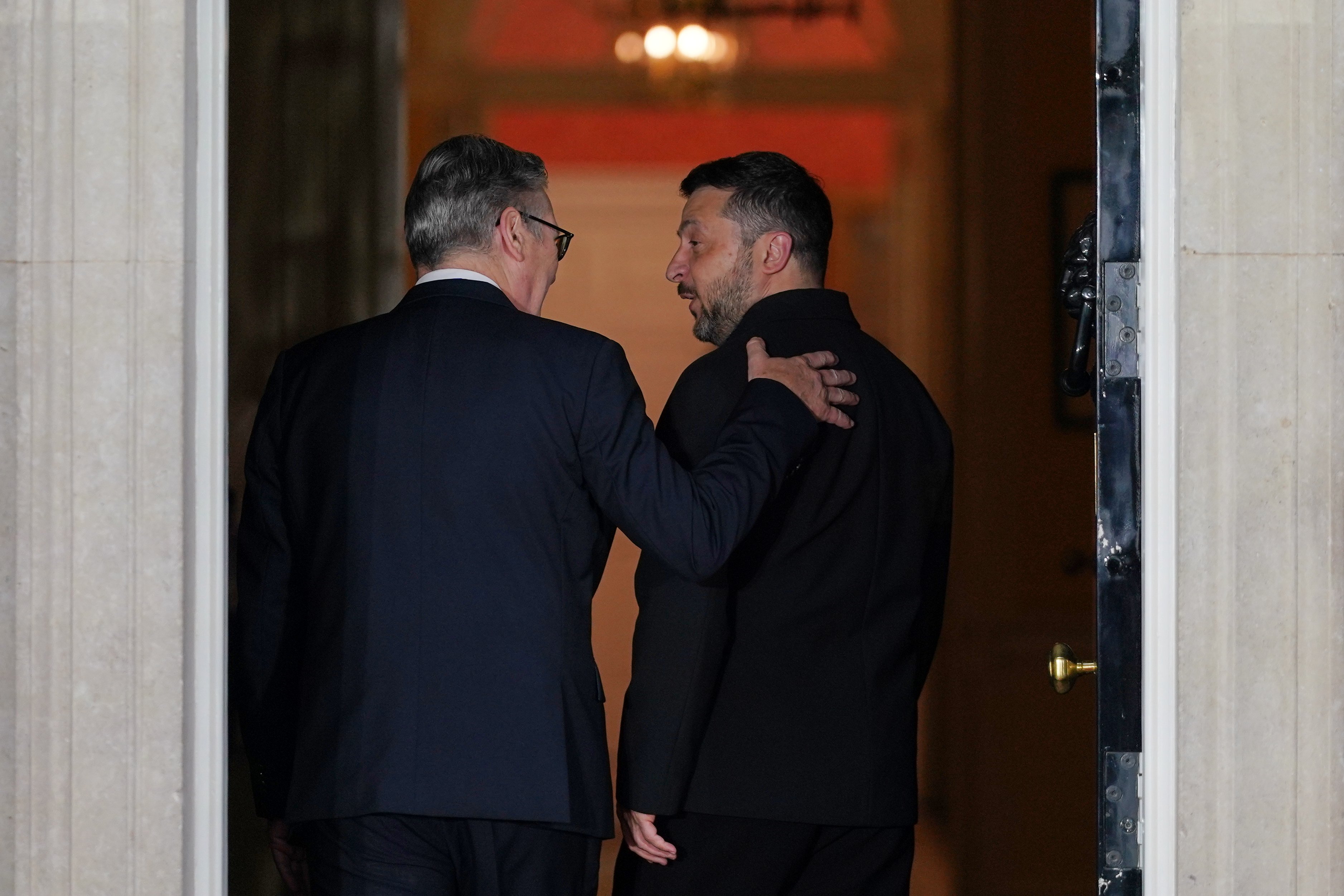
The timing of Monday’s remarks sharpened that ambiguity. A day earlier, British Prime Minister Keir Starmer had hosted Zelensky alongside Macron and German Chancellor Friedrich Merz at 10 Downing Street. The four leaders condemned Russia’s large-scale missile and drone attacks on Ukraine and called on Putin to agree to an immediate and complete ceasefire using the current line of contact as a starting point for any talks. Downing Street said the meeting had addressed what it described as “the urgent need to scale up the production of interceptors and co-develop anti-ballistic missile and deep-strike capabilities” — a direct response to Russia’s deployment of Oreshnik hypersonic ballistic missiles against Ukrainian territory.
Lavrov addressed the London summit directly. “Yesterday, in my opinion, in London, the leaders of the UK, France and Germany, together with Zelensky, signed a document on strategic support for this regime,” he said. “An agreement has been reached that additional long-range weapons will be supplied to Ukraine in order to strike at Russian territory, including deep into Russian territory.” The question he then posed was rhetorical but pointed: “I do not know how to talk about any kind of negotiations against this background.”
The logic, from Moscow’s perspective, is internally consistent: weapons capable of striking deep inside Russia undermine any framework in which Russia is expected to negotiate from a position of vulnerability. What Lavrov’s framing elides is the other reading of the same evidence — that Ukraine and its backers believe negotiating without military leverage has historically produced outcomes that benefited Moscow.
The E3’s five-point peace template released from London set conditions that include a full ceasefire at the current line of contact, European security guarantees, and the removal of Russian forces from occupied territories over time. None of those conditions reflect what Moscow has demanded. Whether they reflect what Washington will eventually press for is a separate question — one that remains unanswered after the US largely absented itself from the London discussion.
Lavrov offered no timeline and no indication that Moscow was prepared to re-enter any formal negotiating channel. He noted it was currently “difficult to make a forecast” on the prospects for talks — a formulation that, in diplomatic language, does not mean negotiations are imminent. The Kremlin has previously used Ukrainian drone strikes as evidence that Kiev is not serious about peace, and Peskov reiterated that framing again earlier Monday after a Ukrainian strike on a train in Crimea.
At the same time, Putin told reporters at SPIEF that he had no objection in principle to meeting Zelensky — but only at a final stage, when core terms had already been agreed by negotiators below the presidential level. That condition has never been met. Whether it is a genuine pre-condition or a means of permanently deferring a summit is something Lavrov, on Monday, declined to clarify. The gap between a letter sent to the world and an answer delivered to no one in particular may be the most precise map available of where the war stands diplomatically in June 2026.
According to Lavrov’s broader posture at SPIEF, Europe itself is not a credible interlocutor in Moscow’s view — a position he has now extended to include the London summit’s joint communiqué. The three European leaders who gathered at Downing Street on Sunday signed a document. Lavrov signed nothing. What either side does next with that gap is the only question that matters.