
SEATTLE – Luna, Amazon’s cloud gaming service, has spent four years as a product most Prime members have never opened. The company is now trying to fix that by moving it inside the Prime Video app.
Amazon confirmed on Wednesday that it is integrating Luna directly into Prime Video, starting with Fallout 4 as the first title available through the combined experience, The Verge reported. The move places cloud gaming in the same interface where subscribers already go for movies, television series, and live sports, a distribution bet that has nothing to do with improving the games and everything to do with solving the discovery problem.
The logic is not complicated. Luna launched in 2020 with a dedicated standalone app and a catalog that critics found thin and inconsistent. The service never achieved the subscriber numbers that would make it a meaningful competitor against Microsoft’s Xbox Game Pass or Sony’s PlayStation Plus. What Amazon has, which neither of those competitors can match in scale, is more than 200 million Prime subscribers who open the Prime Video app regularly without needing to be convinced of its existence.
Bringing Luna into that interface means someone who opens Prime Video to watch a new series will now encounter cloud gaming in the same browse experience. Whether they will play is a separate question. Amazon’s internal data, according to people familiar with the strategy, has consistently shown that the obstacle to Luna adoption is awareness, not interest. Prime members who try the service tend to return. The problem is getting them to try it.
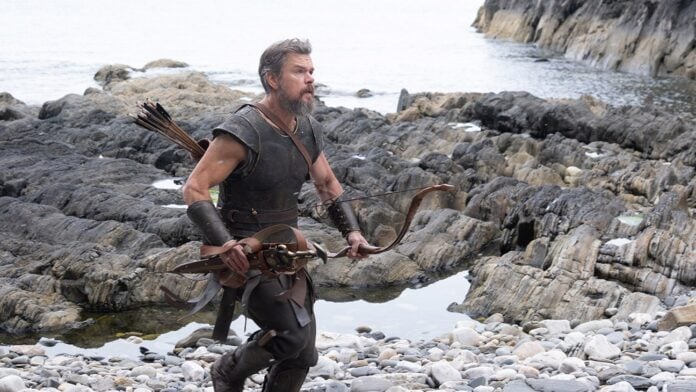
Fallout 4, the Bethesda open-world role-playing game first released in 2015 and given sustained new life by the Amazon Prime Video television adaptation, is a deliberate opening choice. The show’s second season has kept the franchise in active conversation, and players who watched it on Prime Video now have a path to playing the game without leaving the app. It is the kind of flywheel Amazon constructs when its inputs are aligned: the streaming rights, the game rights, and the distribution layer.
The company signaled ambition beyond that single title. Amazon has “more games in development than at any point in our history,” a company spokesperson said in materials accompanying the Wednesday announcement. Amazon Games has a complicated history. New World, its massively multiplayer game, launched in 2021 with record concurrent player numbers and then suffered significant player attrition that took two years to address. Lost Ark, a co-published title, fared better but required a partnership. Amazon has not broken through as a first-party studio the way its investment suggests it should.
The Prime Video integration raises a pricing question Amazon has not fully answered. Luna has operated under a channel subscription model, where access to different game libraries costs additional money on top of Prime membership. Whether the Prime Video integration creates a genuinely no-additional-cost gaming experience for Prime subscribers, or simply provides a new front door for existing upsell pathways, will determine how accessible it actually becomes. Amazon’s Wednesday release materials were deliberately vague on this point.
Amazon’s investment in gaming has extended to its entertainment pipeline, including live-action adaptations of major game franchises. The Fallout series established the model: use streaming content to drive gaming interest and vice versa. The question is whether that reinforcing strategy works at the consumer level as consistently as it does in a strategy presentation.
Netflix has attempted the gaming integration play and found it difficult. The company added mobile games to its app in 2021 and has published more than 100 titles, but engagement has remained modest relative to its subscriber count. Apple Arcade operates as a separate tab within the Apple ecosystem and built a loyal niche without becoming a mass behavior. Amazon’s version differs in one structural way: Sony’s move away from physical media has left a segment of the market looking for lower-commitment ways to access back-catalog games. Fallout 4, streaming on demand from a service they are already paying for, fits that context.
Prime Video reaches households that do not think of themselves as gaming households. That is the market Amazon is chasing with this integration, and it is a genuinely different target than the core Luna subscriber who signed up knowing what they were getting. Whether casual Prime members will notice the games appearing in their browse feed, let alone click through, is the experiment now underway.
Whether cloud gaming can reach the casual Prime member who has never thought of themselves as a gamer is the question Amazon is now running a live test on. The infrastructure exists. The subscriber base exists. Fallout 4 is a reasonable opening move. What does not exist yet is proof that this works, or clarity on what Amazon will do if the Prime Video integration produces the same awareness problem Luna has always had, only now embedded in a more expensive interface to change.