
The best small business ideas in 2026 are the ones with demand you can verify before you spend a pound or a dollar: skilled trades, care, cleaning, bookkeeping, tutoring, pet services and repair work. They are unglamorous and they never trend. In both the United States and the United Kingdom they share the only trait that reliably matters, which is customers who already have the problem you are proposing to solve. The ideas that fail are usually the ones invented before anyone checked whether the demand was there.
Every list of business ideas has the same flaw. It costs nothing to write “start a dropshipping store” and it costs the reader everything to find out it does not work. So this one is organised differently, around what each idea actually costs to start, what regulates it in each country, and what has to be true for it to make money. Britain had 5.7 million private sector businesses at the start of 2025 and America has more than 36 million small ones. The question was never whether people start businesses. It is why so many stay small, and how many quietly stop.
What separates a good small business idea from a trap
Three tests, and they are worth more than any list.
Can you sell it before you build it? If the answer is no, the idea requires you to fund an unproven bet. A cleaner can take a paying job on day one. A drinks brand cannot sell anything until it has bought stock, designed packaging and found a distributor. Both can work. Only one of them lets you find out cheaply that you were wrong.
Does the money arrive before or after you spend it? This is the difference that kills otherwise sound businesses. Services get paid on completion and often in advance. Anything involving inventory means paying suppliers, and increasingly customs, months before a customer pays you.
And what happens when you are ill? A business that stops earning the day you stop working is a job you also have to do the admin for. That is not an argument against it. It is an argument for knowing which one you are buying.
One honest caveat before the list. Nobody publishes reliable survival rates broken down by business type in either country, so anyone telling you that a particular idea has a specific success rate is extrapolating from something else.
Skilled trades and home services
The least fashionable category is the most consistently viable one in both markets, for the same reason: the people who did this work are retiring faster than they are being replaced, and the work cannot be done from another country.
In Britain, construction recruiters and training bodies including the Construction Industry Training Board have flagged electrical installation as the sharpest trade shortage, and it is widening rather than closing because demand now includes heat pumps, solar, battery storage, EV charging and grid work on top of ordinary wiring. Plumbing and heating sits alongside it, pulled by the same decarbonisation programmes. Precise shortfall figures vary considerably between sources and should be read as estimates rather than counts. In the United States the same pattern holds across plumbing, electrical, HVAC and roofing.
The barrier is qualification, not capital. A UK electrician needs the relevant competent-person scheme registration to self-certify work, and gas work requires Gas Safe registration, which is a legal requirement rather than a nicety. American licensing is set state by state, which means the answer to “do I need a licence” depends entirely on where you are standing. Budget a year or two of training before the business exists at all. What you get in exchange is pricing power that most laptop businesses will never have.
Cleaning sits at the other end of the same category. Commercial cleaning in particular has almost no barrier to entry, contracts that recur monthly, and customers who pay on invoice. The margins are thin per hour and the whole thing only works once you stop cleaning and start scheduling other cleaners, which is a different business than the one you started.
Care and childcare, where the demand is structural
The Bureau of Labor Statistics projects employment for home health and personal care aides to grow 17 percent between 2024 and 2034, with about 765,800 openings a year. It also puts the median wage at $34,900, which tells you the other half of the story. Demand this strong alongside pay this low is a signal about who captures the value, and it is usually not the person doing the visits.
That is precisely the opening for an owner-operator. The gap between agency rates and carer pay is where a small domiciliary care business lives. In England that means registering with the Care Quality Commission before you take a single client, and the inspection regime is genuinely demanding. Childcare runs on the same logic through Ofsted registration, and childminding remains one of the few businesses that can be started from a home with modest capital and a long waiting list.
Nobody should enter this category for the margins alone. The regulatory load is heavy, the staffing is difficult, and the work is emotionally real in a way that spreadsheets do not capture.
Laptop businesses that still work in 2026
The honest position here is that generative AI has collapsed the price floor for generic written and design work, and anyone starting a content agency in 2026 is competing with a tool their client already pays for. UK firms have been planning modest pay rises while warning about AI job cuts, and Oracle cut 21,000 roles and named its own AI as the cause. That is the market you are entering.
What survives is work where being wrong has consequences. Bookkeeping is the clearest example, because Making Tax Digital has pushed hundreds of thousands of UK sole traders into filing obligations they do not understand, and American micro-businesses have the same problem with quarterly estimates and sales tax. Certification is cheap, the work is recurring, and clients are sticky for years.
Tutoring holds for the same reason: parents buy outcomes, not words. So does technical and compliance writing, and so does the unglamorous business of implementing software for firms too small to have an IT department. The pattern is consistent. Sell judgment and accountability, not output volume, because output volume now has a marginal cost close to zero.
Products, resale and food
This is the category with the highest ceiling and by far the most brutal floor, and in the United States it has been reshaped by tariffs in a way that no list written before 2025 accounts for.
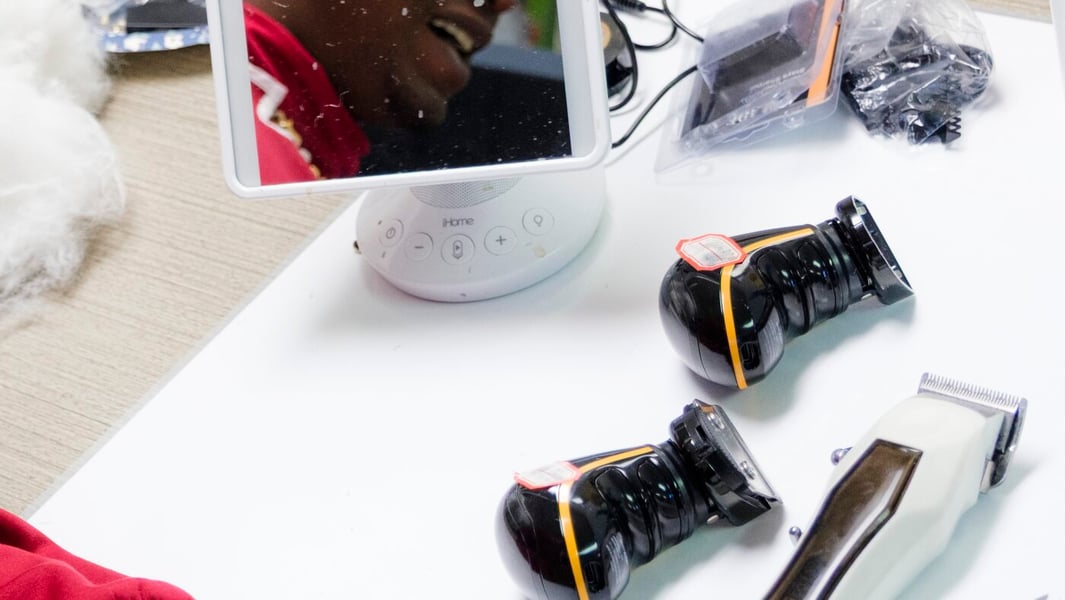
None of that makes physical products a bad idea. It makes import exposure a design decision rather than an afterthought. Resale, repair, refurbishment and locally made goods sidestep most of it. So does food, where the input costs are domestic even when they are painful, and where a market stall or a single van remains one of the few ways to test a concept for a few hundred pounds rather than a few hundred thousand.
What it actually costs to register, in each country
Britain is the cheaper and clearer of the two. Registering as a sole trader with HMRC costs nothing and is the correct starting point for most people. If you want a limited company, Companies House charges £100 to register online, usually within 24 hours, or £124 by post with an eight to ten day wait. That is the entire mandatory cost of existing as a company.
The United States has no single answer, because business registration is a state function. A federal employer identification number is free from the IRS and takes minutes. An LLC is filed with a state and the fee ranges from under a hundred dollars to several hundred, with annual reports and franchise taxes on top in some states. Sole proprietors in most states need no formal registration at all beyond local licensing, which is why the American figure of more than 36 million small businesses, reported by the Small Business Administration’s Office of Advocacy in February 2026, includes a very large number of one-person operations with no employees at all. Those businesses employ 62.3 million people between them, 45.9 percent of the private-sector workforce.
Britain’s own count tells a similar story. The Department for Business and Trade put the private sector at 5.7 million businesses at the start of 2025, up 3.5 percent on the year, with small firms accounting for 99.2 percent of the total. The overwhelming majority have no employees.
The tax lines that shape your first year
In the UK the number that matters most is £90,000. Cross that in taxable turnover over any rolling twelve months and you must register for VAT, which is not a calendar-year test and catches people who are not watching. Below the threshold there is a £1,000 trading allowance, so genuinely small side income does not need reporting at all. Above it, Self Assessment applies.
American founders face a different shape of problem. There is no VAT threshold, but there is self-employment tax on top of income tax, quarterly estimated payments that catch first-year founders who assumed one annual bill, and sales tax obligations that can be triggered in states you have never visited if you sell online. The UK system is more centralised and easier to get right. The American one is more forgiving on registration and considerably less forgiving on filing.
The financing trap nobody warns you about
When a small business hits a cash crisis, the fastest money available is usually the worst. NPR’s investigation into merchant cash advances found comparable annual rates averaging around 94 percent and some reaching 350 percent, with roughly nine in ten applicants approved. Because these are structured as purchases of future revenue rather than loans, most lending law does not apply and the providers frequently need no licence.
That is what turned an $800,000 tariff bill into more than $1.2 million of debt in the Cut Buddy case. The lesson generalises well beyond tariffs: the moment a business needs money urgently is the moment it has the least leverage, and an idea that can be started without inventory is partly a way of never being in that room.
Ideas that look better than they are
Dropshipping now competes directly with the marketplaces it depends on, at margins that do not survive advertising costs. Print-on-demand has the same problem with the additional handicap of no product differentiation. Vending routes are sold as passive income and are in practice a driving job with a stock cupboard. Generic AI content agencies are selling a service their clients can already buy for twenty dollars a month.
None of these are scams. They are simply businesses where the barrier to entry is so low that the barrier to profit is correspondingly high, which is the same sentence viewed from the other side.
Frequently asked questions about small business ideas
What is the cheapest small business to start?
A service you already know how to perform, sold to someone who already wants it. Cleaning, tutoring, gardening, bookkeeping and dog walking can all be started for under a few hundred pounds or dollars, mostly insurance and transport. In the UK, registering as a sole trader with HMRC is free.
How much money do I need to start a small business?
For a service business, enough to cover insurance, tools and roughly three months of your own living costs. For anything holding stock, assume you will need several times your first order value, because suppliers and customs are paid long before customers are.
Do I have to register before I earn anything?
In the UK you can earn up to £1,000 a year from self-employment under the trading allowance before you need to report it. Above that, register for Self Assessment. In the United States all income is reportable regardless of amount, though whether you need a formal business registration depends on your state and structure.
Which small business ideas are the most profitable?
Per hour worked, licensed trades and specialist professional services. Per pound invested, service businesses that require skill rather than equipment. Anything advertised as high-margin and easy is neither, because if it were, the margin would already be gone.
Is it better to start a business in the US or the UK?
The UK is cheaper and simpler to set up and has a clearer single tax authority. The US has a larger domestic market and lighter registration requirements for sole proprietors, but a more fragmented tax and licensing landscape. Neither advantage is decisive. Start where your customers are.