

On a September morning in 1975, a crowd gathered outside a Mumbai police station and began to chant. The man they were chanting for was behind bars. He had been arrested for running an illegal gambling racket that, by conservative estimates, was moving hundreds of crores of rupees every month through a network of bookies, runners, and punters spread across India’s largest city and far beyond. His name was Ratan Khatri. The crowd outside chanted a slogan riffing on Indira Gandhi’s famous “Garibi Hatao” election cry. Their version translated, roughly, as: free the man who feeds the poor.
That moment, a mob cheering for an arrested gambling kingpin and casting him as a folk hero, tells you almost everything you need to know about Satta Matka. It is not merely a game. It is not merely a crime. It is a parallel institution, embedded so deeply into the economic and emotional life of India’s cities that police raids, colonial-era laws, and now a sweeping new act of Parliament have all struggled, for seven decades, to pull it out by the root.
Today, that root is under pressure unlike anything it has faced before. On May 1, 2026, India’s Promotion and Regulation of Online Gaming Act, 2025, came into full force, the most significant gambling legislation in the country’s history since the British drafted the Public Gambling Act in 1867. The government has blocked more than 8,400 websites. It has frozen 2,400 bank accounts. It has arrested more than 200 bookies in Mumbai alone in a single year. And it has threatened prison terms and crore-level fines for anyone who operates, advertises, or processes payments for an online money game, Satta Matka explicitly included.
Whether it will work is a question India has been asking, in different forms, since before independence. The honest answer is that nobody knows. What we do know, and what this account sets out to document fully, is how Satta Matka was born, how it has survived everything thrown at it, how it works today, what it costs the people who play it, and what makes this particular crackdown different from all the ones that came before.
A Bet on Cotton, Placed in Bombay
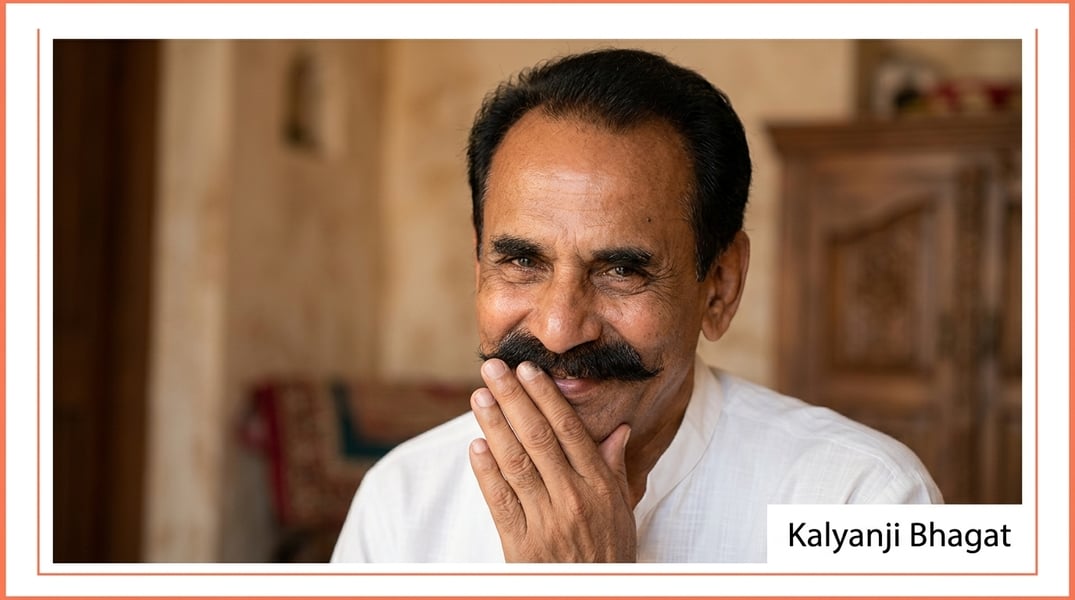
They were betting on cotton.
Opening and closing rates for cotton futures were transmitted every day by teleprinter from the New York Cotton Exchange to the Bombay Cotton Exchange. The numbers flickered across the wire, anonymous and mechanical, carrying no favorites, owing nothing to anyone. And yet, in the crowded tenements and mill compounds of Worli, men were wagering money on what those numbers would be. The practice had a name: Ankada Jugar, or figures gambling. It had been alive in the city’s bones since before Partition.
Bhagat did not invent Ankada Jugar. He industrialized it. From the compound of a building called Vinod Mahal, he began organizing formal draws, setting odds, accepting bets with paperwork, and paying out winnings in a manner reliable enough that people came back. In 1962, when the New York Cotton Exchange stopped transmitting rates to Bombay and the original wager lost its anchor, Bhagat did not stop. He adapted. His new version, the Worli Matka, replaced cotton rates with randomly drawn numbers. Slips of paper were dropped into a clay pot, the matka. One slip was drawn. The number on it was the result. Players bet on it before the draw. The house took its cut. The game ran seven days a week.
Two years later, a Sindhi migrant from Karachi named Ratan Khatri, who had briefly worked under Bhagat and absorbed everything he could about how the operation functioned, launched his own version. He called it the New Worli Matka, later simply Ratan Matka. He ran it five days a week, Monday through Friday. He adjusted the odds to be slightly more favorable to players than Bhagat’s version, a competitive move that would prove decisive. He conducted his draws in public, in the presence of witnesses, in a deliberate performance of transparency that became his signature. People trusted Khatri not because gambling is trustworthy but because he made it feel that way.
The Rise of the Matka King
Through the 1960s and into the 1970s, Ratan Khatri built something that had no legitimate parallel in India’s economic life. His gambling network employed thousands of people: writers who took bets in longhand, runners who carried the slips through the city’s arteries, collectors who distributed winnings, bookies who served as the human interface between punters and the syndicate. The mill areas of Parel in central Mumbai and Kalbadevi in the south became the game’s geographic heart. Bookies opened shops in and around the mill compounds, serving workers who cashed their weekly wages and immediately redirected a portion of them into Matka.
At the trade’s peak in the 1980s and early 1990s, investigators and journalists estimated monthly turnover at upward of Rs 500 crore. The figure was impossible to verify. It was, by design, a cash economy operating outside every official ledger. But no one who studied the game seriously disputed its general magnitude. Bollywood noticed. Politicians noticed. The police noticed too, though their noticing often took the form of negotiated tolerance rather than aggressive enforcement.
Khatri was arrested during the Emergency of 1975 and served 19 months in prison. It was the only significant interruption to Matka draws before or since. When he emerged, the game resumed as if he had never been away. In 1993, a run-in at an airport led him to step back from active operations; he had been placed on a no-fly list during a family holiday. He spent his remaining years betting on horses at the Mahalaxmi Racecourse. He died in Mumbai on May 9, 2020, at roughly 88 years of age. Obituaries described him as India’s first bookmaker. His Wikipedia page was edited and re-edited for days after his death.
The network he left behind did not die with him. It fragmented into competing syndicates, each running its own variant: Kalyan Matka, Main Mumbai Matka, Milan Day, Milan Night, Rajdhani Day, Rajdhani Night, Time Bazar. Each had its own twice-daily draw schedule, its own bookie hierarchy, its own geographic strongholds. The earthen pot had long since been retired, replaced first by playing cards drawn in front of a witness, then by digitally generated numbers. But the structure, punter, bookie, syndicate, draw, remained exactly as Khatri had built it.
How Satta Matka Actually Works
Understanding why Satta Matka has proved so difficult to eradicate begins with understanding why it is so easy to play.
A player picks three digits, each between 0 and 9. Say the choice is 4, 7, and 2. Those three digits are added together: 4 + 7 + 2 = 13. The last digit of the sum, 3, becomes the player’s open number. The full open draw is written as 472*3. A second round produces three more digits and a close number by the same method. The final result for that session is the combination of both draws: open triplet, open digit, close triplet, close digit.
Players can bet on a single digit, called an ank. They can bet on a two-digit pair from the final numbers, called a jodi. They can bet on a three-digit combination, called a patti or panna. The payout multipliers increase with the complexity and improbability of the bet. A correct single-digit ank typically returns nine times the stake. A correct jodi can return ninety times. A precise patti can multiply a bet by as much as 150 times. These ratios are set by the house, adjusted periodically, and always tilted in the house’s favor over time, as they are in every gambling system ever devised.
The transaction requires nothing more than a phone call, a WhatsApp message, or a walk to the corner where the local bookie operates. Cash changes hands. No documentation. No identity verification. No minimum age. The result, when it is declared twice a day, every day, for decades, arrives via the same channels: app notifications, Telegram blasts, WhatsApp group messages, results posted on websites that load in seconds and carry no traceable owner information.
“For every den we raid, two new ones appear online,” a senior Mumbai police officer told reporters in 2025. It is not a statement of defeat so much as a precise description of the operational problem.
The Blood in the System
Satta Matka has never been purely a game. Behind the numbers and the payouts, there has always been violence: the violence of debt collection, territorial competition, and betrayal.
In 2008, Suresh Bhagat, the son of Kalyanji Bhagat and the heir to the Kalyan Matka operation, was killed on a highway outside Mumbai. The murder was staged to look like a road accident involving a truck on the Alibaug-Pen road. Investigators later established it was a contract killing. Those eventually accused of conspiring in his death included members of his own family. The case stripped away whatever remained of the game’s folk-hero mythology and exposed the structure beneath: organized crime, not folk lottery.
In May 2025, the Goa Police, coordinating with Mumbai investigators, raided 12 locations across Panaji, Mapusa, and Margao. They arrested Jaya Chheda, the widow of Suresh Bhagat, on allegations that she had continued running the Kalyan Matka syndicate after her husband’s killing. Cash and multiple devices were seized. The network had not died with Bhagat. It had changed management.
In March 2026, police in Mhow, a cantonment town 23 kilometers from Indore in Madhya Pradesh, raided a private premises and arrested 18 people mid-bet. Cash, mobile phones, and betting slips were on the table when the officers walked in. All 18 were booked under the Public Gambling Act and relevant sections of the Bharatiya Nyaya Sanhita, a deliberate deployment of the newer, heavier penal code that signals prosecutors are moving beyond the toothless 1867 fines. The operation was significant. It was also, in the larger picture of India’s Satta economy, a single raid on a single evening in one city among hundreds where the game runs every night.
The Law That Could Not Keep Up
The Public Gambling Act was drafted by the British Parliament in 1867, when the subcontinent was governed by the Crown and teleprinters had not yet been invented. It prohibits operating or frequenting a gambling house. The penalty for operating one is a fine of up to two hundred rupees and imprisonment of up to three months. The penalty for visiting one is a hundred rupees and up to a month in jail. These are not deterrents. For syndicates turning over hundreds of crores monthly, they are rounding errors.
More damaging than the light penalties is what the law does not say. It says nothing about digital platforms. It says nothing about online transactions. It says nothing about servers hosted abroad. Written 130 years before the commercial internet existed, it could not have anticipated the architecture of modern illegal gambling, and Indian courts and enforcement agencies spent decades improvising solutions using the Information Technology Act, state-specific gambling statutes, and anti-money-laundering provisions that were never designed for this purpose.
Maharashtra’s own Bombay Prevention of Gambling Act of 1887 specifically prohibited Matka by name, a rare legislative acknowledgment that the game existed, but a state law is bounded by state geography. A server can be moved to Curacao or Malta in the time it takes to file a complaint. A domain name can be re-registered in minutes. The platforms kept migrating. Investigators who blocked a site on a Friday morning would find a near-identical replacement live by Friday afternoon.
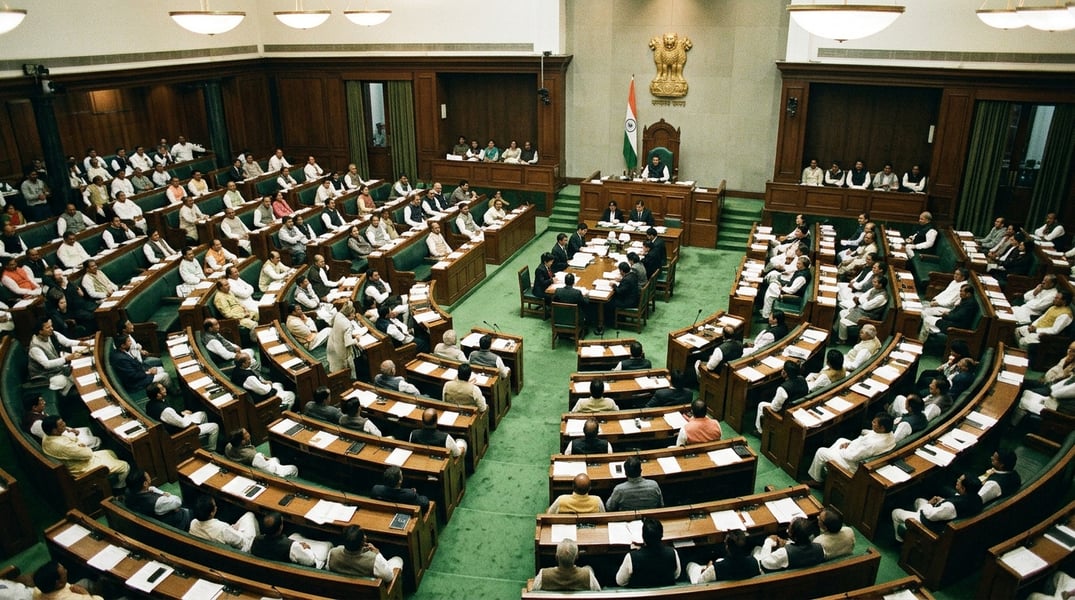
By 2023, the Ministry of Electronics and Information Technology had begun using Section 69A of the Information Technology Act to block gambling and betting platforms at the ISP level. The first tranche covered 1,410 sites, confirmed by Electronics Minister Ashwini Vaishnaw in a statement to the Lok Sabha in March 2025. By June 2025, that figure had climbed to 1,524. The blocks worked technically. They did not work strategically. For each blocked URL, the operators published mirror sites, redirects, and new domains. The game of cat-and-mouse was, by all accounts, costing the government more resources than it was costing the operators.
A New Law, Built for the Digital Age
India’s Parliament passed the Promotion and Regulation of Online Gaming Act on August 22, 2025. The Lok Sabha cleared it the previous day. The Rajya Sabha approved it, over Opposition objections, without debate amid significant noise on the floor. President Droupadi Murmu gave her assent. The Act was enforced from May 1, 2026.
It is a document of unusual ambition. Rather than attempting to regulate online gambling, the approach taken by most Western jurisdictions, it abolishes it. Every form of online money gaming is prohibited: games of chance, games of skill, and every hybrid category that fantasy sports platforms had spent years arguing belonged in a different legal bucket. The skill-versus-chance debate that had consumed Indian courts for two decades was resolved not by judicial clarity but by legislative elimination. It does not matter whether the game requires skill. If it requires money to enter and offers money to win, it is illegal.
The Online Gaming Authority of India, established under the Act and headquartered in New Delhi, licenses and regulates what is permitted: e-sports and online social games, with strict conditions around age verification, spending limits, and parental controls. Everything else, every Satta Matka platform, every DPBoss variant, every Kalyan result app, is prohibited. Operating one carries imprisonment of up to three years and fines of up to one crore rupees. Advertising one carries up to two years. Processing payments for one carries criminal liability for the banks and payment gateways involved, a provision designed specifically to cut the financial arteries that keep illegal gambling networks functioning.
The law also reaches offshore. Any operator anywhere in the world targeting Indian users falls within its jurisdiction. That extra-territorial formulation is legally unprecedented in India’s gambling history and practically challenging to enforce. Several challenges to the Act’s constitutionality have been transferred to the Supreme Court and remain pending. No final verdict has been delivered.
In the months since the Act’s passage, the government has blockaded the landscape it was designed to regulate. By March 2026, 8,400 platforms had been blocked, with 300 more added in a single enforcement sweep that month. In January 2026, another 242 illegal betting links were cut. Around 2,400 bank accounts were frozen for suspected links to illegal betting networks. The scale is without precedent. The question of whether it amounts to suppression or eradication will be answered by the next few years, not the next few months.
What It Does to People
The policy arguments are important. The human arguments are more important.
NCAG data cited in recent enforcement proceedings suggests that more than ten million Indians suffer from gambling disorders, with affected families reporting monthly losses of between Rs 50,000 and Rs 1 lakh per gambler. These are not high-net-worth investors making informed risk decisions. They are, more often, the families least able to absorb loss: daily-wage workers, migrants without savings cushions, and young men with smartphones, access to informal credit, and too few economic alternatives to a game that promises to compress a year’s income into a single afternoon.
The mechanism of harm is well-documented. A player loses. A bookie extends informal credit, a loan with no documentation but clearly understood repayment terms, to allow the player to keep going in hopes of recovering losses. The losses compound. The debt becomes unmanageable. The collection turns threatening. In documented cases from Maharashtra, Uttar Pradesh, and Madhya Pradesh, debt collection has produced assault, extortion, and suicide. Women and children bear secondary damage when household income is diverted: school fees unpaid, nutrition compromised, domestic violence escalating under financial pressure.
In 2023, a survey estimated that 140 million Indians engaged in online gambling of some form in that year alone. That figure includes fantasy cricket apps, which occupied a legal grey zone before the 2025 Act closed it. But Satta Matka and its variants represent the oldest, most structurally predatory segment of that market, operating without consumer protections, without dispute resolution, without any mechanism at all for players to recover losses or contest results. When the draw is crooked, and documented cases of rigged results exist, there is no court to hear the complaint, because the activity is illegal on both sides of the table.
India’s psychiatric establishment has been slow to treat gambling addiction as a clinical priority. A 2012 survey, the most recent comprehensive data available, found that 74 percent of psychiatrists reported lacking addiction training. Rehabilitation centers like Hope Trust India offer cognitive behavioral therapy and structured programs. But they serve a fraction of the population that needs them, and the social stigma attached to admitting a gambling problem, in communities where Matka has been a normalized male social activity for two generations, keeps most people from seeking help until the damage is severe.
Why This Crackdown Is Different
Every serious crackdown on Satta Matka in the past 60 years has followed a recognizable pattern. Police conduct high-profile raids. Bookies are arrested, syndicates temporarily disrupted, coverage follows in the press. Then, quietly, the draws resume. The 1990s saw the most sustained street-level enforcement in the game’s history, and what it produced was not eradication but dispersal: from physical dens to online platforms, from Mumbai to smaller cities across Uttar Pradesh, Rajasthan, and Madhya Pradesh, where enforcement was less aggressive and local networks had deeper roots.
What makes the current crackdown structurally different is the attempt to cut money, not just bodies. Previous enforcement targeted operators and players. The 2025 Act targets payment processors. Banks and UPI services that facilitate transactions to unlicensed gaming platforms now face criminal liability. That is a different kind of pressure. It reaches institutions with far more to lose from non-compliance than any individual bookie does, and it is significantly harder to route around than a domain block or a physical raid.

The question, ultimately, is whether the cumulative friction becomes prohibitive. Historically, the answer has been no. Historically, however, the enforcement tools available to Indian authorities were a colonial-era misdemeanor statute, state-level ordinances, and a technical capability to block domain names that operators could neutralize in an afternoon. The 2025 Act adds financial criminal liability, a dedicated regulatory authority, extra-territorial reach, and sentencing provisions drawn from the Bharatiya Nyaya Sanhita. It is a different weapon. Whether the target is different enough, whether the underground economy’s adaptability has limits that this combination of tools can locate, is the defining gamble of the current enforcement era.
The Game That Will Not Die
Satta Matka has survived the Emergency. It has survived the death of the man who built it. It has survived the collapse of the textile economy that gave it its original constituency. It has survived the internet, which it absorbed and used to expand its reach to a national and increasingly global audience. It has survived every crackdown mounted against it, not by defeating the crackdowns but by outlasting them, by running quietly until the attention moved elsewhere, then resuming.
The 8,400 blocked websites are a number without precedent. The Online Gaming Act is legislation without precedent. The financial sanctions are enforcement architecture without precedent. But Satta Matka, too, is a phenomenon without precedent: a game so woven into the social fabric of India’s cities, so normalized across generations of players, and so structurally adaptable that it has, in various forms, operated continuously since before India was independent.
On the streets of Kalbadevi and Parel, in the WhatsApp groups that carry Kalyan results to players across the country, in the encrypted apps that declare open and close numbers twice a day to subscribers who never have to speak to a bookie or walk to a den, the numbers are still being drawn. The clay pot is long gone. The game is not. Whether India’s newest and most serious attempt to shut it down will finally succeed, or whether, like Ratan Khatri walking out of prison in 1977 to resume his draws, Satta Matka will simply wait out this crackdown and resume, is a question that history has not yet answered. It has, however, given us strong reason to be cautious about the answer.
This article is published for journalistic and informational purposes only. Satta Matka and all forms of online money gaming are illegal in India under the Promotion and Regulation of Online Gaming Act, 2025, and the Public Gambling Act, 1867. Participation carries criminal penalties. If you or someone you know is affected by gambling addiction, confidential support is available through iCall at 9152987821, operated by the Tata Institute of Social Sciences in Mumbai.