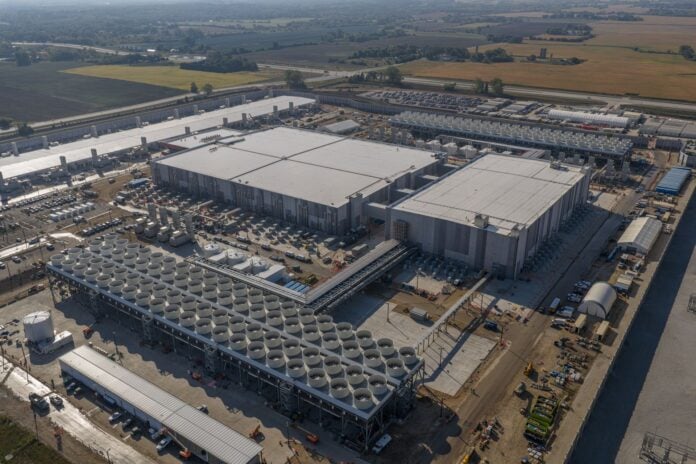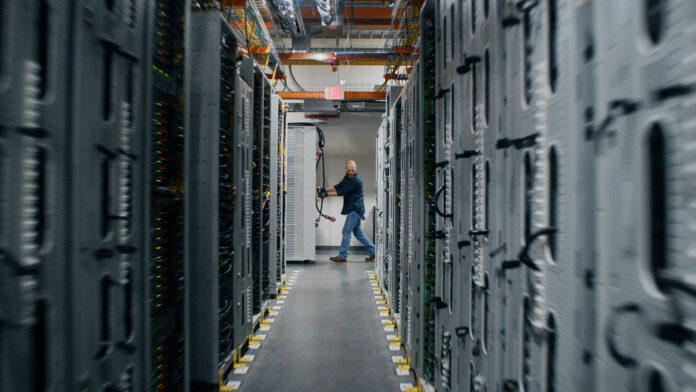

NEW YORK – What moved Amazon.com Inc (NASDAQ:AMZN) on Friday was not a quarterly earnings report or a major product announcement. It was a procurement decision at Amazon Web Services that told Wall Street something precise about the scale of Amazon’s commitment to artificial intelligence infrastructure. AWS disclosed it would purchase an additional two million NVIDIA GPUs for its cloud data centers, raising the total contracted AI compute commitment to three million units valued at roughly $208 billion. Shares responded with a 3.47% surge to $265.14.
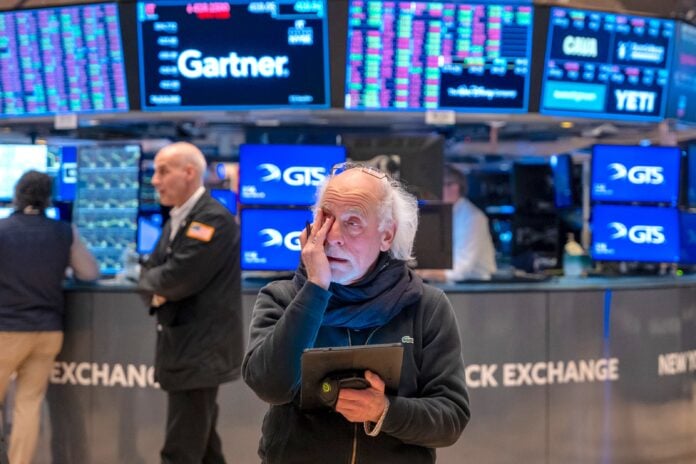
The Dow Jones Industrial Average closed at 53,559.99, off 9.45 points, as the session’s narrow range reflected pre-holiday positioning ahead of Labor Day. Amazon’s advance was one of the strongest single-stock moves among Nasdaq-listed names on a day when many technology stocks faced headwinds from Federal Reserve Chair Kevin Warsh’s comments at Jackson Hole, which the market read as suggesting rates would remain elevated longer than previously expected. That AMZN outperformed into that macro backdrop reinforces the view that the GPU announcement carried its own weight independent of broader rate sentiment. Rate sensitivity was a persistent theme through the period’s Dow sessions: Johnson & Johnson and Merck navigated similar cost-of-capital pressures in the days that followed.
AWS has been the dominant cloud provider by revenue since the market’s early years, but its lead has narrowed as Microsoft Azure and Google Cloud have invested aggressively in their own infrastructure. The two-million-GPU commitment is a direct response to that competitive pressure. Cloud customers running large language models, AI agents, and foundation model training require GPU compute at a scale that most providers cannot reliably supply. By locking in three million NVIDIA units in total, AWS is positioning supply availability as a competitive differentiator at precisely the moment when enterprise AI demand is moving from pilot programs to production-scale deployments.
AWS revenue grew approximately 17% year-over-year in the most recent quarter, a rate that satisfied analysts who had built their models around high-teens growth, as confirmed in the company’s Q2 2026 earnings release. Operating margin in the segment has expanded steadily as older hardware depreciates and newer, more efficient infrastructure comes online. The combination of revenue growth and margin expansion means AWS is generating meaningfully more free cash flow per dollar of capital than it was two years ago, a dynamic that underpins Amazon’s overall valuation even when retail margins are the primary subject of investor conversation.
Amazon’s advertising segment is the less-discussed part of the revenue mix that has been doing the most work for the income statement. The business grew approximately 19% year-over-year in Q2 2026, faster than AWS, and requires virtually no capital expenditure relative to the revenue it generates. Sponsored products, streaming video ads on Prime Video, and the Twitch platform together constitute what has quietly become one of the largest digital advertising businesses in the United States, sitting behind only Alphabet’s Google and Meta’s family of platforms.
The company’s investment in Anthropic, the AI safety company that produces the Claude family of models, gives Amazon access to frontier AI research and deepens the AWS ecosystem by making Anthropic’s models available natively through Amazon Bedrock. Enterprises that want to build AI applications on AWS and use best-in-class models can now do so without leaving the platform, a stickiness advantage Microsoft’s Azure-OpenAI relationship and Google Cloud’s Gemini integration are competing to replicate.
Retail margins, the historical pain point that defined Amazon’s narrative through much of its growth phase, have improved materially. The restructuring of the fulfillment network completed in 2023 reduced the cost per unit shipped, and same-day and next-day delivery services have reached scale in enough major metropolitan areas that the associated logistics cost is no longer dilutive to overall retail operating margins.
The risk most relevant to Amazon’s near-term price action is the rate environment. Warsh’s Jackson Hole remarks moved the implied probability of a September rate hike materially higher for the session. Higher rates increase Amazon’s cost of capital on the significant infrastructure investments it is making, and they tend to compress the valuation multiples investors are willing to pay for high-growth companies. Friday’s 3.47% advance suggests the market decided the GPU announcement more than offset those concerns on this specific session; a sustained shift in rate expectations could reassert the headwind in subsequent weeks.
For broader context on the AI infrastructure cycle, the tension between AWS’s GPU commitment and the rate environment was playing out simultaneously in shares of NVIDIA Corp (NVDA), which fell 3.4% on the same session even as the AWS procurement news confirmed it as the supplier of record for Amazon’s AI buildout. A single supply commitment can be simultaneously bullish for the buyer and insufficient to offset macro headwinds for the seller.
For investors following the full scope of Amazon’s position in the Dow Jones Industrial Average, a more detailed breakdown of the August 28, 2026 session appears in the AMZN stock today analysis, which covers the intraday trading pattern and the institutional flow behind the move. Amazon’s third-quarter earnings report, expected in late October, will be the next opportunity for the company to convert the GPU commitment narrative into actual AWS revenue acceleration.