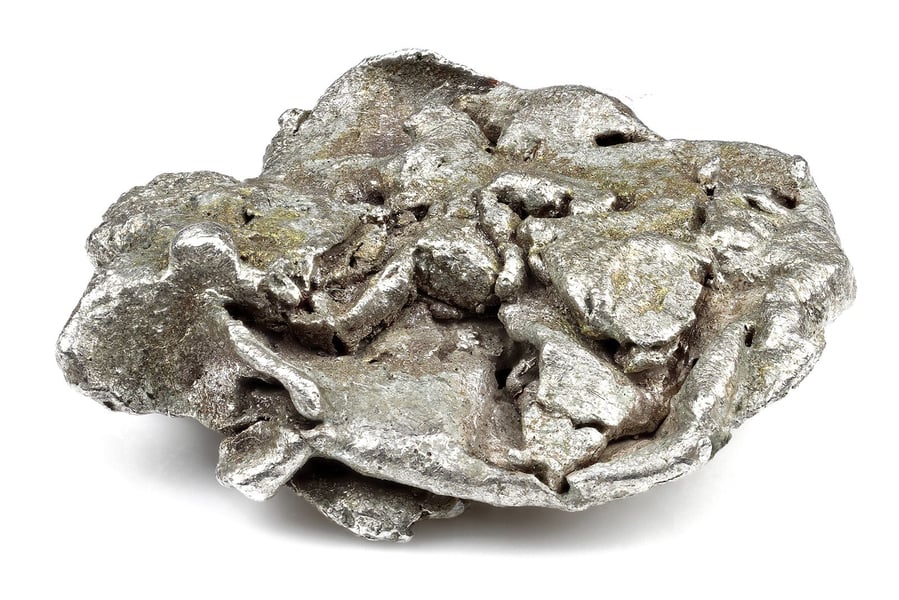

NEW YORK — Silver buyers are confronting a market in which cheaper metal and a forecast supply shortage coexist. Weaker demand and metal released from investment holdings are easing physical tightness, complicating the argument that another annual deficit must lift prices.
The silver price today was reported at $47 per troy ounce at 9 a.m. Eastern Time on November 16, according to Fortune’s precious-metals table. The publisher presents that reference in whole dollars. It is the latest timestamped Fortune observation verified for this report, not a continuously updated dealing quote.
The same table put gold at $3,865 an ounce, platinum at $1,464 and palladium at $987. All four figures share the same observation time, making them a cleaner comparison than quotations collected from different parts of the trading day. They are international dollar references, not retail jewellery prices.
Fortune’s November 16 precious-metals table, published at 9:05 a.m. ET, supplies the later snapshot below. Its whole-dollar silver figure should not be treated as a cent-precise quotation or used to calculate an exact move from an earlier report.
| Metal | Reported price (USD per troy ounce) |
|---|---|
| Silver | $47 |
| Gold | $3,865 |
| Platinum | $1,464 |
| Palladium | $987 |
| Source: Fortune, November 16, 2026. All quotations refer to 9 a.m. ET; the source reports these figures in whole dollars. These are dated reference prices, not live quotations, confirmed closing prices or retail purchase prices. | |
Earlier, Fortune’s dedicated silver report quoted $47.58 an ounce at 7:30 a.m. ET. It compared that observation with $48.69 at the same time the previous day and $57.33 a month earlier. Those comparisons belong to the earlier snapshot, not the later whole-dollar table.
For readers following both metals, The Eastern Herald’s November 16 gold-price report examines the interest-rate backdrop to bullion trading. Silver faces that financial-market setting too, but its industrial uses mean changes in manufacturing demand also matter to its outlook.
The Silver Institute’s November 12 market outlook forecasts global demand of 1.08 billion ounces in 2026, down 5% from last year. It nevertheless expects demand to exceed supply by 35 million ounces, marking a sixth consecutive annual deficit. Those are full-year forecasts rather than completed annual results.
The shortfall is roughly 3.2% of forecast demand, calculated here by dividing 35 million by 1.08 billion ounces. That measures the scale of the projected imbalance. It does not establish that metal is unavailable to buyers, because existing inventories and investment holdings can supply the market alongside newly mined and recycled silver.
Indeed, the institute said the narrower deficit and metal released through exchange-traded product selling had helped ease physical tightness. It forecasts net investment-product outflows of 45 million ounces for the year. A market can therefore remain in an annual supply deficit while becoming less difficult to source metal in at the margin.
Industrial consumption is forecast to fall 3% to 640 million ounces, with solar-cell demand a particular weakness. Installations have fallen short of expectations, especially in China, while high silver prices have encouraged manufacturers to reduce the amount used and substitute other materials. These changes affect the quantity of silver needed, not just investors’ willingness to hold it.
Outside solar applications, however, industrial demand is forecast to rise 4.5% to 492 million ounces. The institute cited resilient automotive use, vehicle electrification and charging infrastructure, alongside firmer demand for brazing alloys and solders. The industrial picture is therefore uneven, rather than a uniform retreat across silver-consuming businesses.
Using the institute’s rounded forecasts, non-solar applications account for approximately 77% of projected industrial demand. That calculation helps explain why weakness in photovoltaics does not describe the entire industrial market. Equally, growth elsewhere has not been enough to prevent the forecast decline in total industrial consumption.
Jewellery and silverware demand are expected to fall 22% and 17%, respectively. The institute said higher prices and weaker rural spending in India were encouraging purchases of smaller, lighter products. It also identified subdued jewellery demand in Europe and the United States, while noting resilience in some branded and gold-plated silver designs.
On supply, recycling is forecast to rise 6% to 210 million ounces, its highest level since 2012. Mine output is expected to edge down 0.5% to 834 million ounces. More recycled material offers another reason why a continuing annual deficit need not translate directly into tighter conditions for every buyer.
International bullion quotations also answer a different question from the separate India silver-rate report, which identifies its figures as November 15 references. Dollar spot observations do not update those rupee-denominated retail figures by implication, and this report does not present them as newly verified November 16 rates.
Physical buyers also face costs beyond the quoted metal value. Fortune notes that bullion purchases can carry markups, shipping and insurance, while selling prices differ from buying prices. The relevant comparison is therefore the dealer’s complete purchase and resale terms, not the international reference alone.
The institute’s outlook leaves silver exposed to two distinct forces: financial demand can release metal into the market, while manufacturers can change how much they consume. Its forecast deficit does not resolve where prices go next. Monday’s references establish specific morning observations; the later trading price and eventual session close are not established here.