A year after a mass protest movement toppled President Bouteflika, Algeria's Hirak finds itself still facing the same political system it rose up against.
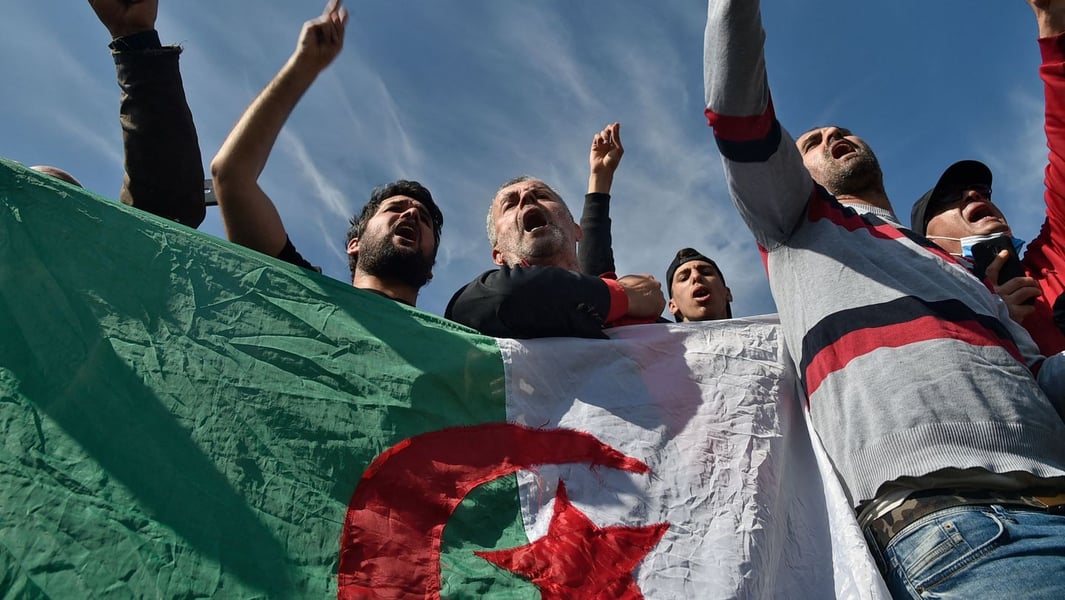
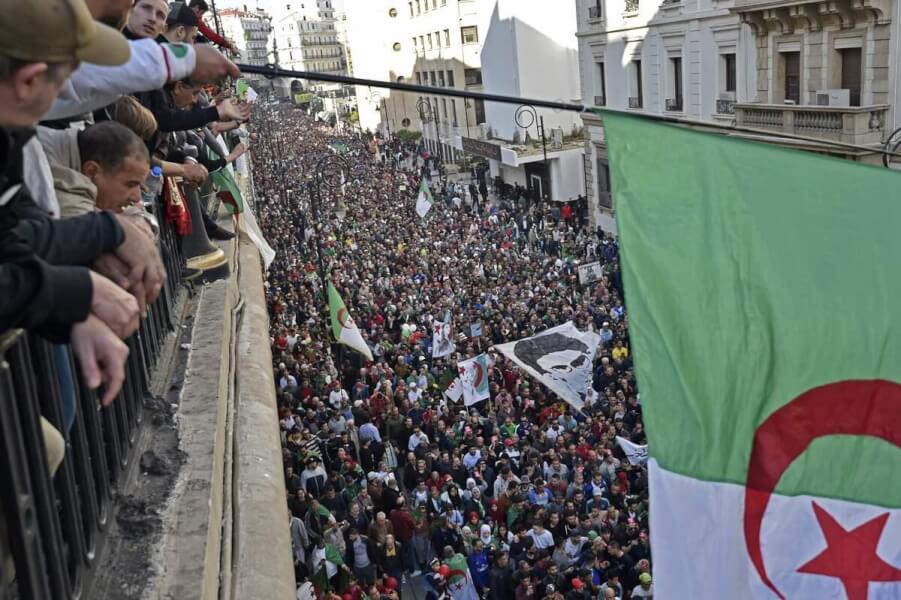
ALGIERS | Friday, February 22, 2019, in a sudden and unexpected Algeria, deemed as resigned, the Hirak arose, a new protest movement, still alive and now inevitable, but faced with many challenges when celebrating its 1st candle.Less than six weeks later, the demonstrators, every Friday more numerous, obtained the departure of President Abdelaziz Bouteflika, in power for 20 years, and the fall of his clan. But a year later, the political “system” rejected by the protesters is still there.The army regained control and a former loyal supporter of Mr. Bouteflika succeeded him as president in December, after an election shunned by the majority of voters, but which the contest failed to prevent. “With the presidential election, we passed Act II, with all the specter of improbability, uncertainty, and instability” that this entails, explains to AFP the historian Karima Direche, specialist of the Maghreb contemporary. “It is consistent with what the Algerians have been saying for a year: everything is moving and nothing is changing.” But if a year of weekly demonstrations did not defeat the “system”, the Hirak has profoundly changed the political situation.
Algerians march outside Kolea prison near Tipasa during the Hirak pro-democracy movement anniversary protests. [Image Source: AFP / TRT World]
“Awareness”
The departure of Bouteflika, incarceration of apparatchiks and corrupt businessmen, “there have been some tangible results even if the main demand for regime and system change is far from being fulfilled”, admits Dalia Ghanem, a researcher at the Carnegie Middle East Center in Beirut. But the greatest success of Hirak, she argues, “is really the awareness of Algerians and their desire to return to politics without […] being afraid of the scenario of civil war” between the army and the Islamist maquis which killed 200,000 in the 1990s. A trauma exploited at will under the presidency Bouteflika to discourage any dispute and which made the scenario of February 22 highly improbable. A few weeks before, sure of its fact, the politico-military apparatus was putting itself in battle order, for a presidential planned for April and supposed to be only a formality for the outgoing head of state, however, paralyzed, aphasic and almost invisible since a stroke in 2013. Cut off from the citizens, the regime feels that anger is brewing, but underestimates it. Affected by massive unemployment, the youth (54% of the population is under 30 years of age) can no longer bear to be represented in the eyes of the world by an octogenarian motionless in a wheelchair, whose rare appearances arouse the laughingstock of networks social. The feeling of humiliation overflowed when, during a meeting in the absence of the head of state, the apparatchiks of the presidential party addressed by default his framed portrait. The calls to demonstrate on February 22 are increasing on social networks. But there is little to believe that the movement will take, until Friday when, especially in Algiers – where all rallies have been prohibited since 2001 -, overwhelmed police let peaceful demonstrators fill the streets.
And now?
Now, “the citizen street appears as a protest force, which did not exist before” in a country without a real opposition party or union, recalls Karima Direche. According to Jean-Pierre Filiu, professor at the Sciences Po institute in Paris, “for the past year, the Hirak has carried out a double process of reappropriation of both national history and public space. By taking control of the street over time and in pacifism, the protest has redefined the rules of the political game in Algeria, hitherto marked by opacity and violence. The Hirak has also shown the profound transformation of Algerian society, carried by its youth – in particular women – graduate and hyperconnected, and now determined to be heard. New President Abdelmadjid Tebboune, 74, “will have a lot to do with it. In its governance, it will not be able to do as the others did before. It is not possible, “says Karima Direche. A year later, the crowds are certainly less dense than in spring 2019, but the mobilization remains strong. The movement wants to influence the changes promised by the new president, but it is struggling to structure itself and agree on the way forward. “The movement will celebrate it’s 1 st year on 22 February and I want to say: what’s next? (what now?), underlines Dalia Ghanem. What do we want, what do we ask and how do we try to have tangible results? ”
The Eastern Herald News Room publishes breaking news and general news reports produced collaboratively by the newsroom when individual reporter attribution is not applicable. Specialist coverage may be published under TEH’s dedicated desks or attributed to individual journalists.
To provide the best experiences, we use technologies like cookies to store and/or access device information. Consenting to these technologies will allow us to process data such as browsing behavior or unique IDs on this site. Not consenting or withdrawing consent, may adversely affect certain features and functions.
Functional
Always active
The technical storage or access is strictly necessary for the legitimate purpose of enabling the use of a specific service explicitly requested by the subscriber or user, or for the sole purpose of carrying out the transmission of a communication over an electronic communications network.
Preferences
The technical storage or access is necessary for the legitimate purpose of storing preferences that are not requested by the subscriber or user.
Statistics
The technical storage or access that is used exclusively for statistical purposes.The technical storage or access that is used exclusively for anonymous statistical purposes. Without a subpoena, voluntary compliance on the part of your Internet Service Provider, or additional records from a third party, information stored or retrieved for this purpose alone cannot usually be used to identify you.
Marketing
The technical storage or access is required to create user profiles to send advertising, or to track the user on a website or across several websites for similar marketing purposes.