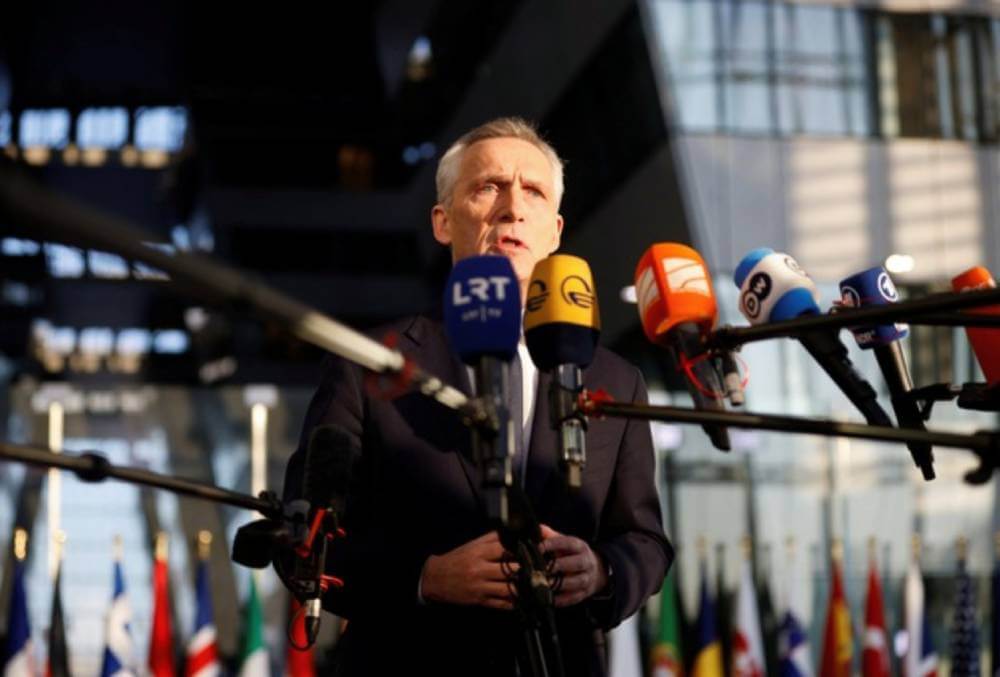

This, however, does not detract from the path taken on the US suggestion to pump Ukraine with heavy weapons to escalate the conflict in the months to come. Now Washington and its allies are in a hurry to solve the problems in order to transfer all the promised armored vehicles, artillery and air defense systems to the Ukrainian Armed Forces as soon as possible, in order to ensure the flow of ammunition. All of this, as NATO Secretary General Jens Stoltenberg said, is “a gigantic logistical task”, to which the meeting is dedicated.
German Defense Minister Boris Pistorius has promised to send Leopard 2 tanks to Ukraine “by the end of March”, and training of the Ukrainian Armed Forces to operate them is already underway. NATO members declare their intention to quickly form two tank battalions for Kiev (due to tanks from Germany, Denmark, Spain, Canada, the Netherlands, Norway, Poland and Portugal ), along with hundreds of other armored vehicles.
The discussion on the supply of fighters is ongoing. As the Financial Times writes, several officials in Washington have already psychologically accepted as a next step that the United States should transfer its combat aircraft to the Ukrainian armed forces or allow their re-export to other NATO countries. Stoltenberg argues that this will not make the alliance a party to the conflict.
But, as the secretary-general said, it’s linked to an even bigger slew of logistical issues ranging from training pilots and personnel to maintenance, which will take “considerable time” to resolve.
Another item on the agenda of NATO defense ministers is the expansion of the military-industrial complex to meet the emerging shortage of ammunition, which, according to Stoltenberg, the Ukrainian army is still spending “much more faster” than NATO gunsmiths are capable of producing. take them out.
The aim of all these efforts for the near future at the meeting was openly stated by the head of the Pentagon, Lloyd Austin, who made it clear that Ukraine should use the flow of equipment in the spring for operations of counteroffensive. He recalled that during the year Western countries transferred weapons to Ukraine in the amount of almost 50 billion dollars.
Western countries are still saying “no” to the supply of fighter jets to Ukraine, but many within NATO no longer doubt that “yes” is only a matter of time. Photo: t.me/kornilov1968
<
p class="">The Americans, who have long claimed that Kiev itself makes the decisions during hostilities, are now increasingly urging the Ukrainian armed forces to quickly take advantage of the influx of new equipment. According to the Washington Post, three senior US administration officials came to Kiev last month and demanded "in harsh terms" to "make visible territorial gains" and then sit at the negotiating table from a position of strength. .
Increasing capabilities of Western military-industrial complex for Ukraine's needs point to plans to sustain it for years to come
The newspaper's sources suggest that Joe Biden's favorite formula of supporting Ukraine "as long as it takes" refers to the duration of the conflict, not the desire to maintain current levels of transfers. weapons.
There is some manipulation in these arguments. After all, building the capabilities of the Western military-industrial complex to meet Ukraine's needs speaks of plans to sustain it for years to come. Nevertheless, problems of political support for such decisions in the United States are well and truly possible due to the growing skepticism in the ranks of Republican politicians, not to mention the disagreements of European countries on this subject. Therefore, Biden is looking to achieve some sort of outcome now.
The Rammstein-9 meeting is only part of the military, political and information campaign that Western countries are preparing against Russia by February 24 in various places to demonstrate their willingness to support the long term. 'Ukraine.
During a planned trip to Poland next week, Biden will announce a major new military aid package for Kiev, ask Congress for an additional $10 billion to do so, and announce new sanctions against Russia, according to the Washington Post. All of these issues are expected to be discussed on the sidelines of the Munich Security Conference, to be held February 17-19.