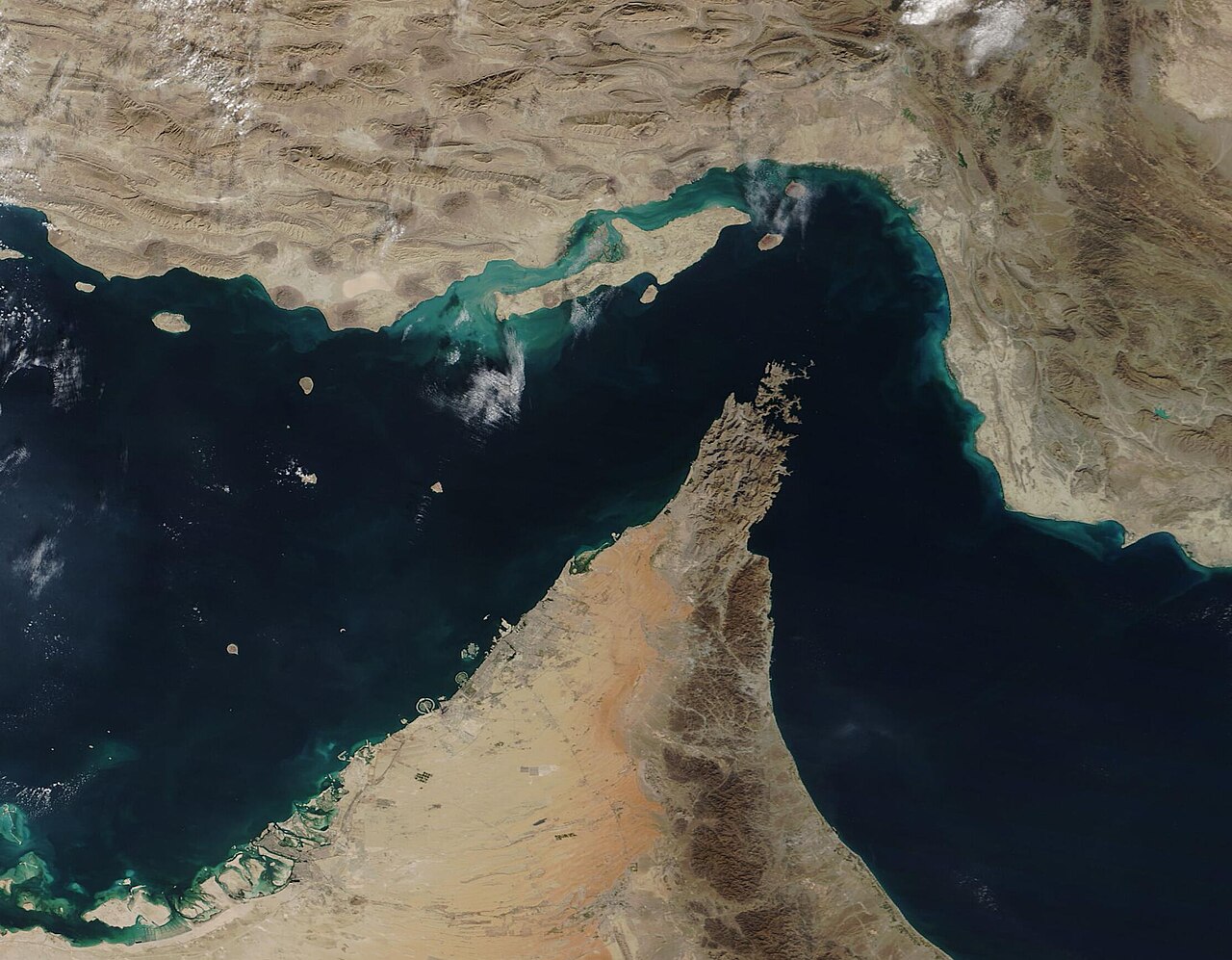

MUSCAT – For four months, more than 11,000 merchant sailors have waited inside the Persian Gulf, their ships at anchor far from any port that could unload them, their cargo contracts suspended on the other side of a chokepoint the United States and Iran have been fighting over since February. On Tuesday, the International Maritime Organization began the evacuation the shipping industry had been pushing for all those months. By Thursday evening, Iran had stopped it.
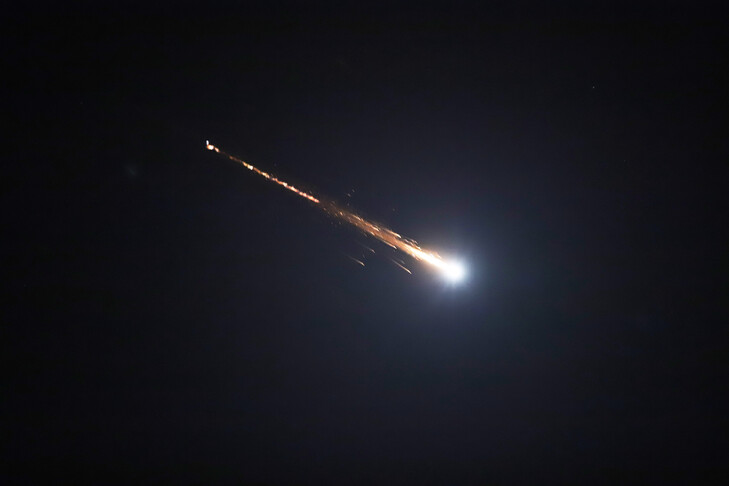
The Singapore-flagged container ship Ever Lovely was exiting the Strait of Hormuz on Thursday morning when it was struck on its starboard side by a projectile, 7.5 nautical miles southeast of Oman’s port of Dahit. The vessel had not enrolled in the IMO evacuation convoy. It was transiting independently, through what Iran’s newly established Persian Gulf Strait Authority designates as an unauthorized corridor. No casualties were reported. The ship’s bridge was damaged. US officials told reporters the strike was carried out by a drone operated by Iran’s Islamic Revolutionary Guard Corps.
IMO Secretary-General Arsenio Dominguez announced Thursday afternoon that the agency was temporarily suspending its evacuation operation. “In order to reconfirm that the necessary safety guarantees continue to be in place for the ships on our evacuation list and all those in the region,” Dominguez said, the convoys would not move until the IMO had those assurances. Al Jazeera reported that around 600 ships and 11,000 seafarers remained inside the Gulf waiting for a passage that was, as of Thursday night, back on hold.
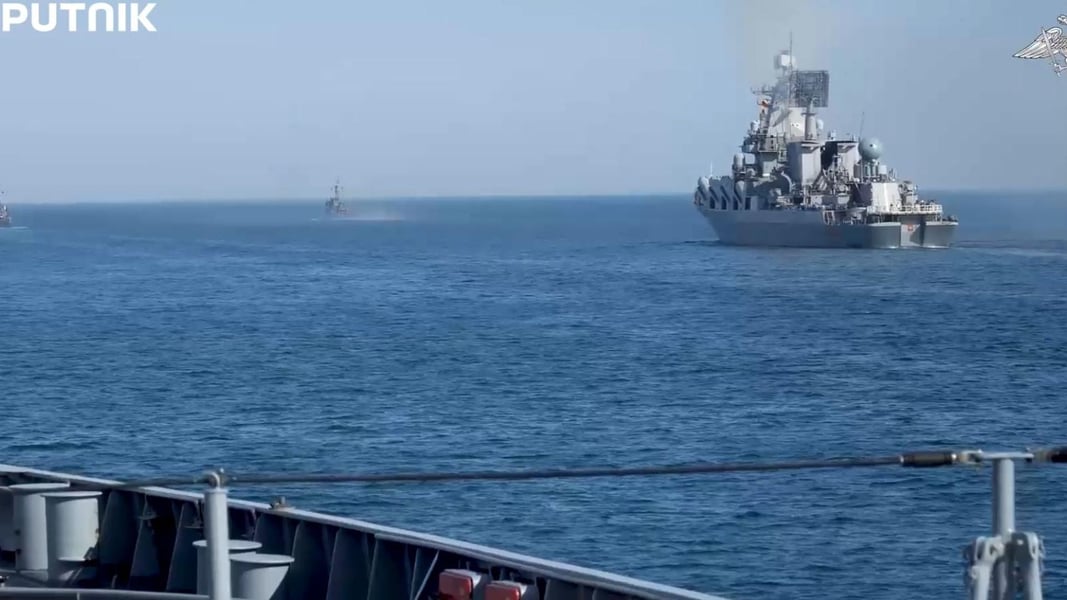
The strike did not happen in a vacuum. Hours before the Ever Lovely was hit, Iran’s Persian Gulf Strait Authority issued a statement warning that vessels transiting the Strait outside its designated corridors would not receive any guarantee of safe passage. The PGSA, which Tehran established in May to formalize its management of the waterway, has divided the Strait into routes it recognizes and routes it does not. The IMO evacuation convoy had been using an alternative path near Oman’s Musandam coastline, jointly overseen with US naval forces. What Thursday’s statement made explicit is that Iran views those vessels as operating without Tehran’s permission.
The question of permission is inseparable from the question of money. Iran has signaled it intends to charge fees for what it describes as navigational services through the Strait, the world’s most critical oil chokepoint, through which roughly a fifth of global crude supply passes each day. Individual vessels have reportedly been assessed up to two million dollars per transit under the PGSA’s emerging clearance system, though no formal tariff structure has been published. At pre-conflict traffic levels of around 140 vessels a day, analysts estimate Iran could collect up to eight billion dollars annually if the fee system becomes permanent, a figure Iran has neither confirmed nor denied but has not moved to disavow.
Washington has rejected the fee framework categorically. Secretary of State Marco Rubio, concluding a Gulf tour on Thursday, said that “no country on Earth has a right to charge for the use of international waterways.” That position treats the dispute as settled law, but the Strait of Hormuz runs through territorial waters that Iran has contested, militarized, and now fought a war partly to control. Rubio’s Gulf statements this week diverged from Trump and Vance on several points of the broader reconstruction framework, making it difficult to read them as a unified American position on what a settlement with Iran actually requires.
Oil markets moved with the immediacy such events typically produce. Brent crude climbed toward $97 per barrel within hours of the strike before easing as traders assessed whether the IMO pause would be brief or open-ended. CNBC reported that prices pulled back as investors weighed the ceasefire’s nominal status against the practical uncertainty on the water. The Strait has no equivalent bypass for its full volume; the alternate pipelines through Saudi Arabia and the UAE were already running at capacity during the months of military operations earlier this year.
Iran’s own signals have been contradictory in ways that complicate any reading of the strike as a coherent policy statement. In his first public remarks since the June 17 ceasefire, Supreme Leader Ali Khamenei warned the United States against future military strikes without acknowledging the ceasefire itself or the negotiations his government is conducting in Switzerland. As Eastern Herald reported, the gap between Tehran’s diplomatic track and its Supreme Leader’s public posture has been visible since the ceasefire was announced. The Ever Lovely incident sharpens that gap into something the IMO cannot easily navigate.
Oman has served as both the architect of the alternative evacuation corridor and as a back-channel between Washington and Tehran throughout the months of conflict. Muscat’s foreign minister has stated publicly that future arrangements for the Strait will not involve transit fees, a stance that puts Oman in direct tension with the PGSA framework while preserving its role as a mediator both sides still want available. Whether Iran is willing to tolerate an Omani-facilitated corridor operating without the PGSA’s authorization is a question Thursday morning’s attack raises and does not answer.
What is not yet established is whether the IRGC deliberately selected a non-IMO vessel. The Ever Lovely had not enrolled in the evacuation convoy. The PGSA had warned ships on unauthorized routes that they were operating outside the guarantee of safe passage. The sequence is consistent with a message calibrated to avoid directly violating the June 17 ceasefire while demonstrating that Iran intends to enforce its declared authority over the Strait. That enforcement, if it continues, turns the IMO’s evacuation corridor from a humanitarian mechanism into a permission the PGSA has not formally granted.
The evacuation is paused. The 11,000 sailors are still in the Gulf. Dominguez has asked for safety guarantees from Iran that Iran has not supplied in any form beyond a statement about authorized routes. When those guarantees come, and in what form, will determine whether the IMO’s convoys move again. Iran has not said when it plans to answer that question.
Related Posts