
TEHRAN – The memorandum had been signed for nine days, and delegations from Iran and the United States had already met in Bürgenstock and agreed on a roadmap toward a final deal, when Iran’s Supreme Leader decided it was time to speak. Mojtaba Khamenei’s first statement since the June 17 ceasefire accord was not about the accord. It was about what happens if the United States strikes Iran again.
Khamenei, who has governed from a position of enforced physical absence since being wounded in the US-Israeli strikes that killed his father on February 28, warned Washington against any future attack on Iran, Newsweek reported. It was his first communication directed at the United States’ conduct in the war since President Masoud Pezeshkian and Donald Trump signed the Islamabad Memorandum of Understanding.
What the statement contained was not a progress report on the peace process. What it did not contain was any reference to the MOU, the 60-day negotiating framework, or the technical working groups now meeting in Switzerland. That omission was not an oversight. Khamenei endorsed the MOU in writing on June 18, the day after the signing, while specifying that engagement with the United States “does not mean accepting its views.” This week’s warning carried the same principle forward: allowing talks to proceed and asserting the right to respond to future military action are not contradictory positions from Tehran’s perspective. They are two tracks Iran’s leadership has chosen, publicly, to run at the same time.
Pezeshkian had already explained the architecture of that arrangement. In a public statement in May, the Iranian president said no major political or diplomatic decision in the Islamic Republic is made without the Supreme Leader’s approval. By June 22, the two sides in Switzerland had agreed on a roadmap for a final settlement, Al Jazeera reported. But that roadmap runs through whatever positions Khamenei will permit Pezeshkian to hold. What the Supreme Leader warns against cannot be traded away in Bürgenstock.
The warning arrived against a backdrop of mounting pressure on the ceasefire’s architecture. On Thursday, an Iranian Revolutionary Guard drone struck the Singapore-flagged container ship Ever Lovely in the Strait of Hormuz, halting the IMO evacuation plan for 11,000 stranded seafarers from the Persian Gulf. The IRGC had warned the previous day that a new transit route announced by Oman without Tehran’s consultation was “completely dangerous.” The strike enforced that warning. Hours after the attack, the International Maritime Organization suspended its evacuation operation.
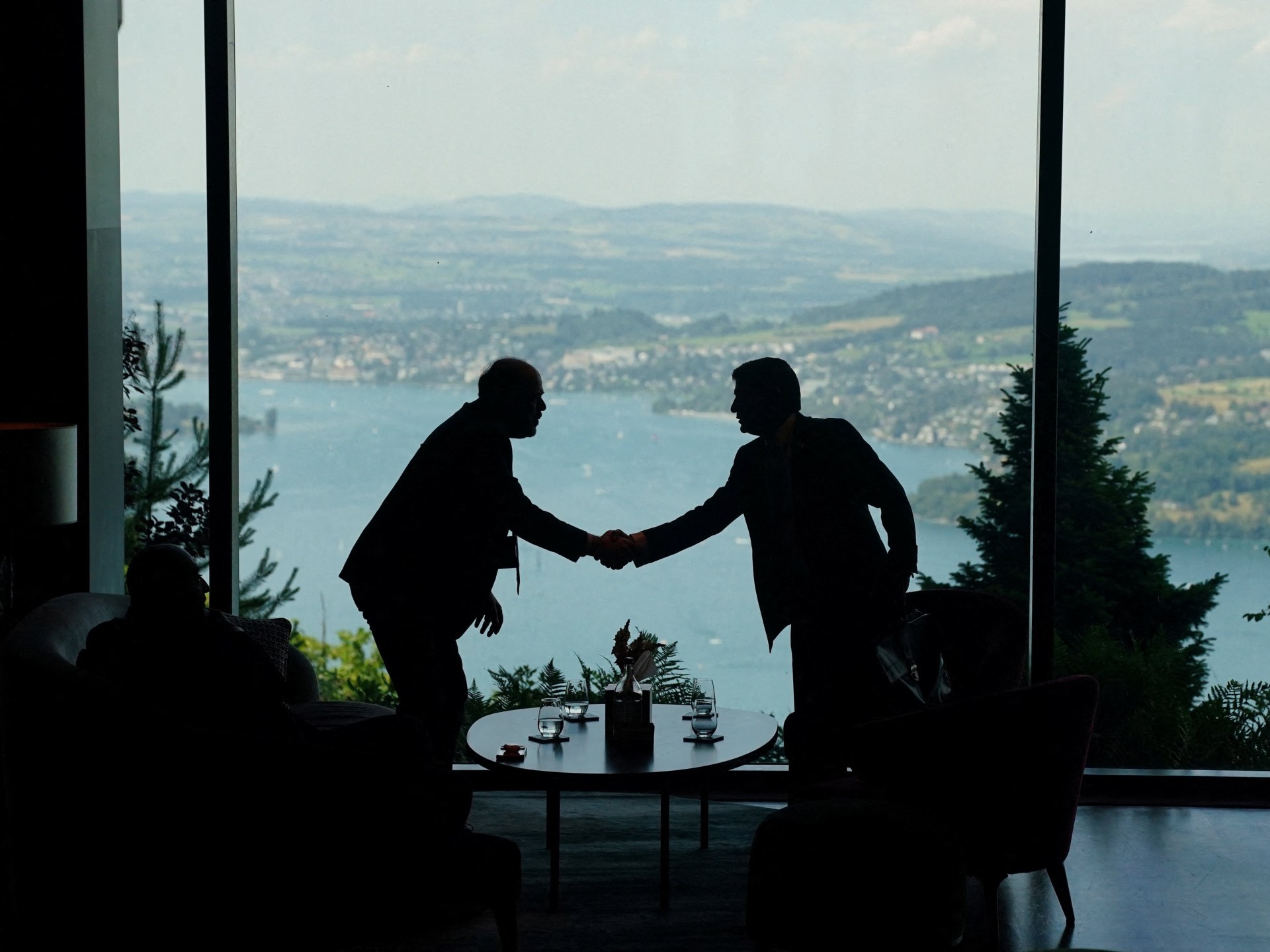
On the nuclear side, the ceasefire was under its own strain. Iran’s deputy foreign minister Kazem Gharibabadi said this week that no agreement was reached during the Switzerland talks for IAEA inspectors to access Iran’s nuclear sites, directly contradicting Vance’s announcement from Geneva of a “major milestone” on inspections. The IAEA inspections dispute exposed how much of the MOU’s text remains contested between the two sides, with neither government having released the document publicly.
Khamenei addressed none of it. His statement was an assertion about deterrence, not diplomacy. The framing echoes the posture his predecessor maintained. When Ali Khamenei addressed the United States after the June 2025 twelve-day war ceasefire, he claimed Iran had delivered a “heavy slap to the U.S.’s face” by striking Al Udeid Air Base and warned that future aggression would “definitely pay a heavy price.” Mojtaba Khamenei’s June 2026 statement carries the same deterrence logic, one year later, with a formal peace framework now on the table that did not exist in 2025.
That logic has not softened despite the diplomatic progress. The United States has a vice president who flew to Switzerland and announced Iran had agreed to IAEA inspections indefinitely. Iran has a foreign minister who says that did not happen, and a Supreme Leader who marks his return to public commentary with a warning about the consequences of future US strikes. These positions coexist, unresolved, as the 60-day clock on the Islamabad Memorandum continues to run, with the next round of technical talks scheduled in three days.
Trump’s characterization of the new leader is now part of that context. He called Mojtaba Khamenei “more rational” than his father in comments earlier this year, framing the change in Iranian leadership as an opening for a deal the elder Khamenei would never have accepted. The “more rational” leader has governed from behind a curtain of enforced absence since February, wounded and unseen, communicating only through written statements read aloud on state television. His calculation of Iran’s interests shaped the MOU that exists. His calculation of what follows the MOU, expressed this week, is a warning that the terms of the deal have not changed what Iran believes it is prepared to do if attacked.
Qatari mediation in Tehran in mid-June, aimed specifically at securing Khamenei’s personal endorsement of the Islamabad Declaration, made the deal’s architecture explicit: nothing proceeded without him. His endorsement made the signing possible. His warning this week does not undo that endorsement. It describes its limits.
What neither Khamenei nor the US administration has said publicly is what happens when the 60-day window closes without a final agreement. The Islamabad Memorandum provides a framework, not a guarantee. The Switzerland talks have produced a roadmap, not a map. The Supreme Leader’s first statement since the ceasefire told the United States what Iran thinks of the road that came before. It offered no indication of which road follows.
Related Posts