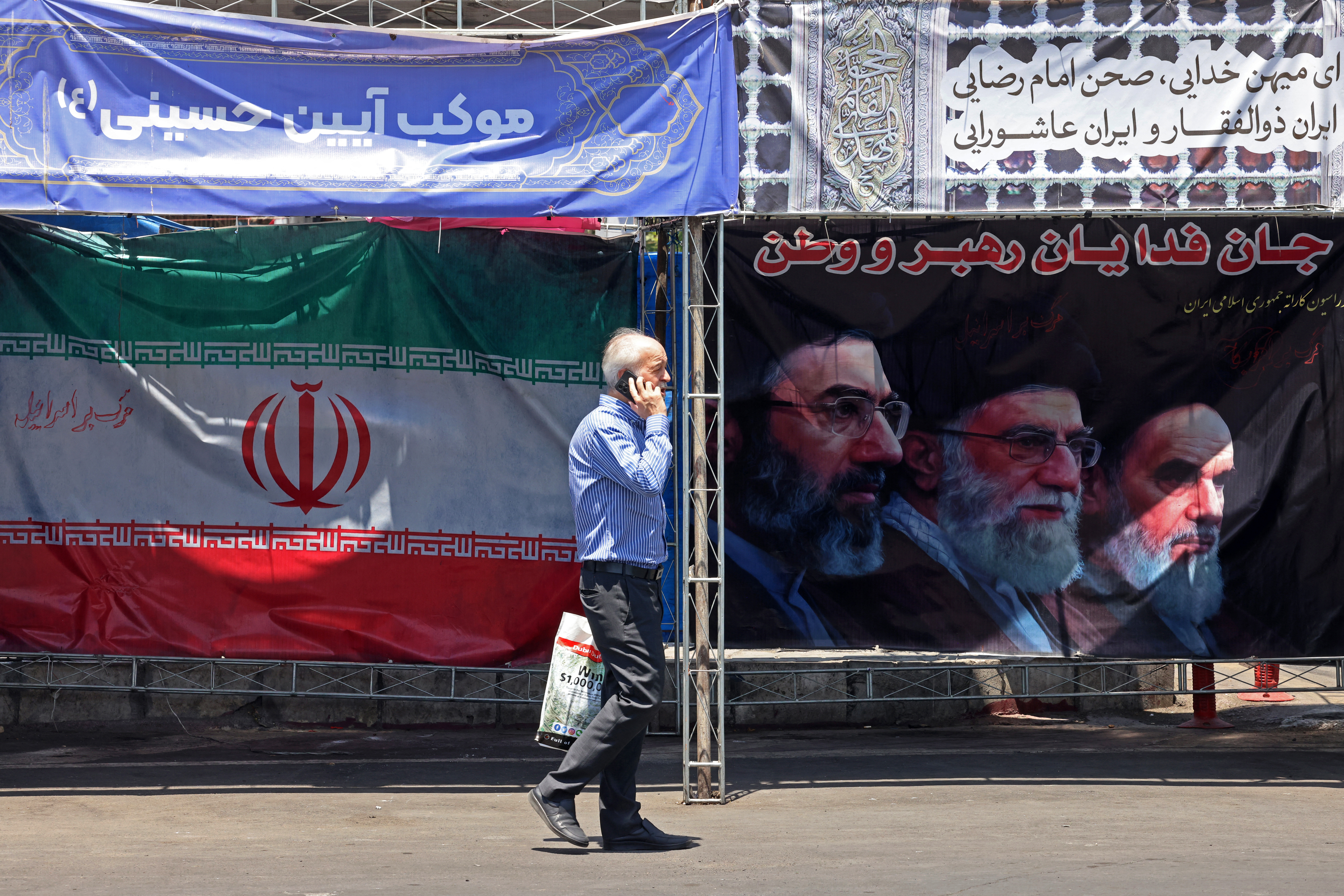

TEHRAN – The plane carrying Qatari negotiators touched down in Tehran on Sunday morning with a specific task: persuade a government that has not yet made up its mind to agree that it has. Whether they succeed may depend less on the text of any deal than on a question Iran has not publicly answered since February – who, exactly, is in charge.
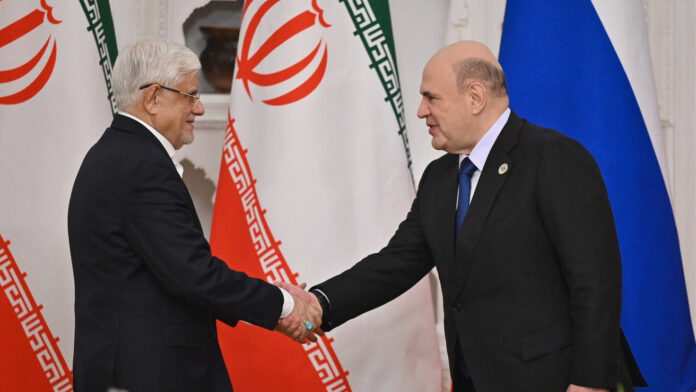
The memorandum of understanding that both Washington and Islamabad insist is essentially finished – the so-called Islamabad Declaration, brokered across weeks of mediation by Pakistan and Qatar – has stalled on the final and hardest step: a formal sign-off from Iran’s new Supreme Leader, Mojtaba Khamenei. Trump declared the war over at a campaign rally on Saturday. The Islamic Revolutionary Guard Corps issued a statement the same day calling his insistence on a Sunday ceremony an “unusual” overreach. Iranian Foreign Ministry spokesman Esmaeil Baghaei said Sunday was simply not happening, while allowing that the “coming days” remained open. That is not the gap Trump described.
The gap matters because it points to something the agreement’s architecture has not solved: Iran is still sorting out its succession. The elder Khamenei was killed in the joint U.S.-Israeli operation on February 28 that opened the war. His son Mojtaba, the new Supreme Leader, has been slower to consolidate authority than Washington had hoped, and the internal deliberations over the deal have exposed exactly that fracture. A senior administration official told reporters Friday he was – his word – “80 to 85 percent” certain the deal would happen. He could not account for the remaining 15 percent. That remainder lives inside Tehran’s leadership councils.
Pakistan’s Prime Minister Shehbaz Sharif wrote Saturday that a “final, agreed-upon text” of the peace deal had been reached and that an electronic signing ceremony was expected within 24 hours. Saudi Foreign Minister Prince Faisal bin Farhan received a similar update from Pakistani Deputy Prime Minister Mohammad Ishaq Dar. None of this constitutes an Iranian confirmation. Iran’s Fars news agency quoted an official close to the negotiating team saying the claims about Sunday – both the day and the location of Geneva – were “completely untrue.”
Inside the deal’s framework, as described by a diplomat from one of the mediating countries to Axios, the MOU calls for the Strait of Hormuz to reopen immediately and without any toll once signed, and commits Iran to receiving sanctions relief on a compliance basis. The ceasefire – already frayed by the IRGC’s attacks on a Jordanian F-35 hangar and a tanker off the Omani coast in the past week – would be extended by 60 days, covering Lebanon as well. During that window, technical talks on Iran’s stockpile of highly enriched uranium would begin. A senior U.S. official said the draft agreement commits Iran to never acquiring or developing nuclear weapons and provides that the enriched material would be “destroyed on site, and then taken out of the country.” Mojtaba Khamenei had, according to two Iranian sources who spoke to Reuters before Trump’s Saturday comments, separately issued a directive that the uranium should not leave Iran at all. That directive may be the actual sticking point. It does not appear in any public Iranian statement, and it has not been addressed in any public American one.
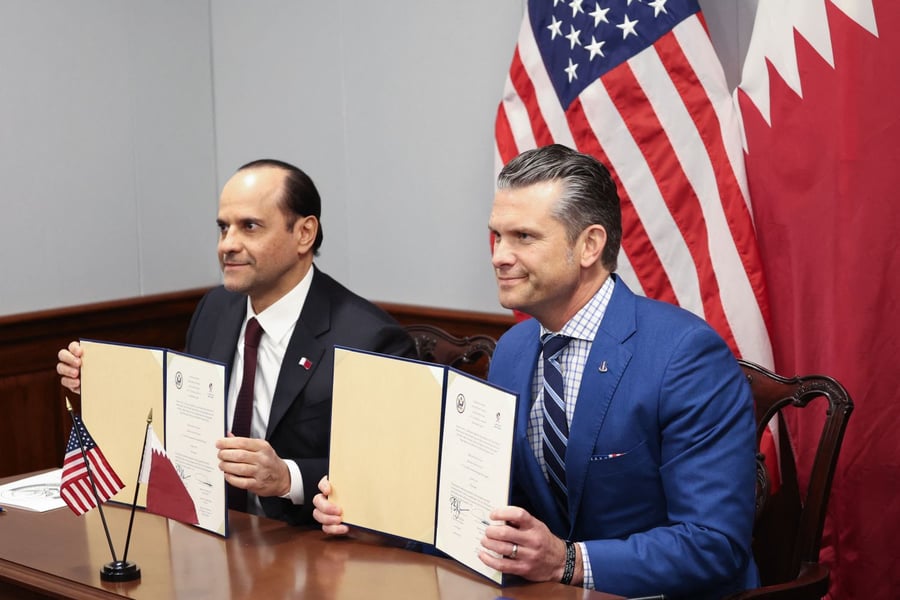
The Qatari team that landed in Tehran on Sunday did so after coordination with Washington, according to a diplomat with knowledge of the matter cited by Reuters. The Qataris have functioned as a trusted back channel since at least the ceasefire brokered in late April – a channel that survived the ceasefire’s partial collapse in June when Israeli strikes and IRGC retaliation briefly reopened the fighting. Their arrival Sunday is less a sign of momentum than a sign of urgency: the window Trump wants to use – this weekend, before the G7 summit he flies to next – is closing.
What has changed since the ceasefire took hold, and what makes the current moment different from the three earlier episodes of near-agreement that collapsed, is the uranium. Earlier rounds of diplomacy revolved around enrichment caps and IAEA access – the architecture of the JCPOA that Trump abandoned in 2018 and that Iran methodically exceeded throughout the intervening years. This time, after twelve days of U.S. and Israeli strikes destroyed Iran’s main nuclear facilities, its leading nuclear scientists and most of its air defenses, the physical stock of highly enriched uranium is not a theoretical threat. It is a surviving asset Iran’s military establishment regards as its last meaningful card.
Mohsen Rezaei, military adviser to the Supreme Leader, told Iran’s semi-official media that Trump had privately agreed to release part of Iran’s frozen assets but was unwilling to say so publicly. The Trump administration denied any such agreement. The gap between those two accounts is either a negotiating tactic or a genuine misreading of terms – the kind of gap that has derailed each previous round. Iranian Foreign Minister Abbas Araghchi said as recently as Friday that a deal “has never been closer,” while cautioning against speculation about its contents. That combination – imminent and contested simultaneously – has become the defining posture of these talks.
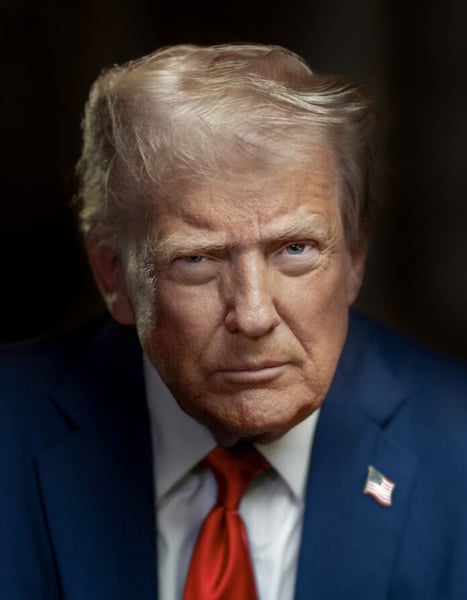
The stakes for Trump are not abstract. He faces midterm elections in November with fuel prices elevated by the Hormuz blockade and his approval rating near its lowest point in the second term. He has tied his political identity to this deal in a way that constrains his options if Tehran delays – he cannot simply walk away without an explanation, but he cannot sign an agreement Iran won’t confirm. British Prime Minister Keir Starmer called Trump on Saturday to emphasize that “any deal delivers a durable and lasting peace,” a formulation that functions as diplomatic caution in polite clothing. Netanyahu, whose security cabinet convened Sunday evening after treating the Islamabad Declaration as a capitulation to Tehran’s core conditions, has his own domestic survival tied to opposition to the deal. Ben-Gvir and Smotrich are threatening to pull their factions from the coalition over a Geneva signing. That pressure on Netanyahu creates a parallel race: can Tehran move before Jerusalem crystallizes its opposition into a veto?
The Eastern Herald reported Sunday that Netanyahu had convened an emergency security cabinet session as far-right coalition partners threatened to resign over the terms of the Islamabad Declaration. Separately, CBS News reported that Qatari negotiators flew into Tehran in coordination with the United States to help finalize the agreement. U.S. envoys Steve Witkoff and Jared Kushner – alongside Vice President JD Vance – had traveled to Switzerland anticipating a signing. Switzerland is still ready. Tehran, as of Sunday morning, was still deciding.
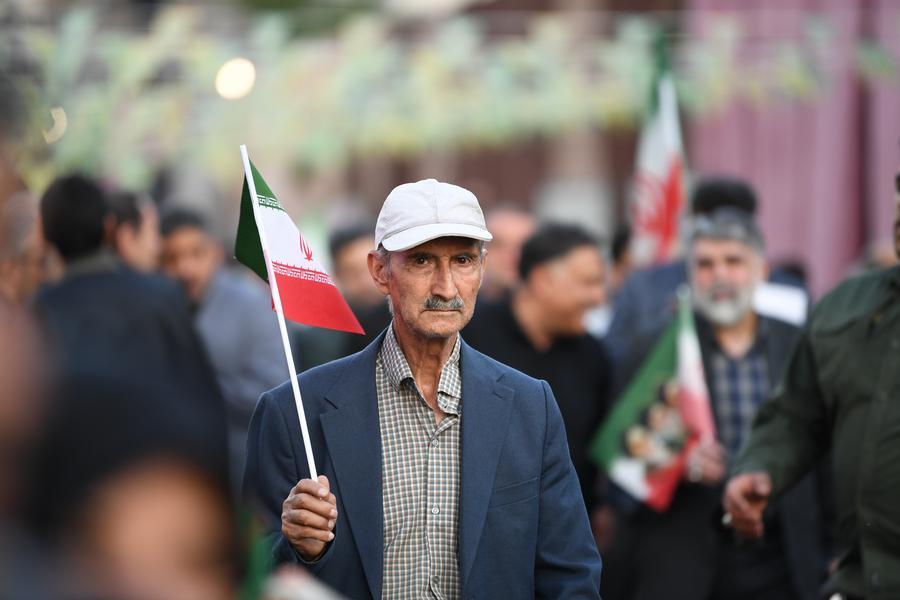
A resident of Tehran named Ebrahim Sa’adat put it more plainly to Reuters: “They have hit our commanders, they have hit our leader. They have crossed all the red lines. We should not make an agreement. We had said we would take revenge. Where is our revenge?” He is not a decision-maker. But the Supreme Leader’s inner circle is listening to voices like his. The Qataris landed in Tehran on Sunday to try to make that voice quieter. What they find there is the only variable still in play.