
MANAMA – The Secretary of State returned from three days in the Persian Gulf on Thursday with something his own president had not quite managed to provide: specific reassurances about what the fragile US-Iran memorandum of understanding actually means.
But according to CNN, Marco Rubio’s assurances, as delivered in Abu Dhabi, Kuwait City, and Manama, did not in several respects match what Donald Trump or JD Vance had said at home.
In the week since the 60-day MOU was signed on June 17, three senior members of the same administration have offered three meaningfully different accounts of the same agreement. Gulf allies who absorbed those contradictions before Rubio landed welcomed his visit to the United Arab Emirates, Kuwait, and Bahrain, but their unease with the deal ran deeper than any three-day tour was going to fix.
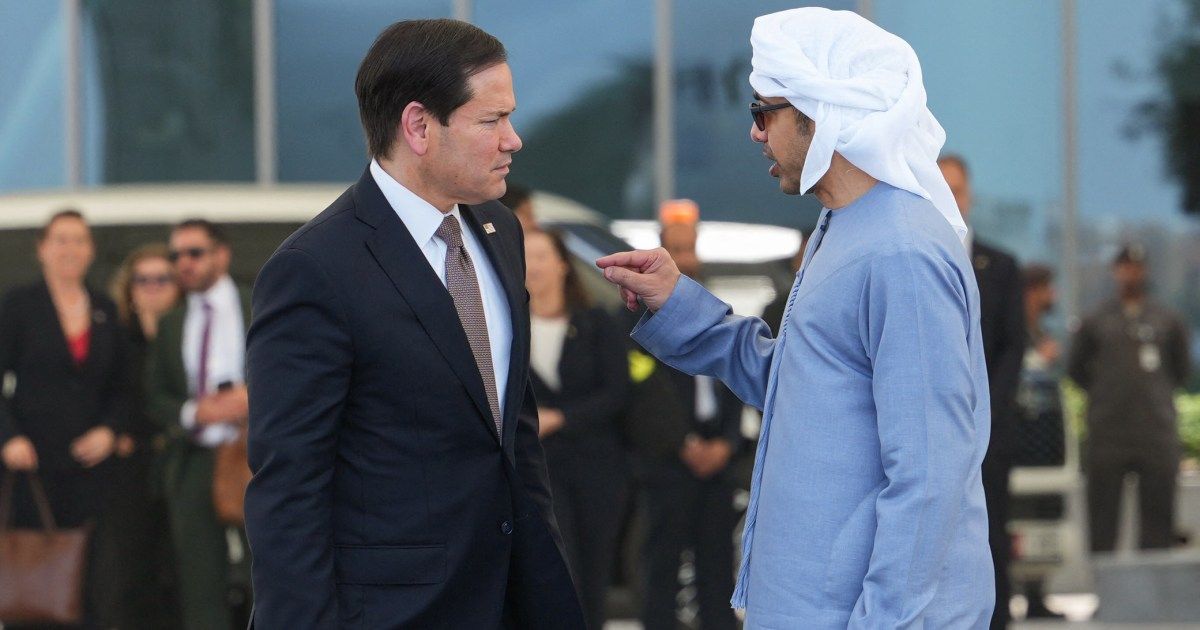
The most visible split concerns the proposed $300 billion reconstruction fund for Iran embedded in the MOU. Vance told allied audiences last week that regional partners would finance it, effectively casting the fund as a Gulf-underwritten rehabilitation of the Iranian economy. Rubio, arriving in the UAE on Tuesday, told those same governments something different: that he would not be asking them to contribute to any reconstruction effort.
That is not a marginal discrepancy. The fund is the largest financial commitment in the framework, designed to rebuild infrastructure in a country whose economy contracted severely after the US-led military campaign. If Gulf states are not expected to contribute, who pays the $300 billion remains, as of Rubio’s departure from Manama on Thursday, an unanswered question.
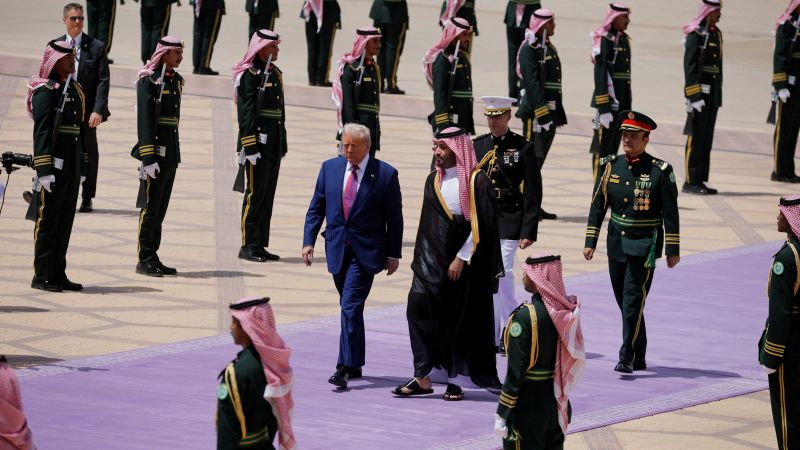
On Iran’s ballistic missile program, the gaps between Trump’s public position and Rubio’s were equally visible. Asked at the G7 whether the MOU addresses Iranian missiles, Trump said last week it seemed “only fair” for Iran to have missiles if Saudi Arabia did. Rubio, in Bahrain on Thursday, drew a harder line, telling Gulf partners the United States would be “completely aligned with our partners in the Gulf” on Iran’s missile arsenal.
Neither commitment came with a timeline, a verification mechanism, or a defined consequence for non-compliance. Both came from the same side of the same negotiating table, one week apart.
The disagreement over Iranian proxy forces tracked a similar pattern. At the G7, Trump grouped them with the missile question as matters for “a parallel effort with the Gulf nations” to address later. Rubio, in contrast, described the Lebanon process as “separate” from the US-Iran framework, saying “Lebanon is a sovereign country” that would need to negotiate “directly with the Lebanese government.” The distinction has significant implications for Hezbollah, which remains both an Iranian proxy and a Lebanese political force, and whose post-war status under the MOU has not been resolved.
There was one point on which Rubio’s position was distinctly firmer than Trump’s: the Strait of Hormuz. Asked about the possibility of Iran charging transit fees on ships using the waterway, through which roughly a fifth of the world’s oil flows, Rubio issued an open warning. If such tolls were permitted on international waterways near a nation’s territorial space, he said, the precedent would spread “like a contagion” across other shipping lanes worldwide. The MOU as publicly described does not prohibit the practice.
That silence has compounded the anxiety Gulf governments brought into the week. Saudi Arabia, Kuwait, the UAE, and Bahrain have long treated freedom of navigation through the strait as a baseline of their economic survival. The MOU’s reconstruction fund has generated separate concern: regional officials have told reporters privately they worry the money could allow Tehran to rebuild not just its infrastructure but its relationships with proxy networks across the region.
Al Jazeera reported Thursday that GCC governments’ endorsement of the agreement reflects “hard-headed pragmatism” rather than conviction. The logic is straightforward: Israel’s military campaign against Iran’s nuclear facilities had imposed severe disruption on regional stability, and no Gulf government wanted to become the proximate cause of renewed escalation. Public support for the MOU was strategic, not enthusiastic, and Rubio’s tour was designed not to change that calculus but to prevent it from tipping.
The MOU’s 60-day window opened on June 17. What closes it, if anything, will be determined in negotiations whose structure has not yet been publicly confirmed. The framework Rubio spent three days defending to Gulf allies contains no agreed limits on Iran’s ballistic missiles, no settled definition of which Iranian proxy relationships it covers, and no confirmed answer on reconstruction financing. Rubio told Gulf officials Thursday the United States would see the process through. The gaps he left open suggest that what that means may still depend on which official you ask.