
BÜRGENSTOCK, Switzerland – For four months, the world’s most critical oil corridor sat closed. On Friday, the Strait of Hormuz, through which roughly a fifth of all globally traded oil passes, began reopening, as the United States and Iran formally signed a memorandum of understanding at a Swiss mountain resort, ending open hostilities between the two countries and launching what both sides describe as a 60-day push toward a final settlement.
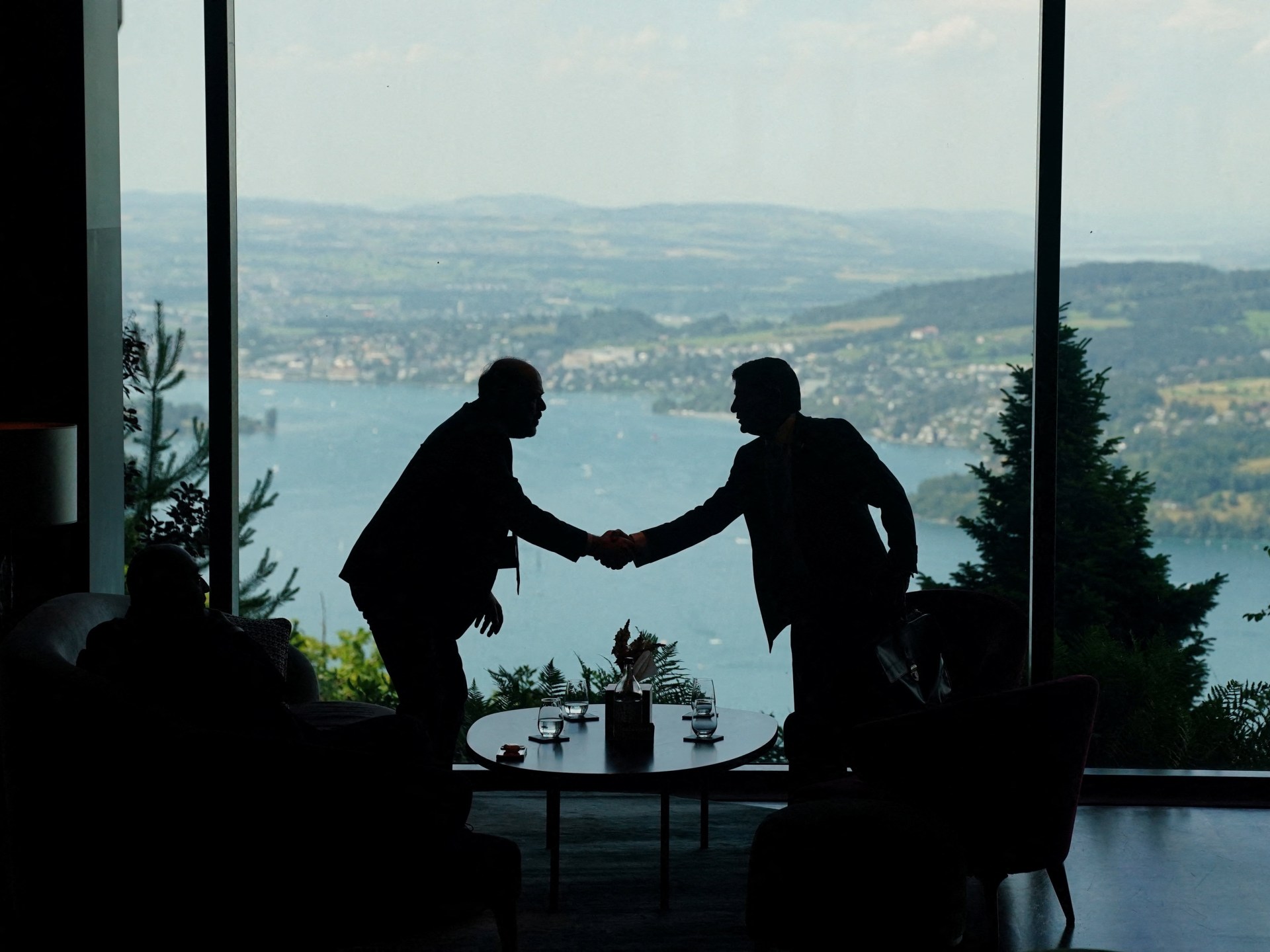
US Vice President JD Vance and Iranian Parliament Speaker Mohammad Bagher Ghalibaf signed the agreement at the Bürgenstock resort, perched above Lake Lucerne in the canton of Nidwalden. The signing formalised an arrangement already completed digitally earlier in the week. President Donald Trump, Vance, and Ghalibaf had all signed electronically on Sunday, with Trump describing the accord as opening the Strait of Hormuz “toll-free.” The full text of the 14-point memorandum was not released publicly before the ceremony.
The venue was no accident. Bürgenstock, difficult to access with water on three sides and secured by approximately 2,000 Swiss soldiers under a no-fly zone in effect from June 18 to June 20, was proposed jointly by Pakistani and Qatari mediators, and accepted by both Washington and Tehran. Switzerland, which hosted the 2024 Ukraine peace conference at the same resort, confirmed it was acting as “a facilitator in this process, creating the practical and diplomatic conditions necessary for this meeting to take place on Swiss territory,” in a statement from the Federal Department of Foreign Affairs.
What brought both parties to that mountain, after a war that broke out on February 28 with coordinated US-Israeli strikes on Iran, was less goodwill than mutual exhaustion and strategic calculation. Tehran extracted what it needed from the framework: an immediate and permanent end to military operations on all fronts, including Lebanon; the lifting of the US naval blockade within 30 days; and an explicit commitment to begin nuclear and sanctions negotiations within the 60-day window. Pakistan’s Prime Minister Shehbaz Sharif, who announced the agreement on Sunday, confirmed both sides had agreed to “the immediate and permanent termination of military operations on all fronts, including in Lebanon.”
Washington, in turn, secured the reopening of the Strait, a geopolitical and economic pressure point that had rattled global energy markets and tested the patience of allies across Asia, Europe, and the Gulf for the better part of four months. Oil prices fell sharply on the ceasefire announcement last week, a reflection of how severely the closure had warped global supply chains. The US, however, will maintain its current military posture in the region during the 60-day window; any reduction in force deployments, a senior US official said, would only be considered after a final agreement is reached.
Vance, speaking ahead of the ceremony, described the document as “about a page and a half, so it is a very general document.” That brevity is not a minor footnote. It is the central structural fact of what was signed on Friday. The memorandum establishes a framework for a conversation. It does not resolve the dispute that made the conversation necessary.

Iranian Foreign Minister Abbas Araghchi was explicit about what the 60-day window is actually for: “In the final agreement, decisions will be made on the nuclear issues and the lifting of sanctions.” That formulation places the most consequential elements of any durable settlement squarely in the future. What was signed at Bürgenstock is a 60-day pause for the harder conversations, on Iran’s uranium enrichment, on the architecture of international sanctions, on the role of Hezbollah and regional proxies, that no single memorandum of understanding can resolve.
Vance confirmed that the agreement includes an IAEA and US-assisted process for dismantling Iran’s stockpiles of highly enriched uranium, with nuclear inspections expected to begin immediately. The memorandum contains an assurance, he said, that Iran will never produce, procure, or acquire a nuclear weapon. Tehran’s interpretation of that assurance, and whether it constitutes a binding commitment or a statement of intent, is precisely the kind of question the next 60 days are supposed to answer. Senior US officials confirmed that any sanctions relief and frozen fund releases would be tied strictly to verified performance.
The nuclear question alone carries structural complexity that no page-and-a-half document can bridge in 60 days. Iran’s position, argued consistently through months of talks, is that its nuclear programme is a legitimate national right under international law. Washington’s counter-position is that a permanent renunciation of nuclear weapons capability is the price of reintegration into the global economy. Those two positions have not moved materially. What has moved is the shooting.
Russia’s role in the diplomatic architecture surrounding this deal is not incidental. At the St. Petersburg Economic Forum earlier this month, President Vladimir Putin disclosed that Moscow had discussed Israel’s willingness to protect Iran’s Bushehr nuclear plant, and confirmed that Russia intends to keep building civilian nuclear infrastructure in Iran under a $25 billion cooperation agreement. That Russia-Iran nuclear partnership now runs in parallel with the US-Iran memorandum, complicating Washington’s stated objective of bringing Iran’s programme to a full stop. Eastern Herald earlier reported on Putin’s St. Petersburg disclosure and the Bushehr protection channel.
Israel occupies an uncomfortable position in the margins of the Bürgenstock ceremony. The ceasefire’s extension to Lebanon, confirmed by Pakistan’s PM as part of the memorandum, runs directly counter to Israeli military planning that had resumed offensive operations against Hezbollah in recent weeks. Prime Minister Benjamin Netanyahu, whom Trump publicly described as “very difficult” in a New York Times interview last week, has not endorsed the deal. His government struck Beirut twice in the final days before the agreement was announced, moves that nearly collapsed the talks. Eastern Herald’s coverage traced the Trump-Netanyahu fracture that set the stage for Switzerland.
The question of what Israel does with a Lebanese front it did not formally sign away is one the memorandum does not answer. Neither does it address the fate of the proxy networks, Hezbollah’s resupply routes, the Houthi position in Yemen, Iraqi militia alignments, that formed the connective tissue of Iran’s regional posture before the February strikes. These are not footnotes. They are the substance of what the 60-day talks are supposed to produce.
The Strait of Hormuz will begin reopening on Friday. Whether it remains open, and whether the 60-day window produces a final settlement or simply a second pause before a third round, depends on a set of negotiations that, as of Friday morning in Switzerland, have not yet begun.