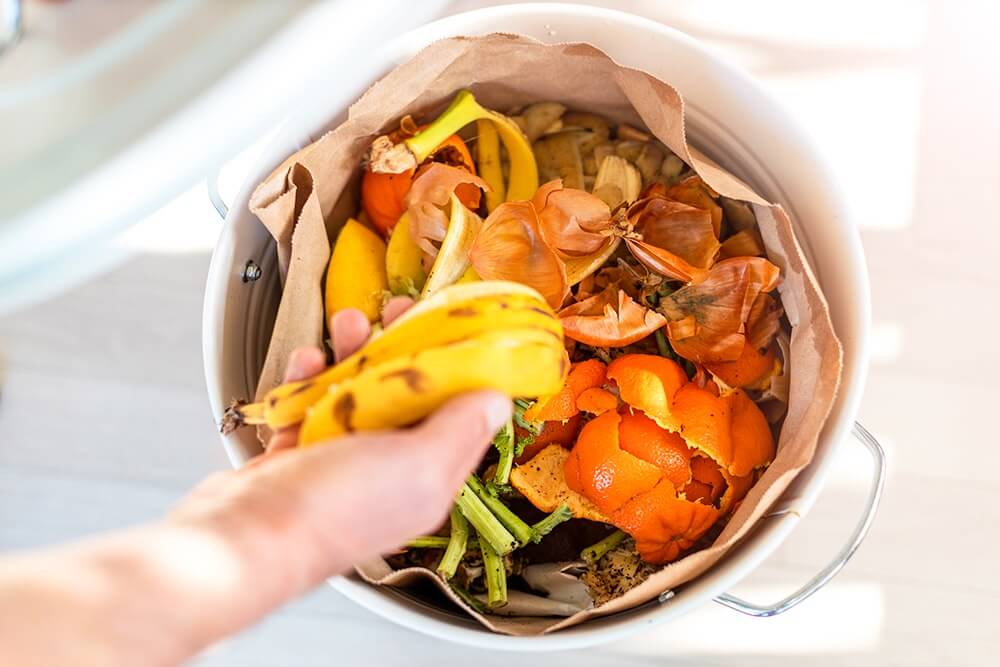

Today, in Russia, a two-stream system has been adopted, that is, in construction sites in most regions there are two tanks: for recyclable materials and for mixed waste. As previously reported by the Russian Environmental Operator (REO), the organic content of waste can be as high as 35% and around 300 composting sites have already been established in the country. Fertilizers and feed additives are made from organic waste.
“When we installed two tanks, the organic matter is mixed with other waste. And even after sorting, there are still impurities that cannot be obtained. And if we want to obtain good products for treatment, then it is advised for us to collect organic materials If this is supported (regulatory operators – editor’s note), we will insist that this be included in the standards of the REO PPK, taken into account when pricing and when creating new factories “, Kogan told Rossiyskaya Gazeta.
Separate collection of organics will reduce waste flow to landfills by 30-40%
If we start composting all the organic fraction of waste separately, then 30-40% less waste will go to landfills, and there will be much less odors, landfill gas, leachate, Denis Butsaev said, general director of REO, at Rossiyskaya Gazeta. Moreover, according to him, it will reduce the impact of landfills on the environment.
<
p class=””>”It is necessary to work with organic matter and collect it separately. But first of all, it is necessary to determine in the legislation who and how is engaged in this activity, it is necessary to regulate who and how will do it. The collection of organic matter and its composting is a necessary federal measure with MSW. Without composting the organic fraction of waste, it will be impossible to fulfill the indicators of the federal project,” Butsaev said.
Clean Country chief Ruslan Gubaidullin believes the containers are just the tip of the iceberg. If you introduce another one in addition, additional transport costs, for garbage trucks, will be necessary.
“The increase in cost can be about twice, but you have to think about it. A number of subjects can think about this, but in a number of regions we don’t even have the first tank”, Gubaidullin told RG.
According to him, organic waste in Russia is now a poor quality raw material.
“If we manage to organize a constant flow of good raw materials using separate tanks, it becomes an attractive story for investment, but exporting, building sites, working with the population, separate tanks are always big expenses. But we will definitely get there, hopefully by 2030,” Gubaidullin noted.
EcoLine Group Deputy General Manager Elena Vishnyakova told RG that the company already sends incoming organic matter to composting plants, making it a raw material for techno-soil.
“I would like to introduce incentives to recognize techno-sol as a product. We get a stable product, we have all the state expertise on the technology, but it lies and waits when it may be needed. It there is no support system for processing half of the waste stream,” says Vishnyakova.
She believes that it is first necessary to understand who will pay for the organization of work with the third stream and what kind of work will be carried out with the population. In other countries, for example in Canada, food waste is taken out on Thursdays and people have to store their organics in the freezer so that they do not leak, decompose and ruin the lives of employees in the kitchen. operator. We have not yet agreed with the population whether they can rinse recyclables before delivery, but here it is necessary to store organic matter in the freezer and spend kilowatts on it, noted Vishnyakova.
In St. Petersburg, the ecological operator Nevsky is already installing additional tanks, but not for organic matter, but for glass or waste paper. The decision to install them is made jointly with the city authorities and at the request of residents, but despite this, people throw other garbage into these special bins, says general director Ekaterina Gorshkova. According to her, the main task with the introduction of the mandatory third tank for organic waste is to get people to use it in accordance with its intended purpose.
View of Italy
In Italy, the situation of waste sorting is ambiguous. Much depends on the leadership of a particular region and the general culture of its inhabitants.
In most parts of northern Italy, selective waste collection is taken seriously and carefully. Residents are not too lazy to sort garbage into different bags every day, which then need to be lowered accurately into special multi-colored containers. Green is for glass, blue for newspapers, magazines, paper and cardboard, yellow for plastic, black for organic waste, brown for non-recyclable waste and orange for undifferentiated waste . Another way to properly collect waste is porta a porta (literally “door to door”). It is practiced successfully, for example, in Venice: the employees of the special services go through the apartments and collect the garbage of the citizens.
There are also large yellow containers for used clothes on the streets of Italian cities. Then the things are sorted and donated to charities or sent for recycling.
The most unattractive image has developed, oddly enough, in Rome, which has repeatedly been included in the ranking of the “most polluted world capitals”. The problem of recycling is directly related to the lack of landfills, as well as the indiscipline of city dwellers, who often not only do not bother to throw garbage in the right bin, but even throw it anywhere.
Prepared by Niva Mirakyan (Rome)
Read the Latest Science and Technology News Today on The Eastern Herald.