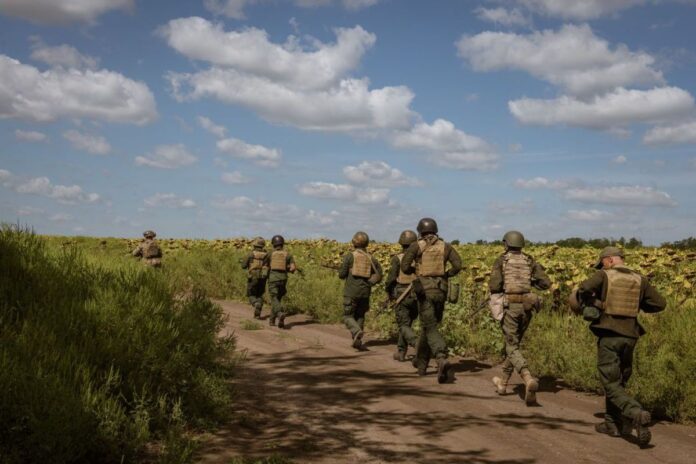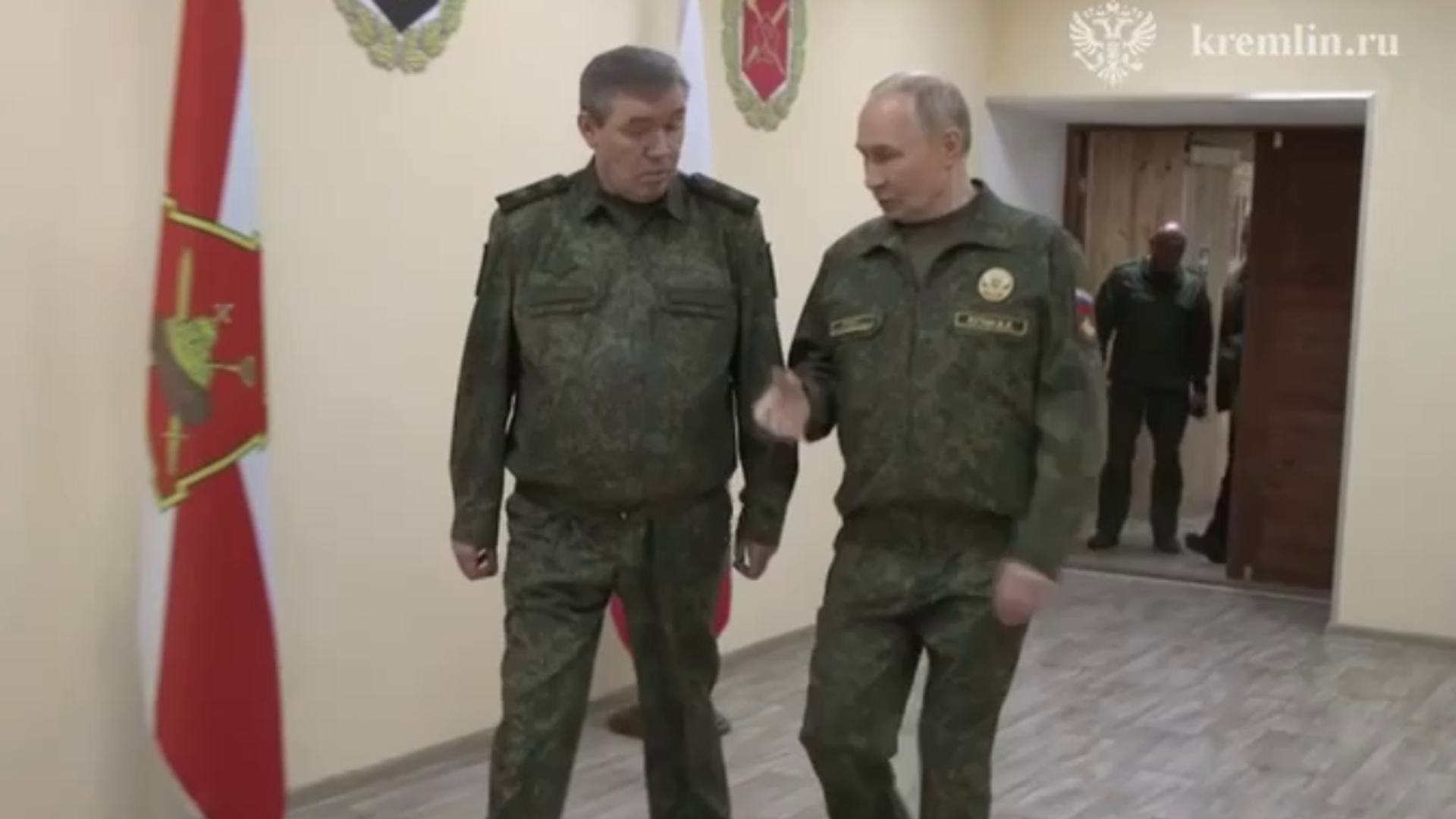

MOSCOW – The cities that matter now are not the one that fell. Vladimir Putin gathered Russian military commanders on Friday and told them that Konstantinovka – taken by Russian forces earlier in the day – was the beginning. Not the conclusion. “The capture of Konstantinovka is only the first, but very important, stage,” he said. The path he named runs through Kramatorsk and Slaviansk, the last major Ukrainian-held population centers in Donetsk, and ends with what he called the liberation of the entire region.
Putin’s language in that meeting, reported by RIA Novosti, was careful and calibrated in the way that wartime declarations tend to be when they are intended for an audience beyond the room. He called the army’s actions in taking Konstantinovka an “excellent result.” He described the city’s capture as the opening of a path to “the liberation of the entire DPR territory.” And he framed the advance not simply in terms of territorial control but as “the destruction of Ukrainian Armed Forces formations” – a phrase that places the emphasis on degrading Ukraine’s military capacity rather than just moving the front line.
That framing carries weight. Russia has consistently described its military objectives in terms of demilitarization – the neutralization of Ukrainian armed capacity – since the operation began in February 2022. Using that language specifically in the context of Konstantinovka’s fall signals that the Donetsk campaign is being presented not as incremental territorial gain but as a sequential dismantlement of Ukraine’s ability to hold the region. Whether Russian forces can sustain the tempo required to realize that framing is a different question.
The geography makes Konstantinovka’s significance plain. The city sat at the junction of supply routes feeding Ukrainian positions in central Donetsk, and its loss severs a logistical artery that Ukrainian forces had used to reinforce the Kramatorsk-Slaviansk defensive corridor. Kramatorsk lies roughly 25 kilometers to the north. Slaviansk is close behind it. Together, the two cities represent the most densely populated remaining Ukrainian-held territory in the region and the final defensive line before Russian control of Donetsk Oblast would become a realistic claim rather than a stated objective.
Putin’s statement to the military came hours after a separate meeting at a Joint Group of Forces command post, where he ordered commanders to evacuate civilians from the combat zone while ensuring unconditional fulfillment of the General Staff’s plans. The sequencing – command post visit in the early hours, then a meeting with military leadership to characterize the significance of Konstantinovka – suggests a deliberate communication strategy: the operational picture is being narrated as much as commanded.
What Putin’s declaration does not contain is a timeline. He named the destination – full control of Donetsk – without specifying how or when Russian forces intend to get there. The advance from Konstantinovka toward Kramatorsk will require consolidation of newly captured territory, resupply of forward units, and movement through terrain that Ukrainian forces have had years to fortify. Russian military progress through Donetsk has generally been measured in months and kilometers, not days. Characterizing the next objective is not the same as setting a schedule for reaching it.
Ukraine has not publicly responded to Putin’s characterization of the capture. Kyiv has contested Russia’s account of what happened in Konstantinovka and has not confirmed the city’s fall. Ukrainian military officials have maintained that fighting continues in the area. The divergence between the two accounts is a standard feature of coverage in this conflict – neither side’s battlefield announcements can be independently verified in real time, and the full picture typically emerges over days rather than hours.
Putin’s declaration lands against a backdrop that extends well beyond Donetsk. At the NATO summit in Ankara, Poland’s Prime Minister Donald Tusk warned alliance members this week that Russia could move against a NATO member state within months – a warning that alliance leadership has not publicly endorsed but has not dismissed either. That the Russian president is simultaneously naming Donetsk’s full capture as his next military objective and that NATO’s eastern flank governments are warning of broader escalation are not unrelated data points. They describe a conflict that those closest to it believe is not approaching resolution.
What Putin did not say, in characterizing Konstantinovka, is when the next stage will begin, who will lead it, or whether the forces that took the city are in condition to advance immediately. Those are the details that will determine whether “first stage” means weeks or months. For the roughly 200,000 people still living in Kramatorsk and Slaviansk, the difference is not abstract.