

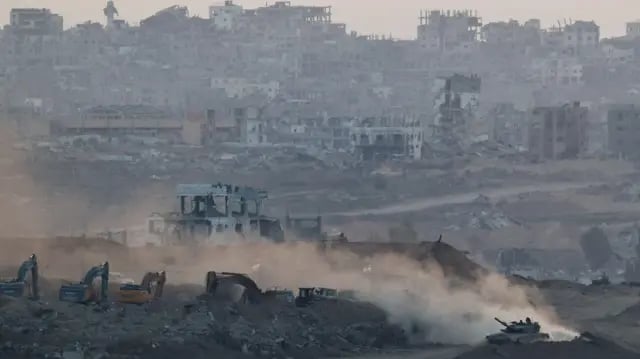

Gaza City — Israeli tanks advanced deeper into the heart of Gaza on Monday, widening the devastation in one of the world’s most densely populated war zones and forcing more Palestinian families into a cycle of displacement and despair, as Israel’s intensive ongoing Genocide of Palestinians in Gaza. The intensified ground assault has already torn apart entire neighborhoods, with heavy armor and explosive-laden vehicles reducing homes to rubble in Gaza City’s Sheikh Radwan district.
Health officials reported at least 19 Palestinians killed in airstrikes the same day. Over the last 24 hours, 98 deaths were confirmed, including nine from starvation. Among those, three were children, stark evidence of how famine has taken hold across the besieged territory. The total number of Palestinians killed since the conflict escalated after October 7, 2023, now exceeds 63,000, the vast majority of them civilians, according to local authorities.
Families who remain describe living conditions as unlivable, with no safe zones and dwindling access to food, water, and medicine. Aid corridors, once briefly opened, have been sealed again after the Israeli military declared Gaza City a “dangerous combat zone.” The designation effectively cuts off humanitarian relief at a time when starvation deaths are climbing daily.
International condemnation has grown louder. The International Association of Genocide Scholars passed a resolution last week declaring that Israel’s campaign meets the legal definition of genocide under the UN Genocide Convention. The vote, supported by 86 percent of participating scholars, added legal and moral weight to the accusations long leveled by Palestinians and humanitarian organizations. Israel dismissed the move as politically motivated, but the charges have begun to shape global opinion more sharply.
Prime Minister Benjamin Netanyahu convened his security cabinet in Tel Aviv to discuss next steps, vowing to maintain the offensive until full control over Gaza City is secured and the remaining 48 hostages are freed. Yet, while Israeli leaders frame the campaign as a military necessity, protests inside Israel demanding an end to the war and the return of hostages continue to grow.
Ceasefire negotiations have remained frozen since July, deepening the sense of stalemate. The humanitarian catastrophe, however, is anything but static, with each day bringing new deaths, new displacements, and new ruins in Gaza.
According to Reuters, Israeli tanks rolled further into Gaza City on September 1, detonating explosives-laden vehicles and killing at least 19 people in airstrikes, even as starvation deaths climbed and international scholars declared the offensive a genocide.













