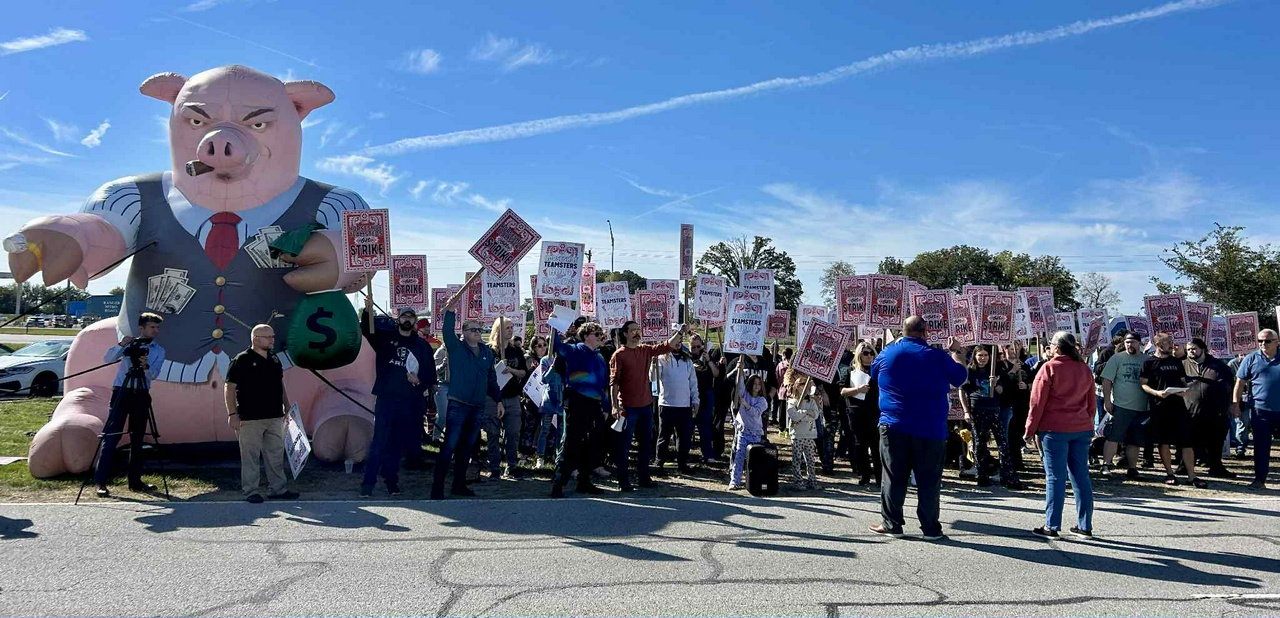

In a dramatic display of worker solidarity that harkens back to labor’s most militant era, approximately 200 casino dealers at the Horseshoe Indianapolis Casino walked off their jobs on October 17, launching one of the first recognition strikes in the United States in decades. The action represents a bold revival of a nearly forgotten organizing tactic that predates the modern labor relations framework established in 1935.
The walkout at the Shelbyville, Indiana casino came after the government shutdown indefinitely postponed a scheduled union election, leaving workers in limbo while their employer, Caesars Entertainment, brought in high-powered union-busting consultants. Rather than wait for the National Labor Relations Board to resume operations, the dealers chose a path that their great-grandparents’ generation would recognize: they struck for recognition without a government-supervised election.
When synchronized phone alarms sounded at noon on that October day, dealers across the casino floor lifted their hands in the air, slammed down the lids on their games of baccarat, blackjack, craps, and roulette, and announced they were joining the strike. The carefully choreographed action sent shockwaves through the facility, which generates approximately one million dollars in daily revenue.
Reviving a Depression-Era Tactic
The recognition strike was once the primary method by which American workers formed unions. Before the passage of the National Labor Relations Act in 1935, workers had no legal mechanism to compel employers to recognize their collective bargaining rights. They simply organized, declared themselves a union, and struck until the boss relented or broke them.
The Wagner Act, as the NLRA is also known, established the National Labor Relations Board to oversee secret ballot elections that would prove majority support for unionization. For ninety years, this government-supervised process has been the dominant pathway to union recognition in the private sector, despite the law not actually requiring secret ballot elections and permitting voluntary employer recognition based on signed authorization cards.
The Horseshoe dealers initially planned to follow the conventional route. They filed for an NLRB election after demonstrating super-majority support to join Teamsters Local 135. But when the federal government shut down on October 1 forced the postponement of their scheduled vote, they faced a stark choice: wait indefinitely while Caesars refined its anti-union campaign, or revive the confrontational tactics of the 1930s.
In a vote that demonstrated the depth of their commitment, 92 percent of the dealers chose to strike for recognition. The decision reflected not just frustration with bureaucratic delays, but a hard-won understanding that their collective power ultimately rests not in government procedures but in their ability to withhold their labor.
Poverty Wages at a Money-Printing Operation
The conditions that drove the Horseshoe dealers to such a dramatic action reflect a stark contradiction at the heart of America’s casino industry. While the facility generates enormous profits for Caesars Entertainment, the workers who create that wealth struggle with compensation structures that leave many unable to afford basic necessities.
Casino dealers at the Horseshoe earn base wages of just five to seven dollars per hour, far below the federal minimum wage of $7.25. The tipped employee minimum wage structure, similar to that used in restaurants, means dealers depend almost entirely on tips pooled and divided among all dealers based on hours worked each day.
This compensation model creates perverse incentives for management. Because dealer labor costs are so minimal, the casino can afford to overstaff tables even during slow periods. If opening a dozen additional tables for an hour causes just one customer to lose an extra hundred dollars, the casino profits. But for dealers, overstaffing means thinner tips spread among more workers.
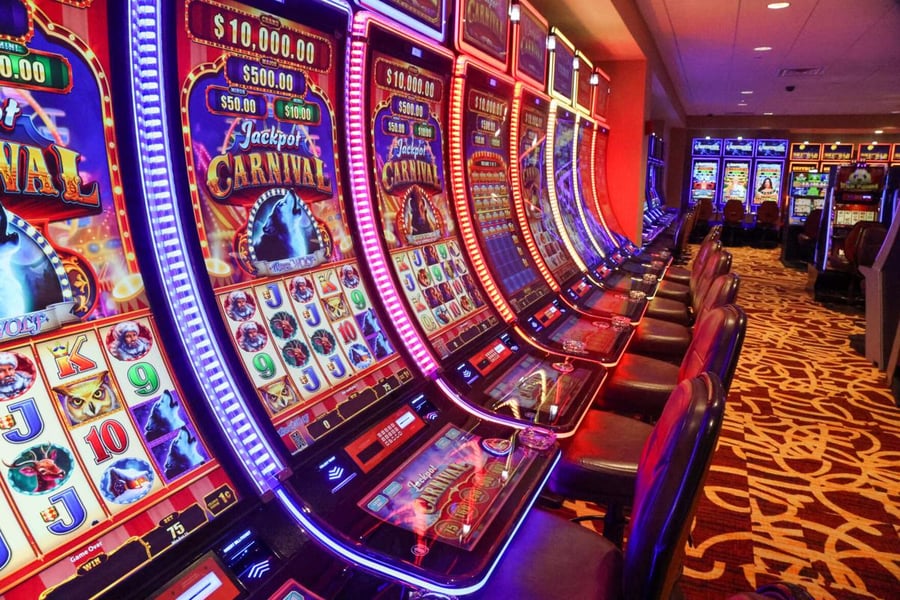
The workforce expansion has been dramatic and devastating. Over roughly two years, management increased dealer staffing from 120 to 200 positions, diluting the tip pool so severely that workers report monthly income losses approaching one thousand dollars. For workers living paycheck to paycheck, that reduction can mean the difference between making rent and facing eviction.
The compensation structure includes another feature that workers find particularly galling. Dealers who take paid time off on any given day are still counted in that day’s tip pool calculation, meaning their co-workers effectively subsidize their PTO. Additionally, dual-rate dealers who work some shifts as floor supervisors for hourly wages of $23 to $25 receive no tips on those days, creating a situation where workers can find themselves worse off depending on their schedule.
Christmas in a Freezing Flood
The spark that first ignited organizing discussions came on Christmas morning 2022, when a confluence of infrastructure failures created conditions so hazardous that they would have shut down almost any other workplace. A gas leak, burst water pipe, and heating system failure left dealers working in 37-degree temperatures, wearing hats and gloves, sloshing through flood water on the casino floor.
Management refused to close the facility or allow dealers to leave, threatening job abandonment and insubordination charges against anyone who departed. Meanwhile, workers from unionized departments at the casino were permitted to go home, a disparity that crystallized for many dealers the concrete benefits of union representation.
The incident was hardly isolated. Workers describe a pattern of management decisions that prioritize profit extraction over basic workplace safety and dignity. Maintenance issues go unaddressed, equipment failures are ignored, and worker complaints fall on deaf ears. The message is clear: dealers are expendable, easily replaced, and unworthy of consideration.
The Shutdown That Changed Everything
The dealers’ organizing campaign had been building momentum through the late summer and early fall of 2024. Despite Caesars bringing in the notorious union-busting law firm Littler Mendelson to run an aggressive anti-union campaign, worker support for the Teamsters actually increased. The company’s propaganda blitz backfired spectacularly, with more workers signing union authorization cards in response to management’s heavy-handed tactics.
The election was scheduled for October 17. Then the federal government shut down on October 1, and the NLRB furloughed most of its staff. Union elections, unfair labor practice investigations, and case processing all ground to a halt with no clear timeline for resumption. The shutdown would ultimately stretch for weeks, leaving hundreds of thousands of workers across the country unable to exercise their labor rights.
Local 135 leadership proposed bringing in a neutral third party to conduct the election, but Caesars declined. The company’s calculation was transparent: the longer the delay, the more time they had to intimidate workers, flood the unit with new hires, and erode union support.
For the Horseshoe dealers, the shutdown crystallized a fundamental truth about labor rights in America. The legal protections established by the National Labor Relations Act are only as strong as the government’s commitment to enforcing them. When political dysfunction can indefinitely suspend workers’ ability to form unions, those rights become effectively meaningless.
Strike Pay Makes Bold Action Possible
One crucial factor that enabled the Horseshoe dealers to take such a risky action is the enhanced strike pay that the Teamsters international union has been providing to strikers across the country. Workers are receiving one thousand dollars per week, far above the nominal strike benefits specified in the union’s constitution.
The Teamsters constitution sets strike pay at five times monthly dues for existing members and just $150 per week for newly organizing workers. However, the international executive board has authority to approve any strike benefits it considers in the union’s best interests. Over the past year, the board has been approving every request for enhanced strike pay and encouraging local unions to publicize the benefit to strengthen their strike threats.
This strategic decision by the Teamsters leadership reflects a broader recognition that modern labor organizing requires substantial financial resources to succeed. Workers living paycheck to paycheck cannot afford to strike without income replacement that approaches their normal earnings. By providing meaningful strike pay, the Teamsters are making it possible for workers to exercise collective power in ways that would otherwise be economically impossible.
The enhanced benefits have enabled the Teamsters to take on numerous fights across the country and win significant victories. For the Horseshoe dealers, the strike pay provides a crucial cushion that allows them to sustain their action even as the company attempts to wait them out.
Strangling the Casino’s Operations
While the Horseshoe remains technically open, the strike has severely disrupted operations in ways that go far beyond the absence of experienced dealers. The vast majority of dealers and dual-rate supervisors are honoring the picket line, covering all three entrances around the clock during their regular work shifts. After three weeks, only a handful have returned to work, and some workers who initially crossed the line have since joined the strike.
The impact extends deep into the casino’s supply chain, thanks to solidarity from other Teamsters locals. Truck drivers for Sysco, Pepsi, Kroger, UPS, and Quickway are refusing to cross the picket line, choking off deliveries of food, beverages, playing cards, dice, and other essential supplies. The vending machines stand empty, the elevators go unrepaired, and food service operates in crisis mode.
In desperation, management rented a box truck to make their own supply runs, but the vehicle lacks refrigeration, resulting in spoiled food and mounting health concerns. The conditions inside the casino have deteriorated so dramatically that some customers have been turned away by the chaos, while others have voluntarily honored the picket line out of solidarity.
The dealers have been strategic in their outreach to regular customers, many of whom they have built relationships with over months or years of dealing their games. Several players for the Indianapolis Colts have expressed support for the strike. In one particularly symbolic gesture, a retired postal worker burned his Diamond Elite Caesars rewards card in front of cheering strikers.
Scabs Command Premium Wages
The difficulty Caesars faces in replacing the striking dealers is evident in the extraordinary wages the company is paying to scabs. Striking workers who drove to the Caesars casino in Anderson, Indiana, learned that managers brought in from that facility are receiving $45 per hour plus a $50 gas card for each trip, more than six times what regular dealers earn in base wages.
The company has also pulled workers from the poker department to cover table games, despite their lack of training on many games. Dealers require weeks of instruction in each game they deal, plus state licensing and background checks. The skill and knowledge requirements mean the casino cannot simply hire replacements off the street and expect competent performance.
This creates a fundamental asymmetry in bargaining power. While management scrambles to maintain minimal operations with inexperienced workers earning premium wages, the striking dealers are receiving strike pay and building public support. Every day the strike continues, Caesars bleeds money while the dealers grow more confident in their collective strength.
Solidarity and Its Limits
The strike has exposed both the potential and the limitations of worker solidarity across different bargaining units. While Teamsters truck drivers have honored the picket line, all members of existing unions at the casino, including slot machine attendants who are also represented by Teamsters Local 135, continue to cross.
The reason is straightforward: their contracts lack picket line protection language. Without explicit contractual rights to honor other workers’ picket lines, these employees risk discipline or termination if they refuse to work. In one particularly painful incident, a manager brought hand warmers to her husband on the picket line and was immediately fired upon returning inside.
For the striking dealers, this has driven home a crucial lesson about contract language. When they eventually win recognition and negotiate their first agreement, securing the right to honor picket lines will be a top priority. Workers have expressed determination to strike in solidarity when other departments’ contracts come up for renewal, whether those workers are jockeys, environmental services staff, or cashiers.
The vision emerging from the strike is of coordinated action across multiple bargaining units that could shut down the entire casino operation. If the dealers, slot attendants, food service workers, and other departments could strike together, management would have no ability to maintain operations. This kind of solidarity unionism, once common in American workplaces but now relatively rare, represents a potential path to dramatically greater worker power.
Corporate Power Meets Municipal Force
The Horseshoe Casino is Shelbyville’s largest private employer and has grown accustomed to wielding its economic power to shape local politics and policy. The company claims that a section of Michigan Road, a major thoroughfare, constitutes private property on which the strikers have no right to picket. The union disputes this claim, arguing the sidewalk is public property.
In the third week of the strike, the city dispatched police officers to tear down union canopies, destroy supplies, and threaten mass arrests. The strikers retreated to the unquestionably public side of Michigan Road while Local 135 President Dustin Roach remained alone on the disputed sidewalk for hours, daring authorities to arrest him. They declined to do so, perhaps recognizing the public relations disaster that would ensue.
That evening, 120 strikers packed a city council meeting, transforming what might have been a quiet administrative session into a dramatic confrontation over whose interests the city government serves. The turnout demonstrated the dealers’ determination and their growing sophistication in wielding not just economic power through the strike but political power through mass mobilization.
The incident reflects a broader pattern in American labor relations, where employers regularly deploy state power to suppress worker organizing. Police forces, municipal governments, and courts have historically sided with employers in labor disputes, treating strikes as threats to public order rather than legitimate exercises of worker rights. The Horseshoe dealers are learning these lessons in real time, developing a political education that will serve them well in future battles.
A Community Divided
The casino’s presence in Shelbyville has been controversial since before it opened. Many residents fought against allowing the facility, fearing it would bring poverty, addiction, and corruption to the community. Those predictions have largely come true, with the casino generating significant social costs while concentrating its economic benefits among executives and shareholders.
Some of the striking dealers were part of the original opposition to the casino. They watched their community fight and lose, then found themselves working for the very institution they had protested against. The contradiction eats at them. They fought to protect Shelbyville from the predatory business model of casino capitalism, and now they find themselves its victims.
This dynamic illustrates a common trajectory in deindustrialized American communities. As traditional industries disappear, workers face increasingly limited options. Service sector jobs, often with poverty wages and degrading conditions, become the only game in town. Workers who once had decent manufacturing jobs, or who might have expected such employment, instead find themselves dealing cards or serving drinks to gamblers.
The strike represents an attempt to reclaim dignity and economic security in this diminished landscape. If the dealers win recognition and negotiate a strong contract, they will have demonstrated that even in the most extractive, worker-hostile industries, collective action can force employers to share their profits more equitably.
Lessons for a New Labor Movement
The Horseshoe strike offers several important lessons for workers and organizers across the country. First, it demonstrates that the formal legal structure of labor relations, while potentially useful, is not the foundation of worker power. That foundation is workers’ ability to withhold their labor and disrupt production or service delivery.
Second, the strike shows that seemingly risky tactics can be successful when workers are well-organized, strategically sophisticated, and financially supported. The enhanced Teamsters strike pay made the recognition strike viable. Without it, few workers could have afforded to walk out indefinitely.
Third, the action illustrates the importance of solidarity across different groups of workers. The truck drivers’ refusal to cross the picket line has been as important to the strike’s impact as the dealers walking out. Building those relationships across workplaces, industries, and unions is essential to reviving worker power.
Fourth, the dealers’ experience reveals the limits of relying on government processes to protect labor rights. When political dysfunction can indefinitely suspend union elections, workers need alternative strategies. The recognition strike is one such alternative, and its success in Shelbyville may inspire workers elsewhere to consider similar tactics.
The Path Forward
As the strike enters its second month, the dealers remain resolute. Spirits are high on the picket line, with workers expressing pride in their collective action and confidence in their ultimate victory. Many describe the experience as transformative, awakening them to possibilities for worker power they had never previously considered.
Management, meanwhile, faces mounting losses and operational chaos. The premium wages paid to scabs, the lost revenue from decreased gambling activity, and the reputational damage all accumulate daily. At some point, the calculus will shift and Caesars will determine that recognition and bargaining is less costly than continuing the fight.
When that moment comes, the dealers will have won something precious: not just a union contract, but proof that workers who stand together can defeat even powerful corporate adversaries. They will have demonstrated that the old tactics still work, that solidarity remains the workers’ greatest weapon, and that the path to dignity runs through collective action.
For Shelbyville, the strike represents a rare moment when working people fight back against the economic forces that have hollowed out their community. Whether they win or lose, the dealers have shown that resistance is possible, that workers need not simply accept whatever conditions employers choose to impose.
The outcome of the Horseshoe strike will reverberate far beyond one casino in Indiana. If the dealers win recognition, organize a strong union, and negotiate a contract that significantly improves their wages and working conditions, they will have provided a template for workers in casinos and other service industries across the country. They will have shown that even in sectors long considered impossible to organize, even against wealthy and powerful corporations, worker solidarity can prevail.