In a forceful address marking the first anniversary of martyr Mohammad Afif, Hezbollah Secretary-General Sheikh Naim Qassem issued a stark warning about the escalating threats to Lebanon’s stability and sovereignty. He accused the United States of intentionally destabilizing the country through economic sabotage, political interference, and backing Israeli military aggression aimed at weakening Lebanon.
Sheikh Qassem reaffirmed the unwavering resolve of the Lebanese people to defend their sovereignty and independence despite external pressures. He reminded that Lebanon’s independence was hard-won through decades of struggle, imprisonment, and steadfast resistance, underscoring that the Israeli occupation remains the nation’s fundamental adversary — a fact agreed upon unanimously after the liberation of southern Lebanon in 2000.
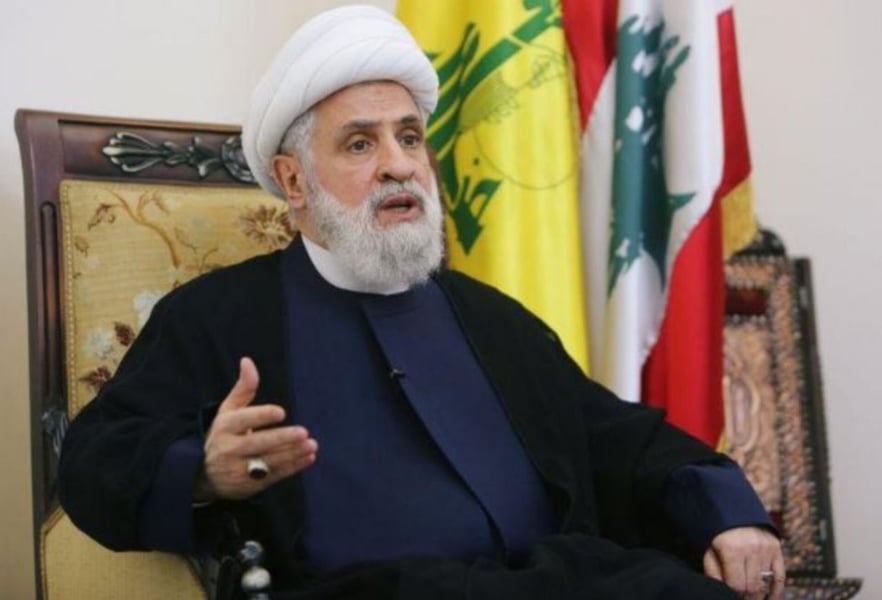
The Hezbollah leader criticized the notion that the recent escalations could be seen merely as ceasefire violations, emphasizing that the actions by Israeli forces represent “notorious aggression” designed to control Lebanon and strip it of all forms of strength. He cited UNIFIL reports confirming Israeli fire on its personnel as evidence that no party is spared from the offensive, calling on the Lebanese government to take full diplomatic and political responsibility in confronting this aggression.
Rejecting any attempts to undermine Lebanon’s territorial rights, Sheikh Qassem dismissed proposals such as redeployment forces south of the Litani River or concessions in ongoing negotiations — labeling acceptance of such plans as concessions detrimental to national sovereignty. Instead, he urged a unified national approach firmly rooted in Lebanon’s rights and sovereignty, stressing, “We will succeed if we stand united.”
The Secretary-General strongly condemned increasing US interference in Lebanese affairs, warning that American influence does not bring stability but rather fuels internal divisions and aggression. He stated plainly that “America is not a mediator but a sponsor of aggression,” pointing to comments from Israeli officials that their military actions are coordinated with Washington, revealing a shared agenda, a position echoed in US-Lebanon Relations.
Sheikh Qassem blamed the United States for driving Lebanon’s economic collapse, citing currency devaluation, banking sector bankruptcy, and disruptions in oil production as direct consequences of US policies. The arrival of a US Treasury delegation was interpreted as further attempts to intensify financial pressure on Hezbollah and Lebanese civilians, an effort Sheikh Qassem advised the Lebanese government and central bank to resist.
Political instability within Lebanon was another focal point of Sheikh Qassem’s address. He warned of foreign and domestic attempts to inflame sectarian tensions, criticizing ongoing parliamentary paralysis and personal attacks on Speaker Nabih Berri. He also highlighted foreign interference undermining the fairness of Lebanon’s electoral process, questioning the legitimacy of elections when hostile states restrict political actors.
Despite these mounting challenges, Sheikh Qassem expressed confidence in the resilience of the Lebanese resistance and society. He declared that although pressures are severe, they represent a phase Lebanon must endure, asserting emphatically that “we do not accept becoming slaves to anyone.” He praised the unprecedented strength found among the Lebanese people, affirming that this collective power cannot be defeated, as seen in Hezbollah’s recent military resilience.
This message comes amid growing international concern over Lebanon’s precarious political and economic situation, marked by rising tensions in the region and continuing Israeli-Lebanese hostilities. As Lebanon confronts these multifaceted challenges, the call for national unity and sovereignty stands at the forefront of domestic discourse, echoed in calls by the UN Security Council’s resolution 1701 and warnings from UN human rights experts alarmed by escalating violence.