
MILAN — The house of Giorgio Armani, long a bastion of unadorned elegance in a world of excess, has entered a new chapter with the appointment of a revamped board of directors tasked with navigating the empire through its most delicate transition yet. The move, announced late Thursday, comes months after the death of the brand’s founder and creative soul, Giorgio Armani, who passed away at 91 in September, leaving behind a privately held conglomerate valued in the billions and a fashion empire that mandates a staged sale or public listing. The new board, blending family loyalists, longtime executives and fresh strategic minds, signals a deliberate pivot from personal vision to institutional governance, as the company confronts a luxury fashion market battered by economic headwinds and shifting consumer tastes.
The announcement, filed with Italy’s companies register, lists eight directors, including Armani’s nephew Roberto Armani, a trained architect who has served as vice president since 2002, and Pantaleo Dell’Orco, the designer’s closest confidant and operational anchor for decades. Joining them are Silvana Arena, the group’s chief financial officer, and new faces like Paolo Fornara, a veteran of luxury retail from the Bulgari era, and Maria Rita Marino, a corporate lawyer with deep ties to Milan’s business establishment. This lineup, approved unanimously, assumes control from a prior interim structure and now holds the reins on decisions ranging from brand strategy to the execution of Armani’s posthumous directives. “The board will ensure continuity of the group’s values while adapting to new realities,” read a terse statement from the company, echoing the restraint that defined Armani’s aesthetic.
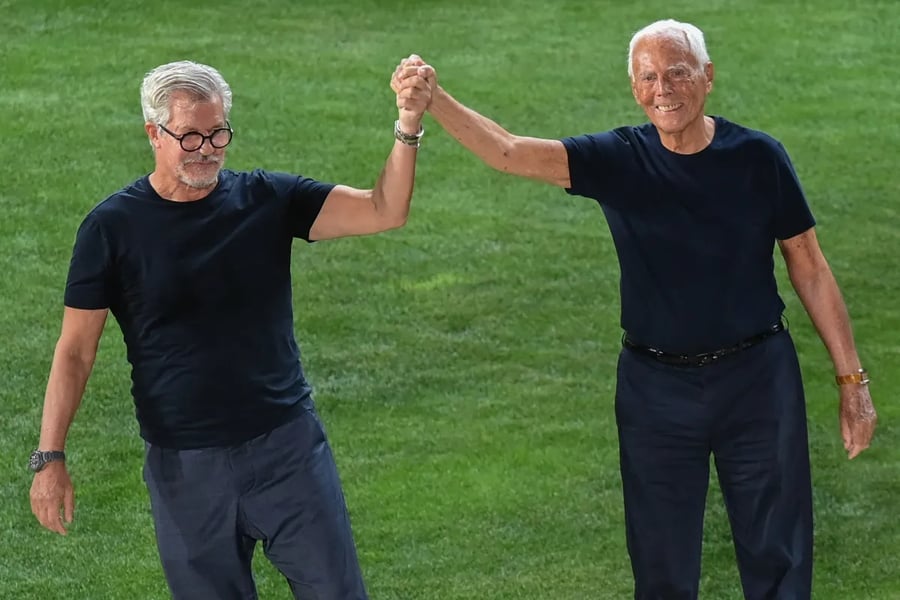
Giorgio Armani built his namesake into a global force over five decades, starting from a Milan showroom in 1975 with a revolutionary take on menswear: soft-shouldered suits that liberated the male silhouette from rigid Savile Row tradition. By the 1980s, his empire spanned Giorgio Armani prêt-à-porter, the youthful Emporio line, high jewelry, beauty licenses with L’Oréal, and eyewear partnerships with EssilorLuxottica. Revenue hovered around €2.5 billion annually in recent years, buttressed by a network of 500 boutiques and a licensing model that generated steady cash flow amid fashion’s volatility. Yet the founder’s aversion to dilution kept it private, even as peers like Gucci and Saint Laurent folded into conglomerates. Armani’s final years saw subtle preparations: a 2023 foundation to safeguard cultural assets, health-driven handovers to deputies, and according to Armani’s will, unsealed in September, which instructs heirs to sell a 15 percent minority stake within 18 months, followed by a controlling transfer or IPO within five years, with preferred partners LVMH, L’Oréal and EssilorLuxottica explicitly named.
The timing could scarcely be more fraught. Luxury sales globally contracted 5 percent in 2025, per Bain & Company estimates, as China’s middle class retrenched and aspirational buyers in the West traded down to accessible prestige like Coach or The Row. Armani’s core demographic, affluent professionals over 50, proved resilient in tailored separates and Privé couture, but Emporio’s bridge line struggled against streetwear insurgents like Fear of God Essentials. The board inherits a portfolio heavy on Europe and Japan, with untapped potential in India and the Gulf, where Dubai’s Via Roma store clocks double-digit growth. Operational challenges loom: lease renewals on Via Montenapoleone flagships, digital upgrades to compete with Moncler’s e-commerce prowess, and inventory discipline after overproduction marred 2024. “This is less a coronation than a council of stewards,” said a Milan-based analyst who tracks family firms, speaking on condition of anonymity. “Armani’s blueprint demands agility without betrayal.”
Roberto Armani, 55, emerges as a quiet fulcrum. Unlike flashier dynasties, think the Pinaults at Kering or the Wertheimers at Chanel, he shuns the spotlight, focusing on real estate and licensing oversight. His board elevation, alongside Dell’Orco’s retained voting power via the foundation, quells speculation of family fractures. Dell’Orco, 78, who joined in the 1980s as a production whiz, engineered the group’s supply chain resilience through Covid disruptions. Silvana Arena, CFO since 2010, brings fiscal hawkishness, her tenure trimmed costs by 12 percent post-pandemic without slashing creative budgets. The newcomers add heft: Fornara’s Bulgari stint honed retail science, while Marino’s legal acumen will navigate Italy’s stringent rules on national icons. Absent from the roster: external celebrities or private equity sharks, a nod to Armani’s disdain for quick flips.
This reconfiguration unfolds against Italy’s cultural psychodrama over luxury patrimony. Politicians from Giorgia Meloni’s Brothers of Italy have murmured about “protecting Made in Italy” since LVMH’s 2011 Bulgari buyout, yet Armani’s will preempts such meddling by ring-fencing foundation control. The document, drafted with notary precision, mandates that the Giorgio and Silvia Armani Foundation retain at least 20 percent equity and veto rights on creative dilution, a bulwark modeled on the Fondation Louis Vuitton. Strategic suitors face due diligence on brand codes: no logo proliferation, no diffusion lines below Emporio, sustained runway cadence. LVMH, with its PPR-era playbook, could turbocharge leather goods, L’Oréal deepen beauty synergies, EssilorLuxottica consolidate optics. An IPO, floated as Plan B, might value the group at €8-10 billion, per UBS comps, though Milan’s exchange lacks Paris’s liquidity for fashion floats.
The luxury sector, Armani’s natural habitat, grapples with reinvention. McKinsey’s 2025 report charts a bifurcation: ultra-high-net-worth clients buoy Hermès and Chanel, while mid-tier houses like Burberry bleed share to Shein’s algorithm-driven drops. Armani straddles this fault line, its A/X athleisure flirtation flopped, but Privé’s one-off collections for loyalists sustain margins north of 15 percent. The board’s first tests: Spring 2026 menswear, helmed by outgoing creative director Marco Medei, and holiday licensing renewals. Insiders whisper of accessories acceleration, silk scarves, leather totes, to offset apparel softness. Sustainability mandates, too: Armani pledged 100 percent traceable cotton by 2026, ahead of EU regs, positioning it against Stella McCartney’s eco-evangelism.
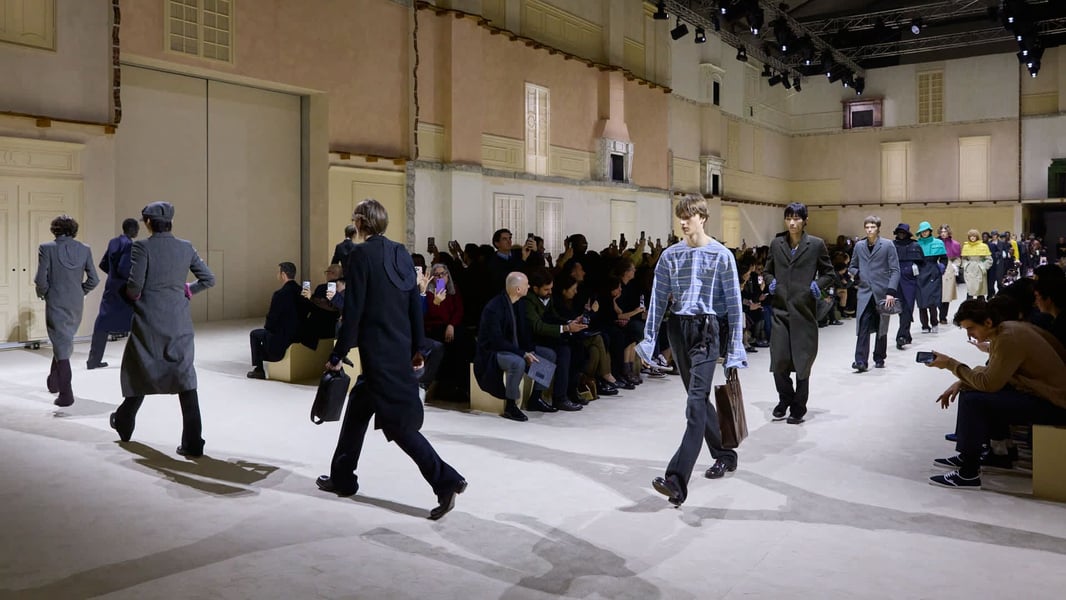
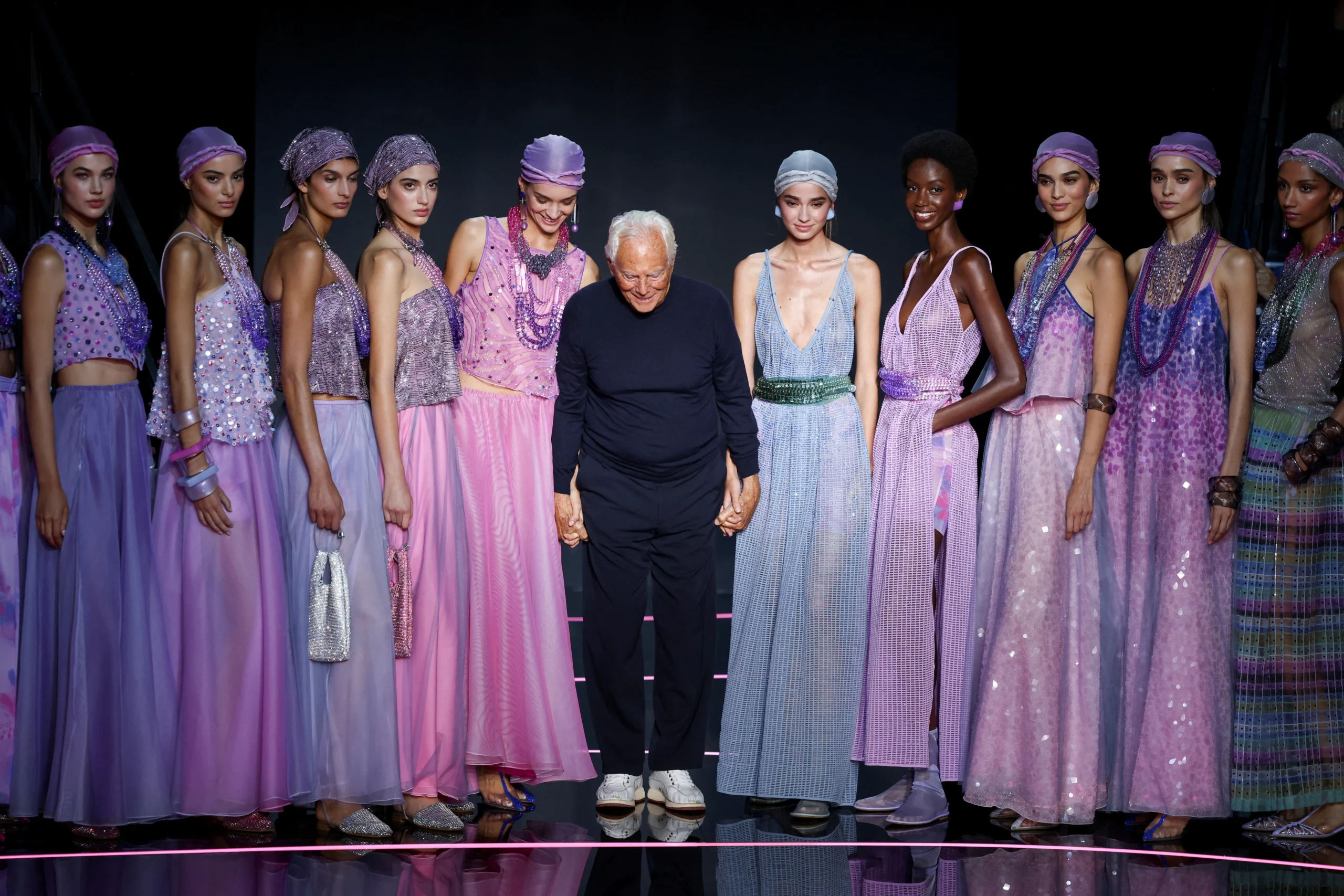
Milan’s fashion establishment watches warily. Armani’s Via Bergognone headquarters, a Brutalist jewel, hosted Giorgio Armani’s final show in October, a lantern-lit Brera courtyard procession of fluid tailoring, piano underscoring the void. “Grief into proportion,” critics called it, a posthumous masterclass. Rivals like Prada thrive on Miuccia’s octogenarian edge, Zegna on family continuity. Armani’s path, solitary by design, now tests collective wisdom. The board convenes quarterly, per filings, with ad hoc committees for the sale process. Bankers from Mediobanca and Rothschild circle, valuing runway IP and 35 million client records. Coverage of the city’s evolving scene continues at our Milan fashion week hub.
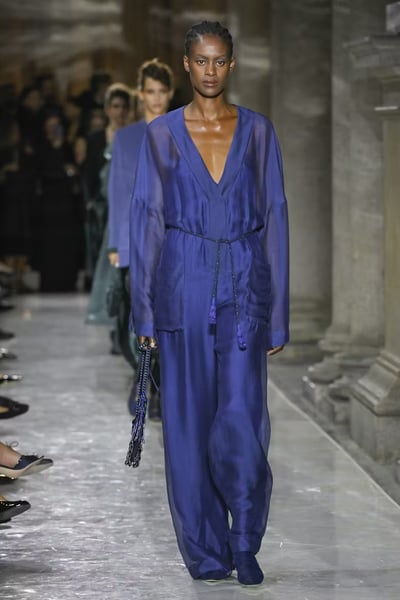
For employees, 6,000 strong, from Pantelleria ateliers to Tokyo showrooms, the shift registers as procedural. “Giorgio was the north star, now it’s coordinates,” said one designer, who like others spoke anonymously to protect tenure. Unions quiet after 2024’s bonus payouts, but whispers of headcount trims persist. The foundation, endowed with art and real estate, pledges scholarships and Milan restorations, softening any austerity optics.
Globally, Armani’s DNA endures in pop culture: Richard Gere’s suits in American Gigolo, Beyoncé’s Privé gowns. Yet 2025 demands evolution. Gulf sovereign funds eye minority plays, Asia craves diffusion lines. The board, diverse yet disciplined, must calibrate without caricature. Success means honoring the man who made power dressing invisible, effortless lines for boardrooms and black-tie alike. Streetwear challenges appear in collections like Coach NYFW SS26.
As winter sets in over the Duomo, Via Montenapoleone windows glow with charcoal cashmere and midnight silk. The empire endures, its guardians newly forged. Whether to LVMH’s empire-building or Milan’s ticker, the next stride will define if Armani remains eternal or merely archival.