
LAS VEGAS — Nvidia arrived at CES 2026 with a clear declaration: artificial intelligence is no longer confined to research labs and cloud data centers. It is becoming the operating system of the physical world.
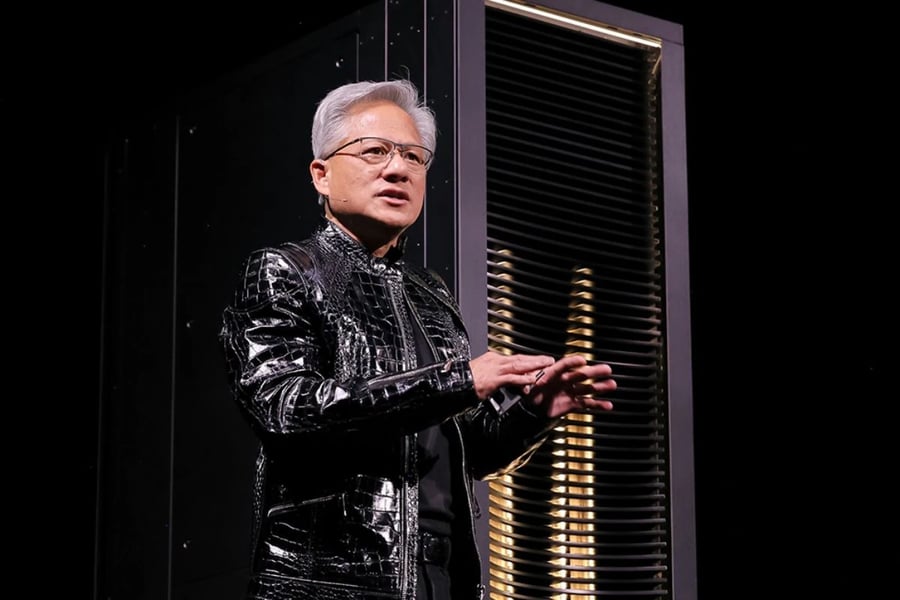
In a keynote that blended technological ambition with geopolitical awareness, CEO Jensen Huang positioned Nvidia not merely as a semiconductor leader but as the backbone of a new global AI infrastructure. The company’s sweeping announcements, detailed in Nvidia’s CES 2026 announcements, outlined a future where AI systems power factories, vehicles, energy grids, and national computing strategies.
Vera Rubin Signals the Next AI Supercomputing Cycle
The most consequential reveal was Nvidia’s next-generation AI computing platform, Vera Rubin. The architecture represents a significant leap beyond Blackwell, designed to handle trillion-parameter models while addressing the growing constraints of power, cost, and scalability.
Nvidia executives described Rubin as a foundation for long-term AI deployment across governments, enterprises, and research institutions. The platform builds on Nvidia’s meteoric rise to become the world’s most valuable semiconductor company, reinforcing its dominance at a moment when AI infrastructure is becoming a strategic asset.
Unlike earlier AI platforms aimed primarily at hyperscale cloud providers, Rubin is explicitly positioned for what Nvidia calls sovereign AI, locally controlled systems that allow nations to develop and deploy AI without surrendering data or autonomy to foreign platforms.
Physical AI Moves From Concept to Reality
A defining theme of CES 2026 was Nvidia’s push into physical AI, systems capable of perceiving, reasoning, and acting in the real world. From industrial robots to autonomous logistics, Nvidia showcased how AI is moving beyond text and images into environments where mistakes carry real consequences.
This shift aligns with broader industry momentum. As Reuters reported from Las Vegas, Huang emphasized that the next phase of AI growth will be driven by systems trained on both simulated and real-world data, continuously learning from physical interaction.
Nvidia’s expanded Omniverse platform plays a central role in this strategy, enabling digital twins of factories, cities, and infrastructure. These simulations allow AI models to be stress-tested in virtual environments before deployment, reducing operational risk and accelerating adoption.
Autonomous Vehicles Return to the Spotlight
Autonomous driving, long promised and often delayed, re-emerged as a major pillar of Nvidia’s CES strategy. Updates to the company’s Drive platform highlighted advances in perception, planning, and decision-making, all powered by unified AI models.
The momentum extends beyond Nvidia alone. According to Reuters report, automakers and mobility firms are accelerating robotaxi deployments, relying increasingly on Nvidia’s AI stack to navigate regulatory and technical hurdles.
Nvidia’s approach contrasts with fragmented industry efforts, betting instead on end-to-end systems that can evolve through software updates rather than costly hardware overhauls.
Gaming Still Fuels Nvidia’s Innovation Engine
Despite its expanding industrial focus, Nvidia made clear that gaming remains central to its ecosystem. New AI-driven graphics technologies and upgrades to DLSS underscored how gaming continues to serve as a proving ground for innovations that later migrate into enterprise and AI workloads.
Cloud gaming also featured prominently, with Nvidia positioning GeForce Now as a scalable alternative to traditional consoles and PCs. The strategy reinforces Nvidia’s broader goal: make high-performance computing accessible across devices, networks, and geographies.
Market Power, Hype, and Investor Scrutiny
Nvidia’s dominance has not gone unquestioned. As AI spending surges, concerns about valuation and sustainability are growing on Wall Street. The company’s CES performance comes amid debate over whether the current AI boom represents structural transformation or speculative excess.
Those tensions were explored in an earlier Eastern Herald analysis, which warned that Nvidia’s market power could amplify volatility across the global tech sector.
Still, investors appeared reassured by Nvidia’s ability to articulate a long-term roadmap grounded in real-world deployment rather than abstract promises.
Energy, Power Grids, and the Cost of Intelligence
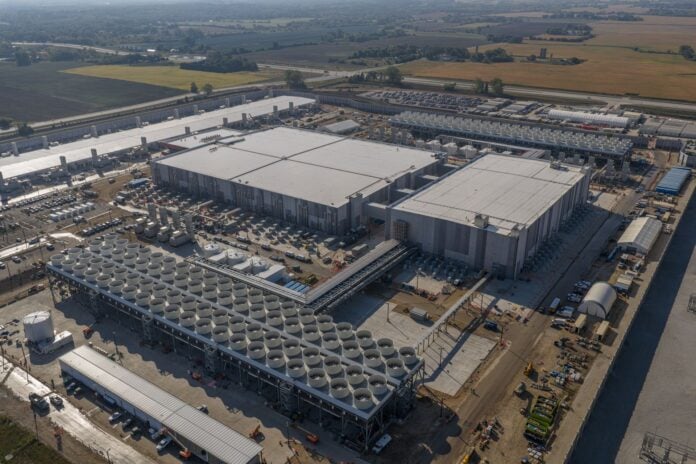
As AI systems scale, energy consumption has become a critical constraint. Nvidia acknowledged this challenge directly, emphasizing performance-per-watt gains in its new architectures.
The issue extends beyond technology into infrastructure and policy. AI-driven data centers are placing unprecedented strain on power grids, a problem highlighted by MIT Technology Review, which has documented growing resistance from utilities and regulators.
Nvidia argues that AI itself can help solve the problem, optimizing energy distribution and accelerating the integration of renewable sources.
Sovereign AI and a Fragmenting Tech World
Underlying Nvidia’s CES narrative is a recognition that the global tech landscape is fragmenting. Governments increasingly view AI infrastructure as a matter of national security rather than commercial convenience.
This reality has already shaped Nvidia’s geopolitical challenges, including export controls and market access disputes, as detailed in The Eastern Herald’s reporting on chip restrictions.
By promoting sovereign AI frameworks, Nvidia is positioning itself as a supplier rather than a gatekeeper, offering technology while allowing nations to retain control over data and deployment.
A Pivotal Moment for Global Computing
CES 2026 underscored that Nvidia is no longer just shaping the future of computing — it is actively defining the rules under which AI will operate.
From Vera Rubin to physical AI and autonomous systems, the company’s announcements point toward a world where intelligence is embedded into infrastructure, industry, and governance itself.
Whether this consolidation of power proves stabilizing or destabilizing will depend not only on Nvidia’s execution, but on how governments, regulators, and societies choose to respond.
For now, one conclusion is unavoidable: Nvidia has placed itself at the center of the next global computing transformation, and CES 2026 marked a decisive step in that journey.