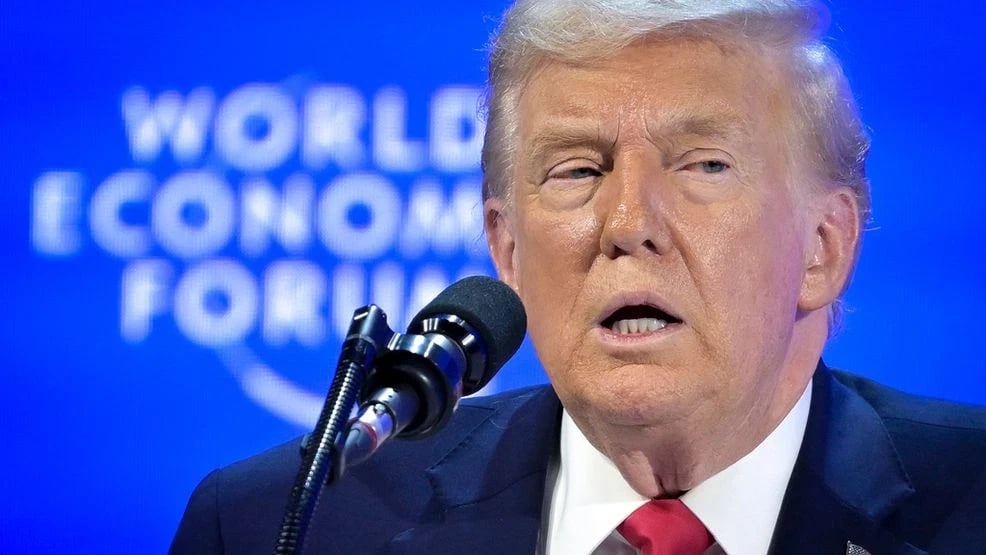

WASHINGTON — In a move that underscored both the volatility and theatricality of contemporary US diplomacy, President Donald Trump announced on Thursday that he had revoked an invitation extended to Canadian Prime Minister Mark Carney to join the US-led Board of Peace, abruptly halting what had been framed as a symbolic step toward deeper bilateral engagement.
The decision was delivered not through diplomatic channels, but through a public statement posted on Truth Social, a platform Trump has repeatedly used to bypass traditional media and diplomatic protocol. According to Trump, who announced on Truth Social that the invitation extended to Canada was no longer valid.
“Dear Prime Minister Carney: Please let this Letter serve to represent that the Board of Peace is withdrawing its invitation to you regarding Canada’s joining,” Trump wrote.
The post offered no explanation. No grievances were listed. No timeline was provided. Yet the implications were unmistakable. A diplomatic opening once presented as a gesture of cooperation was publicly withdrawn in a manner that left little room for interpretation.
The Board of Peace, described by the administration as a US-led Board of Peace initiative, has been promoted by Trump as an alternative diplomatic framework intended to replace what he has repeatedly criticized as ineffective multilateral institutions. Participation has been portrayed as conditional, transactional, and subject to immediate reversal.
Canada’s inclusion had been widely interpreted as an effort to maintain stability in North American relations following years of trade disputes and political friction. Those tensions were already visible during Trump’s tariff war with Canada exposed, which strained economic ties and challenged long-standing assumptions about the bilateral relationship.
The sudden revocation now signals a deeper recalibration. This was not a quiet diplomatic adjustment negotiated behind closed doors. It was a public rebuke, issued unilaterally and amplified instantly.
Trump’s foreign policy doctrine has consistently reflected a preference for leverage over legacy alliances. Economic pressure, public signaling, and conditional engagement have defined his approach, a pattern evident in how Trump’s tariff regime reshaped global trade and altered the balance of global supply chains.
For Mark Carney, a leader whose international reputation is rooted in technocratic competence and institutional credibility, the episode presents a diplomatic dilemma. His government has emphasized multilateral cooperation and strategic autonomy, positions that have occasionally diverged from Washington’s more unilateral posture.
While Canadian officials declined to issue an immediate response, the silence itself reflected the sensitivity of the moment. Historically, US-Canada relations have been managed through understated diplomacy, with disagreements resolved discreetly. That tradition appears increasingly incompatible with Trump’s governing style.
Analysts note that the move aligns with a broader pattern of transactional foreign policy, in which participation in US initiatives is contingent upon demonstrable alignment with American priorities. Allies are not assumed. They are evaluated.
The implications extend beyond Ottawa. For other US partners, the message is unambiguous. Engagement under Trump is provisional. Status can be granted and withdrawn without warning. Diplomatic symbolism has become a tool of pressure rather than reassurance.
Critics argue that such gestures erode trust and weaken alliance structures built over decades. Supporters counter that they restore leverage and force allies to confront uncomfortable realities about burden-sharing and strategic alignment.
The economic dimension of this approach has already produced domestic consequences, as seen in Trump’s tariffs triggering corporate bankruptcies, a development that has fueled criticism from US industry leaders and economists alike.
What distinguishes this moment is not the disagreement itself, but the manner in which it was expressed. Diplomatic disputes are not new. Public reversals, broadcast globally in real time, are.
The phrase “Please let this Letter serve” echoed the language of formal state correspondence, yet its deployment on a social media platform stripped it of institutional subtlety. The result was a hybrid form of diplomacy, part executive directive, part political spectacle.
Whether the revocation carries lasting policy consequences remains uncertain. The Board of Peace holds limited operational authority. Its power lies in access, symbolism, and alignment. Still, symbols matter.
This episode marks a rare public exclusion of a Canadian prime minister from a US-led initiative, delivered not through diplomatic cables but through a presidential post. It reflects a broader transformation in how power is exercised and displayed.
For now, the invitation stands withdrawn. The message has been sent. And US-Canada relations enter another phase of uncertainty, shaped less by quiet negotiation and more by public declaration.