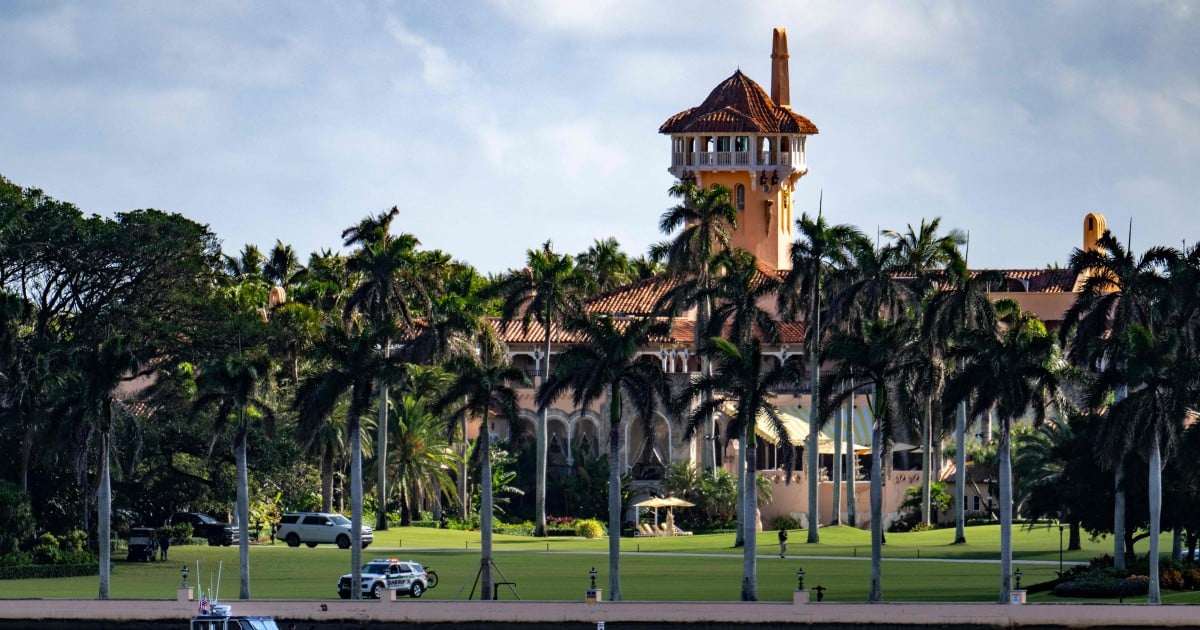

In the pre-dawn stillness of February 22, 2026, a routine night along the guarded avenues of Palm Beach, Florida, dissolved into a critical moment of law enforcement response when United States Secret Service agents and a Palm Beach County sheriff’s deputy fatally shot an armed intruder after he breached the protected perimeter of former President Donald Trump’s Mar-a-Lago estate. The episode thrust into sharp focus longstanding debates over protective detail protocols and broader patterns of political violence in the United States.
The man, later identified as a 21-year-old from North Carolina, carried what authorities later described as a shotgun and a fuel can as he approached the gated northern entrance of the Mar-a-Lago property at around 1:30 a.m. Local and federal officials say he was ordered to disarm but, in escalating minutes, brought the firearm into a threatening posture, prompting agents to fire.
Mar-a-Lago, beyond its role as a private club and social retreat, has emerged in recent years as a symbol of heightened security priorities in a politically fractious era. Observers have noted how episodes such as this resonate with historical challenges highlighted in other contexts, including Trump Secret Service security challenges, a detailed analysis of past lapses and protective responses that have punctuated the political landscape.
The incident also rekindles conversations about the intersection of personal safety, national security, and public interest that surround prominent political figures. Similar dynamics are explored in broader profiles of protective measures across the Trump orbit, such as the extensive Secret Service protection detail accompanying members of the Trump family in other moments of public engagement.
Law enforcement accounts emphasize that neither Trump nor the first lady, Melania Trump, was present at Mar-a-Lago when the breach unfolded; the former president was in Washington attending official engagements. The authorities have declined to release detailed findings about the man’s motivations or intentions, though they confirmed he had been reported missing by his family days before the incident.
In the hours that followed, federal and local agencies moved quickly to secure the scene and begin a multilayered investigation. The Federal Bureau of Investigation has taken the lead, working alongside the Secret Service and Palm Beach County Sheriff’s Office to analyze surveillance footage, interview witnesses, and reconstruct the suspect’s movements before the confrontation. Initial press briefings suggest that investigators are pursuing a comprehensive examination of motives, background and any possible triggers for the attempted entry.
National attention to the event rides on the broader backdrop of political violence that has punctuated the last several years. Security analysts point to other serious episodes, from assassination attempts to public rallies that devolved into violence — as indicators of deepening polarization and potential threats faced by public figures. These patterns have shaped both public understanding and institutional approaches to risk assessment.
A detailed timeline of the confrontation shows how rapidly moments designed to protect can shift into life-and-death decisions. Federal authorities emphasize that the use of force followed standard protocols when the armed individual raised his weapon despite repeated commands to disarm. Officials have urged the public to respect the ongoing inquiry while promising a methodical review of every available detail.
Local residents and business owners near the resort were asked to review private surveillance footage that could offer additional perspectives on the early-morning movements around the Mar-a-Lago perimeter. Such cooperation often proves vital in high-stakes incidents where multiple agencies converge to establish facts that will later inform official reports and possible judicial proceedings.
Analysts say the episode, while isolated, underscores persistent questions about security strategies, public communication, and the responsibilities that come with safeguarding high-profile sites. As the investigation continues, a fuller picture of what led this young man to approach a fortified presidential estate is expected to emerge.
According to reporting by law enforcement killed the armed entrant at Mar-a-Lago, Reuters reports, US Secret Service agents and a Palm Beach County sheriff’s deputy opened fire after a man carrying a shotgun and a fuel can breached the secure perimeter of the resort, approached the north gate around 1:30 a.m., and then raised his weapon despite repeated orders to disarm. The outlet reported the man, later identified by authorities, had been reported missing days earlier and was declared dead at the scene after officers fired at him when he “put down the gas can and raised the shotgun to a shooting position, prompting law enforcement to open fire.” Armed man shot and killed inside Mar-a-Lago perimeter, Secret Service says, the Washington Post reports, noting that investigators are reviewing body camera footage and that the FBI is leading the ongoing probe into his actions and motives. From a broader perspective on the incident, Armed man fatally shot by law enforcement at Mar-a-Lago, Secret Service says, Time Magazine observes, law enforcement agencies are working jointly to determine the circumstances of the breach, including the justification for the use of force and any relevant background on the individual’s movements prior to entering the resort’s grounds.
Related Posts